
In 1983, eight people in California were flown by helicopter to hospital after drinking juice pressed from raw elderberries, leaves and branches. Knowing what is elderberry, and which parts are safe to eat, starts with that hard lesson about preparation.
Elderberry is one of the six herbs this site covers in depth, alongside moringa, tamarind, fenugreek, sea moss and yellow dock.
Unlike moringa, elder shrubs do not grow around my family home in Abia State, so I have not grown or cooked them.
This page explains what is elderberry using extension research, federal health sources and published studies, clearly marked throughout.
It defines the plant, then gives a short summary of each topic with a link to a detailed guide.
Use it to jump straight to identification, growing, harvesting, recipes, storage or safety, depending on what you need today.
Safety note: raw or unripe elderberries, leaves, stems and roots contain cyanide-producing compounds, so berries must be ripe, destemmed and cooked.
Always consult your personal healthcare provider before adding new supplements to your routine, especially if you are pregnant, nursing, or taking prescription medications.
Table of Contents
What Is Elderberry
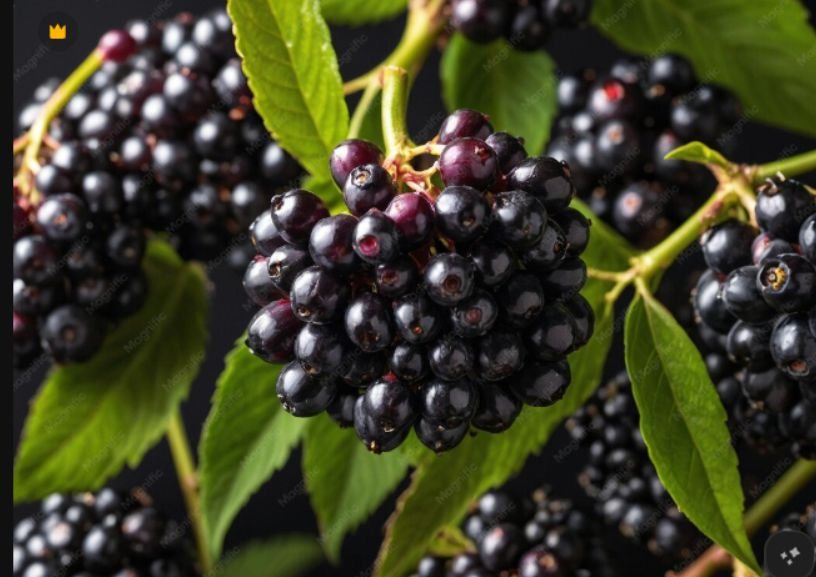
Elderberry is the small, dark purple fruit of Sambucus shrubs, which also produce flat clusters of creamy white flowers called elderflowers.
The NCCIH elderberry overview describes it as the berry of the European or black elder, Sambucus nigra.
That species grows across Europe, North America, Western Asia and North Africa, according to the same federal health source.
In the United States, American elderberry, Sambucus canadensis, is native to much of the eastern half of the country.
A University of Missouri Extension guide describes it as a multiple-stemmed shrub with white flower clusters in June and purple to black berries later in summer.
The same guide notes that fruit and flowers are used for wine, juice, jelly, jam, natural colorant and dietary supplements.
So the short answer to what is elderberry is a wild and cultivated shrub fruit that must be cooked before eating.
Identifying Elder Plants
American and European Species
Two main species dominate the conversation, and they differ in native range, growth habit and how growers in North America prefer them.
Missouri extension researchers found the American species better suited to commercial growing in Missouri than the European one.
The full comparison sits under American versus European elder, with notes on naming and garden use.
Recognizing an Elder Shrub
Elder shrubs are recognized by their compound leaves, flat-topped white flower heads, drooping dark berry clusters and soft, pithy young stems.
Seasonal changes make identification easier in some months than others, so look at the whole plant rather than one feature.
Step-by-step features and seasonal clues for every month of the year appear under spotting an elder shrub.
Plants That Resemble Elder
Several wild plants share some features with elder, and a few of them, such as pokeweed and water hemlock, are dangerously toxic.
Careful foragers check several features together and never rely on berry color or flower form alone when gathering.
The plants most commonly confused with it are compared in elder look-alike plants.
What the Berries Taste Like
Cooked elderberries taste tart, earthy and lightly sweet, while raw ones are unpleasant and unsafe to eat in any quantity.
Sugar, lemon and warm spices are commonly used to balance their sharpness in syrups, jams, pies and teas.
Flavor notes, pairings and how cooking changes the taste are covered in the flavor of elderberries.
Growing and Harvesting
Starting Plants From Cuttings
Elder shrubs root readily from stem cuttings, which lets gardeners copy a productive plant without buying new stock.
Missouri extension notes that established plants bear large crops in their second year, so new plantings need patience.
Timing, cutting size and rooting steps are laid out in rooting elder cuttings.
Pruning the Shrub
Elder shrubs send up new canes each year, and older canes slowly lose vigor and fruit less heavily as they age.
Regular pruning keeps the plant productive, easier to harvest and less crowded in small gardens and farm rows.
Seasonal cuts, tools and the choice of which canes to remove are explained in pruning elder bushes.
Knowing When to Harvest
Berry clusters ripen unevenly, and picking too early brings in green fruit that carries more of the problem compounds.
Missouri extension places fruiting in mid to late summer, though local climate shifts the exact window each year.
Ripeness signs, picking methods and handling tips for fresh clusters are covered in picking ripe elderberries.
Removing Berries From Stems
Stems should be removed before cooking, since the CDC report links crushed stems and leaves to the 1983 poisoning.
Freezing clusters and combing them with a fork are two common ways to speed up this fiddly job at home.
Practical methods for large harvests are explained in stripping berries from stems.
Flowers and Berry Forms
Elderflowers
Elderflowers come from the same shrub but are harvested in early summer, long before any berries form on the plant.
They are used in cordials, teas and fritters, and their light floral flavor differs sharply from the dark, tart berries.
How the two parts compare in use and preparation is set out in flowers compared with berries.
Dried or Fresh Berries
Most buyers outside growing regions use dried berries, while gardeners and foragers work with fresh or frozen fruit.
Each form needs different soaking, cooking times and amounts in recipes, so swapping one for the other takes adjustment.
Cost, flavor, storage and recipe trade-offs between the two forms are compared under dried and fresh berries.
Drying Your Own
Drying preserves a summer harvest for syrups and teas through winter, and it suits growers with more fruit than freezer space.
Dehydrators, low ovens and air drying each work, but berries must be ripe, clean and fully stemmed first.
Methods, temperatures and storage steps are explained in drying elderberries at home.
Kitchen Uses
Syrup
Syrup is the best-known home preparation, made by simmering berries with water, then adding sweetener once the liquid cools.
Cooking matters here, because NCCIH states that cooking eliminates the cyanide-producing substances found in raw berries.
A step-by-step method using dried fruit, with sweetener options, appears in making elderberry syrup.
Storing Syrup
Homemade syrup lacks the preservatives found in shop products, so storage conditions decide how long it stays safe to use.
Refrigeration, clean bottles and honest labeling with the making date all matter for a batch kept over several weeks.
Storage times, container choices and spoilage signs are covered under keeping syrup fresh.
Tea
Elderberry tea is made by simmering dried berries rather than simply steeping them, which keeps the cooking step in place.
Many people blend it with cinnamon, ginger or citrus peel to round out the berries’ tart, earthy flavor.
Brewing ratios, simmer times and flavor pairings are set out in brewing elderberry tea.
Jam and Pie
Cooked elderberries have featured for generations in jams, jellies and pies, which the CDC report notes are probably safe.
Their seeds and tartness call for extra pectin, sugar or a second fruit, such as apple, in many recipes.
Full recipes with ingredient amounts appear under elderberry jam steps and baking elderberry pie.
Gummies
Homemade gummies turn cooked syrup into a chewable form, usually set with gelatin or agar in silicone molds.
They need refrigeration and careful dosing labels, since they look like candy and can tempt young children.
Ingredients, molds and setting steps for a family batch are explained in homemade elderberry gummies.
Elderflower Cordial
Cordial is a sweet floral concentrate made from fresh elderflower heads, sugar, water and citrus, then diluted to drink.
It is a summer project, because the flowers must be picked at their peak and used soon after picking.
The full method, from picking flower heads to bottling, is set out in elderflower cordial at home.
Wine
Elderberry wine is a traditional homebrew in Europe and North America, and Missouri extension lists wine among the fruit’s main uses.
Fermentation needs ripe, stemmed berries, clean equipment and patience, since the wine improves with aging.
Equipment, fermentation steps and aging times are covered in brewing elderberry wine.
What Research Says About Health
Knowing what is elderberry also means separating supplement marketing from the small body of clinical research on colds and flu.
NCCIH notes that a small number of studies suggest elderberry may relieve symptoms of colds, flu and other upper respiratory infections.
A 2019 meta-analysis in Complementary Therapies in Medicine pooled 180 participants and reported reduced upper respiratory symptoms.
That total is small, so the finding needs larger trials before anyone treats it as settled.
NCCIH also states there is no good evidence for COVID-19, and federal regulators have acted against companies making such claims.
Herbs studied for immune support more broadly are compared in herbs and immune support.
Safety Basics
The CDC’s 1984 MMWR report describes 11 people falling ill after drinking juice made by crushing berries with leaves and branches.
The report notes that leaves, flowers, bark, buds and roots contain a compound that can release hydrocyanic acid, with roots considered most poisonous.
NCCIH lists nausea, vomiting and severe diarrhea from raw or unripe berries, and states that cooking eliminates the toxin.
Little is known about safety in pregnancy or breastfeeding, and anyone taking medicine should check with a health professional first.
Always consult your personal healthcare provider before adding new supplements to your routine, especially if you are pregnant, nursing, or taking prescription medications.
The full case for cooking every batch is made in why raw berries harm.
Buying, Storing and Related Herbs
Dried berries and flowers keep best in airtight containers away from light, as explained in storing dried plant foods.
Label checks for dried fruit, syrups and supplements are listed in choosing herbal products carefully.
Readers following the other core herbs can visit the moringa plant guide, the sea moss overview or the full Six Herbs plant library.
Conclusion
So what is elderberry in practice: the dark fruit of Sambucus shrubs, prized for syrups, jams, pies, teas and wine.
Its flowers make cordials and teas, while the berries must be ripe, destemmed and cooked before eating.
Research on colds and flu is promising but small, and evidence for other health claims is thin.
Each section above links to a full guide, so follow the topic that matches your next step.
Six Herbs will keep adding practical elderberry guides, so bookmark this page and return as the collection grows.
Frequently Asked Questions
Can you eat elderberries raw?
No, raw or unripe berries contain cyanide-producing compounds that can cause nausea, vomiting and severe diarrhea.
NCCIH states that cooking eliminates the toxin, so cook every single batch thoroughly.
What is elderberry used for at home?
Most home cooks turn the cooked berries into syrup, jam, pie, tea or wine, depending on the harvest.
The flowers are used separately for cordials, teas and light summer drinks.
What is the difference between elderflower and elderberry?
Both come from the same shrub, but flowers bloom first in early summer and berries ripen weeks later.
Flowers suit cordials and teas, while berries suit cooked syrups and jams.
Is elderberry the same in America and Europe?
Not quite, because American elderberry is Sambucus canadensis, while European elder is Sambucus nigra.
They look similar, but growers note differences in growth habit and regional suitability.
Disclaimer: Six Herbs is an educational resource, not a medical service. Nothing in this article constitutes medical advice, diagnosis, or treatment. Always consult a qualified healthcare provider before using any herb medicinally, particularly if you are pregnant, breastfeeding, taking medication, or managing a health condition.