
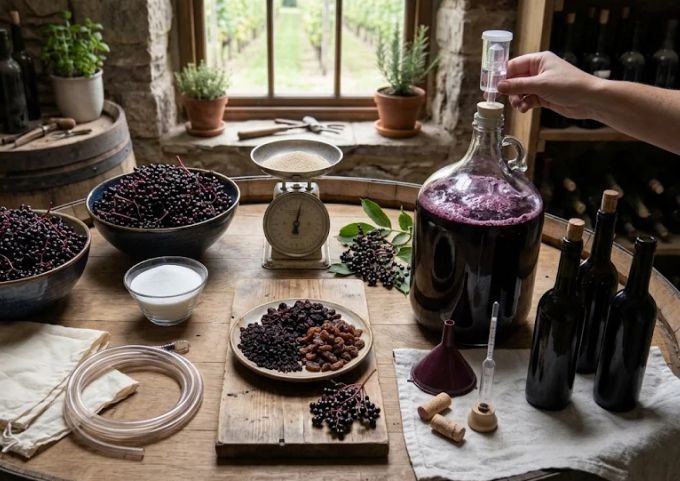
An Ohio State University extension bulletin on amateur winemaking includes a method for turning crushed elderberries into homemade wine. This elderberry wine recipe follows that bulletin’s gallon method, then adds one important change that today’s elderberry safety guidance calls for.
In Eastern Nigeria, the best-known fermented drink is palm wine, tapped from palm trees rather than pressed from any berry.
Elderberry wine has never been made in my home, so this method draws on three university extension guides, each cited throughout.
This elderberry wine recipe makes about one gallon, using crushed berries, water, sugar, wine yeast and standard home winemaking equipment.
The procedure includes heating the fruit, sanitizing, measuring sugar, primary and secondary fermentation, racking, bottling and aging the finished wine.
Anyone curious about the plant, its species and its safety rules can start at the Six Herbs elderberry home page.
Safety note: heat elderberries before fermenting, use only ripe destemmed fruit, and remember that no amount of alcohol is known to be safe during pregnancy.
Always consult your personal healthcare provider before adding new supplements to your routine, especially if you are pregnant, nursing, or taking prescription medications.
Table of Contents
A Safety Change to Older Recipes
Older wine recipes crush raw elderberries straight into the fermenter, but current guidance treats raw fruit as unsafe.
The Oregon State elderberry preserving guide, published in 2024, tells readers to cook elderberries every time before they are eaten.
Its own elderberry vinegar recipe simmers the berries for at least 10 minutes, a useful model for any fermented elderberry drink.
I found no study showing that fermentation alone removes the compounds in raw berries, so this recipe heats the fruit first.
The reasons behind that caution are explained in the problem with raw fruit, including a documented poisoning case.
The Trade-Off With Heat
NDSU Extension’s home winemaking guide, reviewed August 2026, advises avoiding heated fruit because heat releases pectin.
It warns that heating can cause a pectic haze in the finished wine, which looks cloudy but is a quality issue, not a safety one.
Adding pectic enzyme, which the Ohio State bulletin already recommends for fruit wines, helps break that pectin down.
Equipment
Home winemaking needs a few specialist tools, most of them sold in homebrew shops and online.
- A food-grade primary fermenter, such as a 2-gallon bucket with a loose lid, for the first stage.
- A 1-gallon glass carboy or jug with a rubber bung and airlock for the second stage.
- A hydrometer or refractometer for measuring sugar, and a thermometer for checking temperature.
- A siphon tube, a nylon straining bag, a funnel, clean bottles and new corks or caps.
NDSU recommends washing equipment in hot, soapy water, rinsing it and then sanitizing it with Campden tablets or sodium metabisulfite.
The same guide warns never to use bleach or antibacterial soaps containing triclosan on bottles.
Elderberry Wine Recipe Ingredients
The ratios below follow the Ohio State amateur winemaking bulletin, an older extension guide that includes a dedicated elderberry method.
- About 2 quarts ripe, destemmed and crushed elderberries
- About 2 quarts water, matching the volume of crushed fruit
- 1/8 teaspoon potassium metabisulfite
- 1/2 teaspoon yeast nutrient and 1/4 teaspoon pectic enzyme
- 1 packet wine yeast, never baking yeast
- About 2 pounds sugar, adjusted after pressing
Ohio State mixes crushed fruit with an equal volume of water, so two quarts of each gives roughly one gallon of must.
That lines up with NDSU’s general guideline of 3 to 5 pounds of fruit per gallon for fruit wines.
Preparing the Berries
Clean fruit makes clean wine, so the work before fermentation matters as much as the fermentation itself.
- Harvest only fully ripe, dark clusters, using the signs listed in judging berry ripeness.
- Strip all stems and any green berries, using the tricks in fast destemming methods.
- Crush the berries in a clean bucket with a potato masher, without grinding the seeds.
Frozen berries work well, since NDSU notes that freezing and thawing fruit helps release its juice.
Dried berries can stand in when fresh fruit is scarce, as compared in fresh fruit against dried.
How to Make Elderberry Wine Step by Step
These elderberry wine recipe steps follow the Ohio State method, with the added heating step marked clearly.
Heat the Fruit
Bring the crushed berries and water to a simmer and hold it for at least 10 minutes, stirring now and then.
This step is my safety adaptation, modeled on the Oregon State vinegar recipe, and it is not part of the Ohio State bulletin.
Cool the mixture to room temperature in the covered primary fermenter before adding anything else.
Add Sulfite and Enzyme
Stir in the potassium metabisulfite and pectic enzyme, then cover the fermenter loosely.
Ohio State lets the sulfited mixture stand for at least 6 hours, while NDSU waits about 24 hours before adding yeast.
Pitch the Yeast
Sprinkle the wine yeast and yeast nutrient over the must, stir gently and cover the fermenter again.
NDSU warns that skipping yeast nutrient can produce a rotten-egg smell from hydrogen sulfide.
Ferment on the Skins
Ferment on the skins for 3 to 4 days, as Ohio State directs, stirring the cap of fruit down daily.
Ohio State suggests fermenting fruit wines at 70 to 75 degrees Fahrenheit for steady, clean fermentation.
Press and Adjust the Sugar
Strain the must through a nylon bag, pressing gently, and discard the pulp and seeds.
Ohio State then adjusts the fermenting wine to 22 degrees Brix, which it says takes about 2 pounds of sugar per gallon.
Dissolve the sugar in a little of the wine first, then stir it back into the batch.
Secondary Fermentation
Siphon the wine into the glass carboy, fit the airlock and let fermentation finish undisturbed.
NDSU says finished dry wine can reach a specific gravity near 0.990, which confirms that most sugar has fermented.
Rack and Clear
When bubbling stops, siphon the wine off its sediment into a clean container, filling it close to the top.
NDSU advises adding Campden or sulfite at every other racking, and using only one clarifying agent at a time.
Bottling and Aging
Patience improves this elderberry wine recipe more than any additive or piece of equipment.
- Bottle only when the wine is clear and fully stable, as NDSU advises.
- Use new corks, stand bottles upright for a few days, then store them on their sides.
- Keep the bottles in a cool, dark cupboard or cellar, out of direct sunlight.
- Age the wine at least two months, though NDSU notes that one year is better.
Flavor comparisons with other dark fruits appear in the taste of cooked berries.
Rules for Home Winemaking
Making wine at home is legal in the United States within limits, and it comes with clear responsibilities.
NDSU states that federal rules limit a one-adult household to 100 gallons per year, or 200 gallons for two or more adults.
Home wine is for personal use, not for sale, and it is for adults of legal drinking age only.
The CDC page on alcohol and pregnancy states that there is no known safe amount of alcohol use during pregnancy.
For an alcohol-free elderberry drink, try a spiced elderberry syrup or a flower-based summer cordial instead.
Always consult your personal healthcare provider before adding new supplements to your routine, especially if you are pregnant, nursing, or taking prescription medications.
Conclusion
This elderberry wine recipe follows Ohio State’s gallon method, with crushed berries, equal water, sulfite, yeast and sugar.
Heating the fruit follows current advice to always cook elderberries, even though it can cause harmless haze.
Ferment on the skins for 3 to 4 days, press, then finish fermentation under an airlock.
Rack the wine off its sediment, bottle it once clear and age it for at least two months.
Six Herbs covers the whole elderberry season, so read the harvest timing guide next before picking fruit for your first gallon.
Frequently Asked Questions
Should elderberries be cooked before making wine?
Older recipes ferment raw fruit, but Oregon State says to cook elderberries, so this method simmers them.
Adding pectic enzyme then breaks down the extra pectin that heating releases.
How much sugar does elderberry wine need?
Ohio State adjusts the pressed wine to 22 degrees Brix, about 2 pounds of sugar per gallon.
Check the reading with a hydrometer or refractometer before stirring in the sugar.
How long should elderberry wine age?
NDSU Extension recommends aging homemade wine at least two months, and notes that one year is better.
Store bottles on their sides in a cool, dark place while they age.
Can you use dried elderberries in this elderberry wine recipe?
Dried berries can replace fresh ones, though they absorb water and need a longer simmer before fermenting.
Weigh them carefully, and check the sugar reading again after pressing the must.
Disclaimer: Six Herbs is an educational resource, not a medical service. Nothing in this article constitutes medical advice, diagnosis, or treatment. Always consult a qualified healthcare provider before using any herb medicinally, particularly if you are pregnant, breastfeeding, taking medication, or managing a health condition.

Chims Clements writes about herbs from personal experience and careful research. Growing up in Aba, Nigeria, moringa and tamarind were everyday household plants long before they became globally recognised superfoods. He uses both regularly in his home today. At Six Herbs he goes deep on moringa, tamarind, fenugreek, and sea moss — building honest, experience-backed content that separates what tradition knows from what science confirms. The content on this site is for informational purposes only and is not medical advice. Always consult a healthcare provider before using herbs medicinally.