
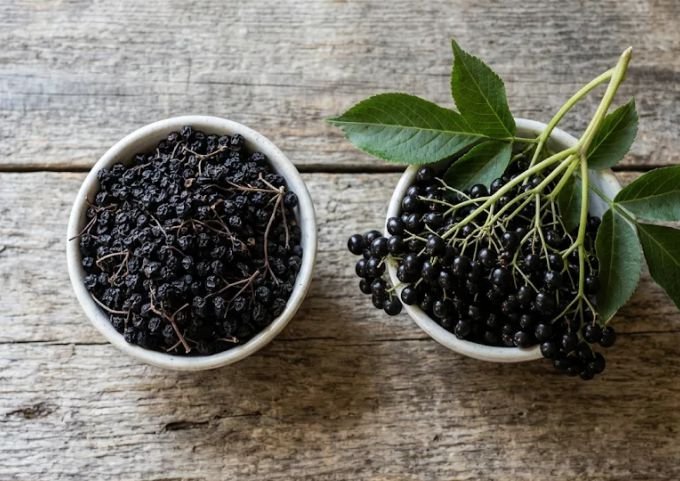
Raw elderberries are about 86 percent water, so drying shrinks a heavy summer harvest into a light jar of shriveled, dark fruit. The dried vs fresh elderberries choice changes recipe amounts, storage plans and how much work happens before cooking.
In our Aba kitchen, fresh moringa leaves go straight into the pot, while dried powder waits in jars for months.
Elderberries are not part of that kitchen, and I have never cooked either form, so this comparison draws on official food data and extension guides.
It weighs dried vs fresh elderberries on shelf life, water content, flavor, preparation time, plant compounds and safety.
It also covers frozen berries, how to swap one form for another and which home recipes suit each one best.
The wider plant story, from species to harvest, is gathered in our main elderberry page.
Safety note: dried, fresh and frozen elderberries all need thorough cooking, because none of these forms is safe to eat raw.
Always consult your personal healthcare provider before adding new supplements to your routine, especially if you are pregnant, nursing, or taking prescription medications.
Table of Contents
What Each Form Is
Fresh elderberries are ripe, destemmed berries used within days of picking, while dried berries have had most of their water removed.
The Norwegian food composition table lists raw elderberries at 86 grams of water per 100 grams.
That leaves about 14 grams of solids in every 100 grams, roughly the amount remaining once the fruit is fully dried.
Frozen berries sit between the two, keeping their water while lasting far longer than fresh fruit in the refrigerator.
Dried vs Fresh Elderberries, Point by Point
Each trait below is compared in two sentences, then a summary table lines up every difference.
Availability
Fresh berries appear only during the late summer harvest, and only for people who grow or forage elder shrubs nearby.
Dried berries are sold year-round, which suits syrup and tea making in any month of the year.
Shelf Life
Colorado State University Extension gives properly stored dried fruits a shelf life of six to 12 months.
Fresh berries are perishable and should be cooked, frozen or dried soon after picking, as covered in timing and handling the harvest.
Water Content and Weight
With 86 percent water in raw fruit, 100 grams of fresh berries contain about 14 grams of solids.
That means recipes written by weight need far less dried fruit than fresh, while volume measures shift as the berries shrink.
Flavor and Texture
Fresh berries cook down into a juicy, tart pulp, releasing liquid quickly once they reach a simmer in the pot.
Dried berries taste more concentrated and chewy, and they need extra water and longer simmering to release their color.
Preparation Time
Fresh berries need picking, destemming, and sorting before cooking, which is the slowest part of working with them.
Dried berries arrive ready to measure, though quality varies, so check every bag for stems and debris before use.
Color and Plant Compounds
A 2018 berry drying study in food chemistry found freeze-dried berries kept the most anthocyanins, while very high drying heat destroyed nearly all of them.
That research tested four other berries, so it suggests rather than proves how elderberries respond to drying.
Safety
The NIH elderberry safety page says uncooked or unripe fruit holds cyanide-producing substances and that heat from cooking removes the toxin.
Drying does not remove that need, so both forms belong in a pot before anyone eats them.
Best Uses
Dried berries suit syrups and teas, where long simmering in plenty of water rehydrates them and draws out their color.
Fresh berries suit jams, pies and wine, where their juice and body matter as much as their flavor.
Comparison Table
This table lines up both forms on the traits above, using the sources cited in each section.
| Trait | Fresh elderberries | Dried elderberries |
|---|---|---|
| Availability | Late summer only | Year round |
| Shelf life | Days, unless frozen | Six to 12 months when stored well |
| Water | About 86 percent | Most water removed |
| Flavor | Juicy, tart | Concentrated, chewy |
| Preparation | Destemming and sorting | Measure and check for debris |
| Anthocyanins | Full starting level | Some loss, depending on drying heat |
| Safety | Must be cooked | Must be cooked |
| Best uses | Jam, pie, wine | Syrup, tea |
Frozen Berries as a Middle Option
Freezing keeps fresh berries usable for months without drying, which suits gardeners with large harvests.
California elderberry freezing guidance recommends spreading destemmed fruit on cookie sheets to freeze, then moving it into bags.
Frozen berries behave like fresh ones in recipes, releasing juice as they thaw and cook.
Freezing whole clusters also makes stems easier to remove, as shown in fork and freezer methods.
Swapping One Form for the Other
Recipes rarely state conversions between dried vs fresh elderberries, so a little arithmetic and tasting will get you close.
Replacing Fresh With Dried
Use far less dried fruit by weight, since fresh berries are mostly water, and add extra liquid to the pot.
Simmer longer than the fresh recipe says, until the berries soften and the liquid turns deep purple.
Replacing Dried With Fresh
Use more fresh fruit by weight and reduce the added water, since fresh berries release their own juice.
Taste as the mixture cooks, because fresh berries can vary in tartness from one harvest to the next.
Weigh Rather Than Scoop
A kitchen scale gives steadier results than cups, because dried berries pack differently from plump fresh ones.
Record what worked in each batch, so your next syrup or jam turns out the same way.
Turning Fresh Berries Into Dried
Gardeners with surplus fruit can dry their own berries rather than buying them, using a dehydrator or low oven.
Temperatures, timings and dryness tests are set out in drying berries at home.
Buying Dried Berries
Quality varies widely between sellers, so a few checks protect both flavor and safety.
- Look for the species name, usually Sambucus nigra or Sambucus canadensis, as explained in comparing elder species.
- Check the bag for stems, leaves and green berries, which should not be present in good dried fruit.
- Choose sealed, dated packaging, and store opened bags in airtight jars away from light and heat.
- Use the label checks in buying herbs with confidence for origin and testing details.
Which Form to Choose
The dried vs fresh elderberries decision usually comes down to where you live and what you plan to make.
- Choose dried berries for year-round syrups and teas, steady pantry supplies and easy measuring.
- Choose fresh or frozen berries for jams, pies and wine, or if you grow elder shrubs yourself.
- Choose either form only if you will cook it thoroughly, as explained in cooking before eating.
Recipes using each form appear in syrup from dried berries, jam from fresh fruit and a fresh berry pie.
Always consult your personal healthcare provider before adding new supplements to your routine, especially if you are pregnant, nursing, or taking prescription medications.
Conclusion
Dried vs fresh elderberries is mostly a question of season, storage and the recipe in front of you.
Fresh berries are 86 percent water and suit jams, pies and wine, while dried berries keep six to 12 months.
Dried fruit suits syrups and teas, and frozen berries offer a middle path for large harvests.
Whichever form you choose, cook it thoroughly before serving the finished recipe to anyone.
Turn to the Six Herbs syrup recipe next and put a jar of dried or frozen berries to good use.
Frequently Asked Questions
Are dried elderberries as good as fresh?
They work well in syrups and teas, though research on other berries shows high drying heat reduces anthocyanins.
Fresh berries suit jams, pies and homemade wine better than dried fruit.
How do I substitute dried elderberries for fresh?
Use far less dried fruit by weight, since raw berries are 86 percent water, and add extra liquid.
Simmer longer than the original recipe says, until the berries soften completely.
Which needs cooking, dried vs fresh elderberries?
Both do, because drying does not make berries safe to eat raw, so simmer dried fruit thoroughly.
Fresh and frozen berries need the same thorough cooking before they are served.
Can you freeze fresh elderberries instead of drying them?
Yes, spread destemmed berries on a tray to freeze, then bag them, and they behave like fresh fruit.
Avoid thawing and refreezing, which lowers berry quality according to grower guidance.
Disclaimer: Six Herbs is an educational resource, not a medical service. Nothing in this article constitutes medical advice, diagnosis, or treatment. Always consult a qualified healthcare provider before using any herb medicinally, particularly if you are pregnant, breastfeeding, taking medication, or managing a health condition.

Chims Clements writes about herbs from personal experience and careful research. Growing up in Aba, Nigeria, moringa and tamarind were everyday household plants long before they became globally recognised superfoods. He uses both regularly in his home today. At Six Herbs he goes deep on moringa, tamarind, fenugreek, and sea moss — building honest, experience-backed content that separates what tradition knows from what science confirms. The content on this site is for informational purposes only and is not medical advice. Always consult a healthcare provider before using herbs medicinally.