
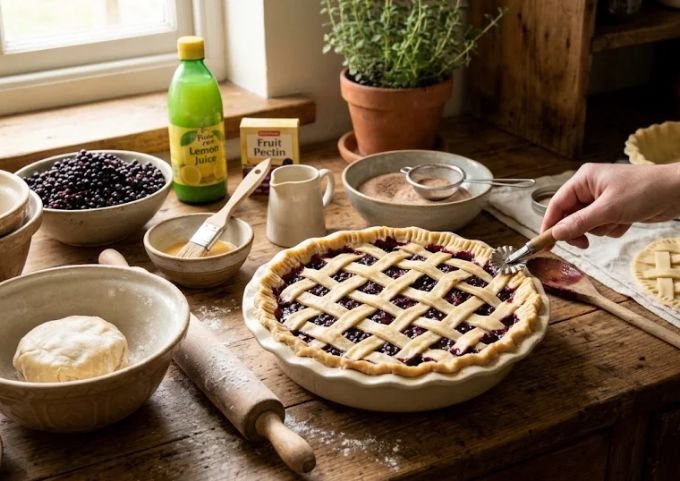
Mother Earth News first printed a grandmother’s elderberry pie in 1973, using just berries, sugar, lemon, cornstarch and pastry. This elderberry pie recipe keeps that simple filling but cooks it on the stove first, so every berry is heated through.
Herbs like uziza and utazi grew in my family compound in Aba, but elderberry pie belongs to North American and European kitchens instead.
I have never baked one, so the amounts come from a dated magazine recipe, and the safety steps come from extension guides.
This elderberry pie recipe uses fresh or frozen berries, a stovetop filling, a vented double crust and a hot oven.
You will also find tips on thickeners, seeds, dried fruit swaps, storage times and serving ideas for guests.
Readers new to the shrub should start at the elderberry introduction page for species and harvest basics.
Safety note: use only ripe, dark, fully destemmed elderberries, and cook the filling thoroughly, since raw berries can cause stomach illness.
Always consult your personal healthcare provider before adding new supplements to your routine, especially if you are pregnant, nursing, or taking prescription medications.
Table of Contents
Why Cook the Filling First
Most berry pies go into the oven raw, but elderberries carry a safety concern that ordinary fruit does not.
An Oregon State University Extension guide from November 2024 says to always cook elderberries before eating them.
It warns that raw berries or juice can cause nausea, and in some cases serious illness.
Simmering the filling on the stove before baking means the berries are cooked through, whatever the crust does in the oven.
Why raw fruit is a problem is explained in what raw berries contain, with the history behind the warnings.
Choosing Berries for Pie
Fresh, fully ripe berries give the best texture, though frozen fruit works nearly as well in a cooked filling.
- Pick clusters only once every berry has turned dark, as shown in spotting harvest-ready clusters.
- Remove every stem, leaf and green berry, since the Oregon State guide says stems and leaves hold higher toxin levels.
- Avoid red elderberries for food, because the same guide notes they may contain higher toxin levels.
- Confirm your plant before picking with how to tell elder apart from similar dark-berried shrubs.
The fastest ways to clean a large harvest are covered in stem stripping for bakers.
Elderberry Pie Recipe Ingredients
The filling amounts come from a recipe Mother Earth News republished in 2022, first printed in its July and August 1973 issue.
- 3 1/2 cups ripe, destemmed elderberries
- 1 cup sugar, or more for a sweeter pie
- 1/4 teaspoon salt
- 2 tablespoons cornstarch or tapioca
- 1 tablespoon lemon juice
- 1 tablespoon butter
- Pastry for a 9-inch double-crust pie
The original method mixes everything raw, while this version cooks the filling first, an adaptation made for safety.
How to Make Elderberry Pie
The steps below for this elderberry pie recipe take about an hour and a half, including cooling time for the filling.
Prepare the Pastry
Line a 9-inch pie tin with the bottom crust, then cover the top crust and chill both while the filling cooks.
Cold pastry holds its form better in a hot oven, and it browns more evenly at the edges.
Mix the Dry Ingredients
Stir the sugar, salt and cornstarch together in a saucepan before adding any fruit.
Mixing them dry first stops the cornstarch from forming lumps once it meets the berry juice.
Cook the Filling
Add the berries and lemon juice, then heat gently while stirring until the juice runs and the sugar dissolves.
Bring the mixture to a steady boil and cook for a few minutes, stirring, until it turns glossy and thick.
Take the pan off the heat, stir in the butter, then let the filling cool for about 20 minutes.
Fill and Top the Pie
Pour the cooled filling into the chilled shell and spread it evenly to the edges.
Lay the top crust over the filling, trim and crimp the edges, then cut several slits for steam.
A lattice top works too, and it shows off the dark purple filling beneath the pastry.
Bake Until Golden
The 1973 recipe bakes the pie at 400 degrees Fahrenheit for 40 to 45 minutes.
Set the pie on a baking sheet to catch drips, and bake until the crust turns golden brown.
Juice bubbling through the vents is a good sign that the filling has stayed hot throughout the bake.
Cool Before Slicing
Let the pie cool on a rack for at least two hours, so the filling sets enough to slice cleanly.
Cutting it warm is fine, though the filling will run across the plate more freely.
Tips for a Better Elderberry Pie
Small adjustments help with the two common complaints about elderberry pie, which are seeds and a runny filling.
Dealing With Seeds
Elderberries are small and seedy, a point Illinois Extension’s elderberry overview makes when describing ripe fruit.
You can press half the cooked berries through a sieve and return the smooth pulp, which softens the texture.
Mixing With Other Fruit
Blending elderberries with sliced apples, blackberries or blueberries stretches a small harvest and adds sweetness.
Keep the total fruit near the same volume, so the thickener amount still suits the filling.
Thickener Choices
Cornstarch gives a clear, glossy set, while quick-cooking tapioca gives a slightly firmer, more textured filling.
Add another teaspoon of cornstarch if frozen berries release extra juice during cooking.
Frozen and Dried Berries
Frozen berries can be added to the saucepan still frozen, though they take a few more minutes to release their juice.
Dried fruit needs soaking and simmering first, and the differences are covered in cooking with dried elderberries.
Storing Elderberry Pie
A pie from this elderberry pie recipe counts as a sugar-based fruit pie, which keeps longer at room temperature than cream pies.
Iowa State’s AnswerLine on pie storage says the USDA considers sugar-based fruit pies food-safe at room temperature for up to two days.
It adds that loosely wrapped fruit pies keep two more days in the refrigerator.
For longer storage, the same page suggests freezing the baked pie uncovered until solid, then wrapping it for up to four months.
Thaw a frozen pie at room temperature for about an hour, and warm it at 375 degrees Fahrenheit if you like.
Serving Ideas
Elderberry pie suits the same toppings as any dark berry pie, from cream to plain yogurt.
- Serve slices warm with vanilla ice cream, as the 1973 recipe suggests, or with lightly whipped cream.
- Pair a slice with a cup of simmered elderberry tea for an all-elderberry afternoon.
- Spoon extra filling onto pancakes, or save a little for a batch of cold-stored jam later in the season.
The flavor of cooked berries is compared with other fruits in how elderberries taste.
Always consult your personal healthcare provider before adding new supplements to your routine, especially if you are pregnant, nursing, or taking prescription medications.
Conclusion
This elderberry pie recipe follows a 1973 filling of berries, sugar, lemon, salt, butter and cornstarch.
Cooking the filling on the stove before baking makes sure every berry is heated through, as extension guides advise.
Bake at 400 degrees Fahrenheit for 40 to 45 minutes, then let the pie cool and set.
Keep it two days at room temperature, two more days chilled, or frozen for up to four months.
Six Herbs covers elderberries from shrub to spoon, so try the jam guide next and turn spare berries into spreads.
Frequently Asked Questions
Do you have to cook elderberries before baking a pie?
Oregon State Extension advises always cooking elderberries, so this elderberry pie recipe simmers the filling first.
The oven then finishes the pastry while keeping the filling bubbling hot.
Can you use frozen elderberries in pie?
Yes, frozen berries go straight into the saucepan, though their extra juice may need more cornstarch.
Cook the filling until it turns thick and glossy before baking the pie.
Why is my elderberry pie runny?
Filling that never reached a full boil, or pie sliced too soon, runs across the plate.
Boil the filling until glossy, then let the baked pie cool for two hours.
How long does elderberry pie last?
Iowa State’s AnswerLine allows sugar-based fruit pies two days out, two more chilled and four months frozen.
Wrap leftovers loosely, and freeze any slices you cannot finish within four days.
Disclaimer: Six Herbs is an educational resource, not a medical service. Nothing in this article constitutes medical advice, diagnosis, or treatment. Always consult a qualified healthcare provider before using any herb medicinally, particularly if you are pregnant, breastfeeding, taking medication, or managing a health condition.

Chims Clements writes about herbs from personal experience and careful research. Growing up in Aba, Nigeria, moringa and tamarind were everyday household plants long before they became globally recognised superfoods. He uses both regularly in his home today. At Six Herbs he goes deep on moringa, tamarind, fenugreek, and sea moss — building honest, experience-backed content that separates what tradition knows from what science confirms. The content on this site is for informational purposes only and is not medical advice. Always consult a healthcare provider before using herbs medicinally.