
Last updated on September 15th, 2026 at 09:16 am
Moringa leaves are the most studied part of the tree, yet much online writing about them stays vague and uncited. This guide covers what the leaves are, how fresh and dried compare, and where real research supports each actual claim.
Moringa leaves are the specific part of the tree most people actually mean when they say moringa.
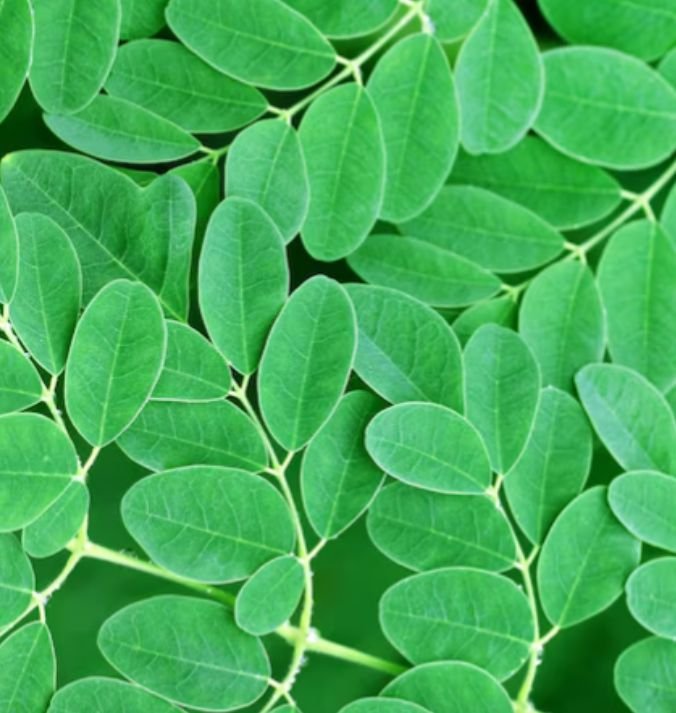
They are small, oval leaflets that grow in feathery clusters along a central stem.
This guide covers what the leaves actually are, botanically and nutritionally, along with practical guidance on choosing, storing, and preparing both fresh and dried forms.
Detailed nutrition numbers and evidence-tiered claims live on our dedicated health benefits guide, so this page stays brief and links there for the full picture.
Specific uses like brewing tea, cooking recipes, and proper drying methods each get their own linked guide as well.
Growing up, we lumped moringa in with other soup greens like utazi, uziza, and oha, plants my grandmother Kanka also kept close at hand.
She used moringa both fresh in soups and dried for tea, never as an occasional treatment.
Kanka always said herbs work best as food, eaten regularly, not reached for only when something feels wrong.
Medical Disclaimer: This article is for informational purposes only and does not replace professional medical advice. Consult a qualified healthcare professional before using herbs or supplements.
Table of Contents
What Are Moringa Leaves
Moringa leaves are the compound, feathery leaves of the moringa tree, also called Moringa oleifera.
Each leaf stem carries many small, oval leaflets, giving the plant its soft, fern-like look.
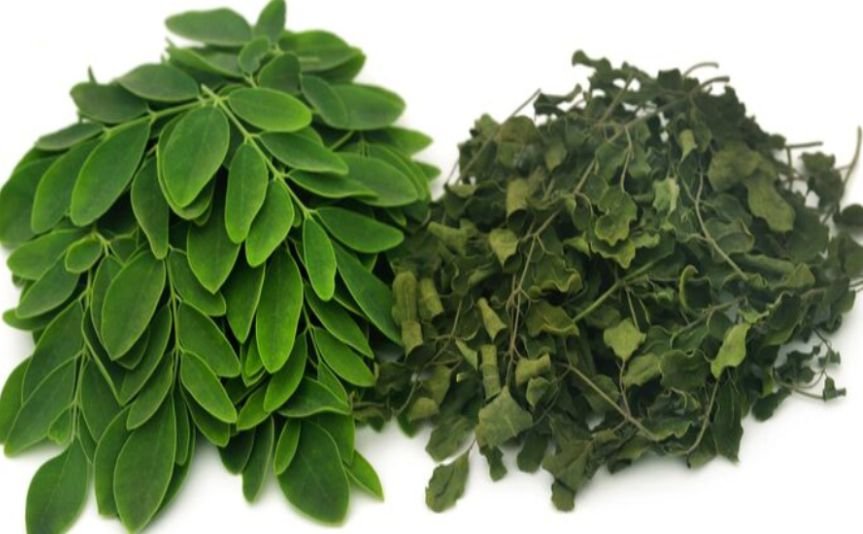
Fresh leaves taste mild and slightly earthy, while dried leaves taste stronger and a bit bitter.
The tree belongs to the Moringaceae family and grows quickly across tropical and subtropical regions.
For the tree itself, including cultivation and structure, see our guide to the moringa tree.
Fresh vs. Dried Moringa Leaves
Fresh and dried leaves are not nutritionally identical, mainly because drying removes water and concentrates certain nutrients.
Fresh leaves carry roughly 9 grams of protein per 100 grams, while dried leaf powder concentrates that up to around 25 to 30 grams.
Vitamin C drops sharply with drying, since heat and air break it down during that process.
Fresh leaves work best in salads, smoothies, and light cooking, while dried leaves suit teas, powders, and long-term storage.
See our complete nutrition and health benefits guide for the full nutrient breakdown across every moringa part.
A Note on Health Claims and Research
Moringa leaves are the most researched part of the plant, with real human evidence for a few specific uses.
A systematic review found 8 human trials on moringa leaves and blood sugar, alongside 33 animal studies, with human results described as promising but inconsistent.
Many other leaf benefit claims circulating online, including several once published on this site, cite no real study at all.
Our research roundup sorts every leaf-related claim by human, animal, or lab-cell evidence.
Where Moringa Leaves Grow
Moringa grows across tropical and subtropical regions, including Africa, India, Southeast Asia, and parts of Central America.
It thrives in well-drained, sandy, or loamy soil, growing best under full sun exposure.
Established trees tolerate drought well, needing little water once their roots mature.
Growing conditions affect nutrient content, which is one reason leaf composition studies show a real range rather than one fixed number.
Harvesting and Storing Moringa Leaves
Harvest leaves from young, healthy branches, cutting or pinching stems carefully to keep the tree intact.
Rinse leaves thoroughly right after harvest to remove dirt, insects, and dust.
Store fresh leaves in a breathable container in the refrigerator and use them within about a week.
For drying, several methods work, including sun-drying, shade-drying, and low-temperature ovens; our dedicated drying guide covers each method in detail.
Store finished dried leaves in an airtight container, away from light and moisture.
Cooking, Tea, and Everyday Use
Fresh leaves work well stirred into soups, stews, omelettes, or salads, added near the end of cooking to protect nutrients. Dried leaves rehydrate easily in warm water and work well in teas, broths, and herbal blends. Start with small amounts, since the flavor can overpower a dish quickly. Our guides on moringa leaf recipes and moringa tea cover each of these uses in far more depth than fits here.
Skin and Hair: What the Evidence Actually Shows
Most online claims about moringa leaf masks and hair treatments cite no real study at all, the same unsourced pattern found throughout this topic generally.
One small, published study did find a traditional moringa leaf face mask significantly improved skin moisture and texture in women aged 35 to 45.
That result came from a very small sample of just six people total.
A 2026 systematic review found only five qualifying studies connecting moringa to hair at all: four in animals, one human case series.
That single human study tested a topical leaf-extract tonic in just four people.
That same review noted seed oil carries the strongest available evidence for hair, not leaf powder or leaf extract.
No real evidence supports oral leaf powder improving hair growth or strength.
See our complete guide to moringa oil for the stronger, though still limited, evidence specific to that form.
Buying Fresh and Dried Leaves
Choose fresh leaves that look vibrant green, with tender stems and no yellowing or spotting.
Avoid leaves that show insect damage, spots, or a wilted, limp texture.
For dried leaves, look for consistent color, a pleasant smell, and no visible mold or dust.
Buying from reputable suppliers or certified organic producers reduces the risk of contamination or pesticide residue.
Safety and Precautions
Moringa leaves are generally safe in moderate food amounts for most healthy adults.
They can interact with blood-thinning, diabetes, or blood pressure medication, so check with a doctor if you take any of these.
Pregnant women and people with low blood pressure should also moderate their intake.
Our complete warnings and risks guide and dosage guide cover this in full detail.
Conclusion
Moringa leaves are the plant’s most versatile and useful part, good fresh in cooking or dried for teas and storage.
Their exact nutrition numbers and evidence-based health claims live on our dedicated health benefits guide, not repeated here in full.
What matters most here is knowing how to identify, store, and prepare the leaves safely, whatever form you choose.
Start with fresh leaves if you cook often, or dried leaves for convenience and shelf life.
Check the linked guides for tea, recipes, and safety before making leaves a daily habit.
Frequently Asked Questions
What are moringa leaves used for?
Moringa leaves are used fresh in cooking, dried for tea and powder, and traditionally for general wellness, though every specific health claim still needs real, actual supporting evidence.
Are fresh or dried moringa leaves better?
Neither is universally better: fresh leaves offer more vitamin C and hydration, while dried leaves concentrate protein, minerals, and other nutrients for even longer storage and daily convenience.
Can I eat moringa leaves every day?
Small daily amounts are generally safe for most healthy adults, though anyone regularly taking blood thinners, diabetes, or blood pressure medication should always check with a doctor first.
How should I store moringa leaves?
Keep fresh leaves in a breathable container in the refrigerator for about a week, and always store dried leaves in an airtight container away from light and moisture.

Chims Clements writes about herbs from personal experience and careful research. Growing up in Aba, Nigeria, moringa and tamarind were everyday household plants long before they became globally recognised superfoods. He uses both regularly in his home today. At Six Herbs he goes deep on moringa, tamarind, fenugreek, and sea moss — building honest, experience-backed content that separates what tradition knows from what science confirms. The content on this site is for informational purposes only and is not medical advice. Always consult a healthcare provider before using herbs medicinally.