
Last updated on September 7th, 2026 at 06:30 pm
Moringa bark shares the same toxic alkaloids as the root, yet gets marketed as a gentle wellness tea far too casually. This guide covers what bark actually contains, what limited research exists, and why no dose is genuinely considered safe.
The moringa I use daily is the leaf, not the bark, and I want to be direct about that.
Moringa bark always contains the same concentrated alkaloids as the root, including spirochin and moringinine, with a documented link to toxicity.
This page covers what bark actually is, what limited research exists, and traditional use, without instructing you to prepare or consume it yourself.
Compared parts, growing notes, and who should absolutely avoid bark round out the rest of this page.
If you want a safe, well-studied everyday moringa option, our guides on moringa leaves and moringa powder are far better.
In my family’s compound, bark was never something anyone stripped for tea or medicine.
If an elder ever mentioned it, it was in the same breath as the root, something respected from a distance rather than something we reached for.
That distinction, made without any scientific explanation, turned out to match what the chemistry now confirms.
Disclaimer: This article is for informational purposes only and does not replace professional medical advice. Consult a qualified healthcare provider before using any herb medicinally, especially if you are pregnant, breastfeeding, or on medication.
Table of Contents
What Is Moringa Bark
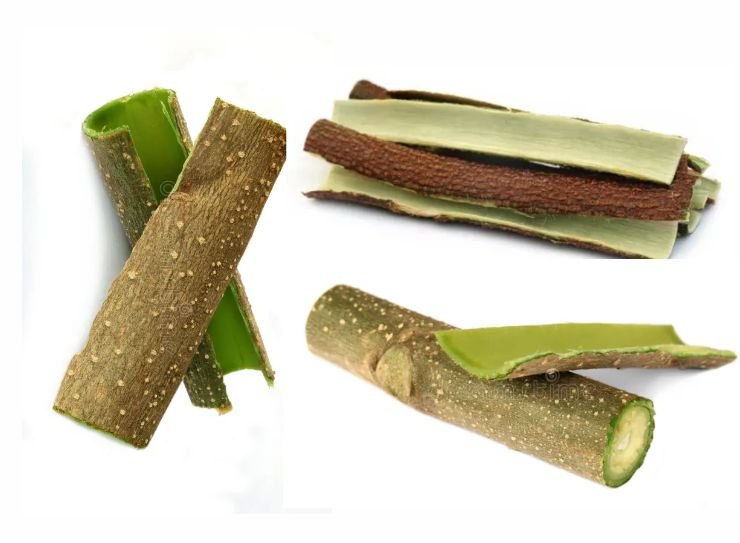
Moringa bark is the rough, fibrous outer covering of the tree’s trunk and branches, gray-brown on the outside and pale beige underneath.
It has a faint earthy smell and a firm texture, clearly distinct from the wood or leaves.
Traditional use has focused on small, careful preparations rather than everyday food. For the tree it grows on, see our complete guide to the moringa tree.
Why Bark Is Different From Other Parts
Bark shares its concentrated alkaloids with the root, specifically spirochin and moringinine.
A 2024 review in Heliyon documents these compounds causing tachycardia around 35 milligrams per kilogram of body weight in animal studies, with kidney injury at higher doses.
Cleveland Clinic states plainly that moringa root and bark are not safe to eat.
These same compounds carry a documented traditional history as an abortifacient, which is why bark does not belong in a regular wellness routine.
What Research Actually Shows
Human trials on moringa bark essentially do not exist anywhere in the literature.
Claims about immunity, digestion, and heart health circulating online almost always borrow from leaf research rather than bark-specific studies.
What limited bark research does exist stays mostly in animal models, examining toxicity rather than proving a benefit worth the risk.
Our complete research roundup sorts every moringa claim by which part was actually tested and in what species.
Traditional Use
In parts of Africa, Asia, and South America, folk healers have historically prepared bark decoctions or poultices for digestive discomfort, fever, and joint pain.
Preparation was deliberate and measured, reflecting an understanding that potency built quickly with more concentrated forms.
This history represents genuine cultural knowledge, developed carefully over generations, not evidence of everyday safety.
This page does not provide preparation instructions, since the documented risks outweigh any traditional rationale for casual use.
Compared to Other Parts of the Plant
Leaves, pods, seeds, oil, and flowers are all considered safe for regular food use, unlike bark and root.
See our guides on moringa leaves, moringa pods, moringa seeds, moringa oil, moringa flowers, and moringa roots, which shares bark’s toxicity profile closely.
Growing and Sustainable Harvesting
When bark is harvested at all, removing more than 20 to 30 percent from a single trunk can seriously stress or kill the tree.
Harvesting during the dry season, when the outer layer separates more easily, also reduces damage.
This page focuses on the tree’s health, not on encouraging bark harvesting for personal use.
For general cultivation and tree care, see our complete guide to the moringa tree.
Who Should Never Use Bark
Pregnant and breastfeeding women should avoid bark entirely, given its documented effects on uterine activity.
Children, older adults, and anyone with liver, kidney, or chronic health conditions face higher risk and should also avoid it.
Anyone on blood pressure, blood sugar, or blood-thinning medication should avoid bark, since these compounds can interact unpredictably.
Our complete warnings and risks guide and dosage guide explain why no dose of bark is considered safe.
Conclusion
Moringa bark is not a gentler cousin of the leaf, and this page has tried to make that clear throughout.
It shares the root’s toxic alkaloids, with no established safe dose or human research behind any claim.
Traditional use reflects real cultural knowledge, developed carefully over generations, but it does not substitute for proven safety.
Leaves and powder deliver similar nutrition with far more research and far less risk attached.
If you still choose to use bark, speak with a doctor first, and avoid it completely during pregnancy or breastfeeding.
Frequently Asked Questions
Is moringa bark safe to consume?
No established safe dose exists; bark shares the root’s toxic alkaloids, and consumer health sources like Cleveland Clinic state it is not safe to eat regularly at all.
What compounds make moringa bark risky?
Bark contains the alkaloids spirochin and moringinine, linked to tachycardia and kidney injury in animal studies, plus a long-documented traditional use as an abortifacient too in several distinct cultures.
Can pregnant women use moringa bark?
No, pregnant women should avoid bark entirely; its compounds have a documented link to uterine activity and a traditional history used specifically to end pregnancies in several distinct cultures.
Should I use moringa bark instead of moringa leaves?
No, leaves are far better researched, much lower risk, and provide comparable nutrition, without the documented toxicity concerns specifically associated with using bark regularly even at all today.

Chims Clements writes about herbs from personal experience and careful research. Growing up in Aba, Nigeria, moringa and tamarind were everyday household plants long before they became globally recognised superfoods. He uses both regularly in his home today. At Six Herbs he goes deep on moringa, tamarind, fenugreek, and sea moss — building honest, experience-backed content that separates what tradition knows from what science confirms. The content on this site is for informational purposes only and is not medical advice. Always consult a healthcare provider before using herbs medicinally.