
Last updated on August 30th, 2026 at 04:11 pm
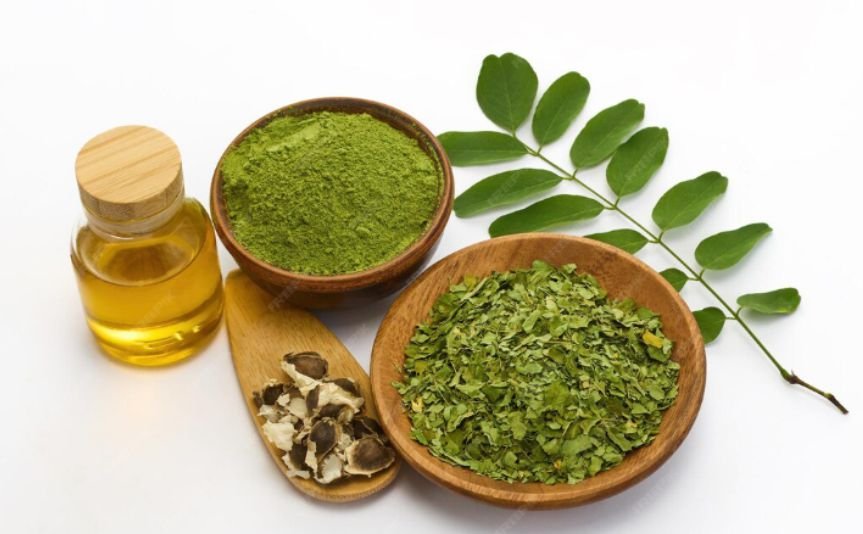
Moringa’s reputation as a nutrient powerhouse is not hype. Its leaves, seeds, and pods carry vitamins, minerals, and plant compounds, studied across dozens of trials. This guide breaks down what moringa contains and what the evidence says about its benefits.
Moringa attracts sweeping marketing claims, but its actual nutritional profile does not need exaggeration to be impressive.
The leaves, seeds, pods, and flowers each carry a distinct mix of protein, vitamins, minerals, and plant compounds, documented across dozens of laboratory and clinical studies.
This guide discusses what moringa actually contains, part by part, before turning to what current research supports for specific health goals like blood sugar, blood pressure, and daily energy.
Some claims here rest on real human trials, others only on animal studies, and this guide says which is which throughout, rather than blurring the two together.
Medical Disclaimer: This article is for informational purposes only and does not replace professional medical advice. Consult a qualified healthcare professional before using herbs or supplements.
Table of Contents
What’s Actually in Moringa
Moringa’s nutrient content varies a great deal by part, growing region, and preparation, which is why blanket claims about “moringa” as a single food can mislead.
Numbers below draw on multiple peer-reviewed compositional studies, and where studies disagree, a range is given rather than a single false-precise figure.
Leaves: fresh vs. dried powder
Fresh leaves and dried leaf powder are not nutritionally interchangeable, since drying concentrates some nutrients while destroying others. More on moringa leaves.
Multiple compositional studies, including USDA food composition data and a 2025 peer-reviewed analysis of moringa parts, report the following approximate figures per 100 grams:
| Nutrient | Fresh leaves | Dried leaf powder |
|---|---|---|
| Protein | ~9.4 g | ~25–30 g |
| Calcium | ~185 mg | ~1,500 mg |
| Iron | ~4.0 mg | ~25–28 mg |
| Potassium | not concentrated | ~1,350 mg |
| Vitamin C | ~52 mg | ~15–18 mg |
| Vitamin A (as beta-carotene) | ~7,560 IU | ~20–40 mg |
| Fiber | ~2 g | ~12–20 g |
The drop in vitamin C after drying happens because vitamin C breaks down with heat and air exposure, while minerals and protein become more concentrated per gram simply because water weight is removed.
Leaf protein includes all nine essential amino acids, which is unusual for a leafy plant food.
A 2024 review in Heliyon also documents leaf-specific phytochemicals including:
- Quercetin and kaempferol, flavonoids studied for antioxidant activity
- Chlorogenic acid, linked in laboratory research to blood sugar regulation
- Beta-sitosterol, a plant sterol studied for cholesterol-lowering potential
- Marumoside A and B, alkaloids unique to the leaf and root
Pods (drumsticks)
Pods carry a different nutrient balance than leaves. Depending on maturity and growing conditions, studies report roughly 100 to 240 mg of calcium per 100 grams, notably higher vitamin C than leaves at times exceeding 110 mg per 100 grams, and substantial fiber.
Protein in pods runs lower than in leaves on a fresh-weight basis, though dry-matter analyses of the pod’s crude protein content run higher, which is why fresh versus dried comparisons must stay consistent to mean anything.
See our full guide to moringa pods for preparation-specific detail.
Powder
Commercial moringa powder is almost always dried, ground leaf, so its nutrient profile matches the “dried leaf powder” column above rather than the fresh leaf.
A serving is typically one to two teaspoons, roughly 2 to 10 grams, which delivers a modest fraction of the per-100-gram figures rather than the full amount.
See our complete moringa powder guide and dosage guide for realistic serving math.
Tea
Brewed moringa tea does not carry the same nutrient load as eating the leaf or powder directly.
Steeping transfers some water-soluble compounds, including part of the vitamin C and certain phenolics, into the water, but fat-soluble vitamin A and much of the fiber and protein stay behind in the leaf material if it gets discarded rather than eaten.
Most compositional research measures dried leaf material directly, not the brewed liquid, so tea-specific nutrient claims deserve extra skepticism.
See our guide to moringa tea for brewing methods that retain more of the plant’s compounds.
Root and bark: not a nutritional source
Unlike the parts above, root and bark are not used for nutrition, and presenting a nutrient table for them would be misleading rather than helpful.
A 2024 review in Heliyon documents that moringa root and root bark contain the alkaloids spirochin and moringinine, along with benzyl isothiocyanate, at concentrations that have caused tachycardia at doses around 35 mg per kilogram of body weight in animal studies and kidney injury at higher doses.
These same compounds have a documented history of traditional use as an abortifacient, and multiple sources describe root and bark as unsafe to consume in any regular amount, particularly during pregnancy.
This post on moringa warnings and risks guide covers this in more detail, and our guides to moringa roots and moringa bark explain their narrow, traditional, non-food uses specifically.
Health Benefits: What the Evidence Actually Shows Backed by Research
Blood sugar and diabetes
A 2021 meta-analysis pooling 44 studies in diabetic rodents found that moringa extract lowered blood glucose.
Separate human trials in people with prediabetes and type 2 diabetes, including a placebo-controlled trial of 73 patients with metabolic syndrome, point in a similar direction on fasting glucose and glycated hemoglobin, though effects stay modest and inconsistent between studies.
This guide on moringa for diabetes covers the individual trials.
Blood pressure
Small human studies, including a placebo-controlled trial of 41 healthy adults and a separate trial in 20 patients with stage-1 hypertension, found that eating cooked moringa leaves lowered systolic and diastolic blood pressure after meals.
A larger systematic review covering 847 participants found the human evidence mixed overall, with most trials small and non-randomized.
See our guide on moringa for blood pressure.
Energy and athletic performance
Small pilot studies, including a 34-person cycling time-trial study and a 16-person study in taekwondo athletes, found improvements in exercise markers after moringa leaf supplementation.
These remain underpowered pilot studies, not established sports-nutrition fact. See our guide on moringa for energy.
Menopause
A controlled study of 90 postmenopausal women given moringa leaf powder daily for three months found measurable improvement on a validated menopause symptom scale, alongside separate research showing improved hemoglobin and vitamin A status in postmenopausal women.
See our guide on moringa and menopause.
Anemia and childhood malnutrition
This is arguably moringa’s best-evidenced practical use. A supplementation program in Tanzania found that moringa leaf powder reduced moderate and severe anemia in children under two by well over half compared to communities without the program.
Programs in Senegal and India have reported similar reductions in vitamin A and protein deficiencies.
This use case has real public-health backing behind it, not just marketing language.
Studied in Humans, but Narrow or Mixed
Immunity
The clearest human evidence comes from a systematic review and meta-analysis in adults living with HIV, which found improved BMI and nutritional markers with moringa supplementation.
This is a specific, immune-compromised population, not evidence for general immune-boosting in healthy people. See our guide on moringa for immunity.
Inflammation
Real human trials exist in specific conditions, including a trial in rheumatoid arthritis patients and the metabolic syndrome trial mentioned above measuring inflammatory markers alongside glucose.
A separate umbrella review found that most inflammatory-marker mechanisms have only been studied in cells and animals.
See our guide on moringa for inflammation.
Digestion
Moringa’s fiber content gives a plausible basis for digestive benefit, and this is standard, uncontroversial nutrition science rather than a moringa-specific finding.
Direct research on moringa and digestion is mostly in mice and poultry. See our guide on moringa for digestive health.
Studied Mainly in Animals or Lab Models, not yet Confirmed in People
Liver health
Every hepatoprotective study found used rats or a liver cell line, not human participants, and one review states plainly that human studies have not been performed for this specific claim.
See our guide on moringa for liver health.
Cholesterol and heart health
Animal studies show moringa extract affecting cholesterol and blood vessel markers, and beta-sitosterol is known to reduce dietary cholesterol absorption in general nutrition research, but dedicated human cardiovascular trials on moringa specifically remain scarce.
Antibacterial and antimicrobial activity
Laboratory studies consistently show moringa leaf and seed extracts inhibiting bacterial growth in petri dishes, which supports its traditional use in wound care, but this has not been tested as a treatment in human clinical trials.
Dosage and Safety
None of this evidence licenses unlimited or careless use of any form.
Our complete dosage guide and warnings and risks guide cover safe amounts and interactions in full.
NCCIH reports that dietary supplements cause an estimated 23,000 emergency room visits per year in the United States, most often tied to interactions or unlisted ingredients.
Pregnant women and anyone on regular medication should read those guides before starting anything new.
Conclusion
Moringa’s nutritional profile is genuinely strong, backed by real measurements of protein, minerals, and antioxidants across its leaves, pods, and powder.
Its health benefits are more mixed: solid evidence exists for blood sugar, blood pressure, energy, menopause, and childhood anemia, while immunity, inflammation, and liver claims need real caution.
None of this makes moringa a cure for anything, and none of it replaces medical care.
Read the specific guide for your goal, check dosage and warnings first, and talk with your healthcare provider before starting.
Frequently Asked Questions
What nutrients does moringa actually contain?
Fresh leaves, dried leaf powder, pods, seeds, and flowers each carry a different nutrient load, with drying concentrating protein and minerals while significantly reducing vitamin C levels overall.
Is moringa actually proven to treat diabetes?
No, moringa is not a proven medical treatment, but human trials in people with prediabetes and type 2 diabetes show modest, consistently reported improvements in fasting blood glucose.
Which moringa health claims have the weakest evidence?
Liver health and digestion claims currently show the weakest evidence on this site, since nearly every supporting study so far used animal models rather than actual human participants.
Should I take moringa every day for these benefits?
Daily use is common in traditional diets, but safe amounts vary by form and current health status, so always check the complete dosage guide before starting anything new.

Chims Clements writes about herbs from personal experience and careful research. Growing up in Aba, Nigeria, moringa and tamarind were everyday household plants long before they became globally recognised superfoods. He uses both regularly in his home today. At Six Herbs he goes deep on moringa, tamarind, fenugreek, and sea moss — building honest, experience-backed content that separates what tradition knows from what science confirms. The content on this site is for informational purposes only and is not medical advice. Always consult a healthcare provider before using herbs medicinally.