
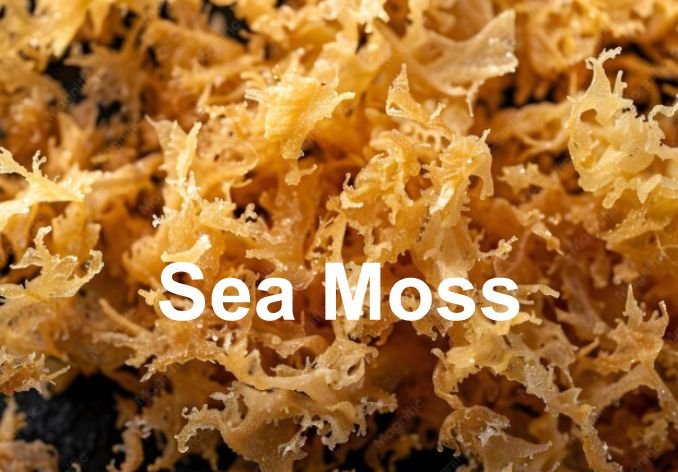
Sea moss has grown from a Caribbean and Irish coastal tradition into a wellness-shelf staple. It’s valued for its mineral content, its gel-like use in the kitchen, and its long folk-medicine history. This guide covers what it actually is, what it can do, the different forms and varieties available, and how to use it safely.
Sea moss shows up everywhere now, from smoothie bowls to skincare shelves, and it’s earned some of that attention honestly.
This guide walks through what this herb actually is, where it comes from, and the actual differences between its varieties.
It covers what published research supports about its nutrition and health effects.
It also covers the forms you’ll find it in, how to choose a quality product, and the safety considerations that matter more than most articles let on.
Each major topic links to a dedicated guide on this site for anyone who wants the fuller picture.
Disclaimer: Six Herbs is an educational resource, not a medical service. Nothing in this article constitutes medical advice, diagnosis, or treatment. Always consult a qualified healthcare provider before using any herb or supplement, particularly if you are pregnant, breastfeeding, taking medication, or managing a health condition, including thyroid conditions.
Table of Contents
What Is Sea Moss?
Sea moss is a general name for several species of red algae that grow along rocky coastlines and are prized for their mineral content and gel-forming properties.
It’s harvested both wild and farmed, then dried, ground, or blended into the various forms sold today.
Its texture comes from natural polysaccharides, compounds like carrageenan or agar depending on the species, which give it a gelatinous quality once soaked and blended.
My Experience With Sea Moss
I didn’t grow up with this herb. It doesn’t grow where I’m from, and it wasn’t part of my childhood kitchen the way tamarind was.
I came to it through curiosity, the way many people do, and kept using it once I started.
That use pushed me to look into the research seriously, not to confirm what I already believed, but to find out where the evidence actually stands.
This guide reflects that.
Origins and Traditional Use
Chondrus crispus, the species most associated with the name Irish moss, has a documented history in 19th-century Ireland.
It was boiled into a soothing remedy for coughs and colds and used in traditional puddings like blancmange.
It also served as a survival food during the Irish Potato Famine of the 1840s, alongside other edible seaweeds, when the potato crop failed.
In the Caribbean, sea moss has a long parallel history in Jamaican and wider West Indian folk medicine, traditionally used to support recovery and general vitality.
Both traditions predate today’s supplement marketing by well over a century.
Varieties of Sea Moss
Sea moss functions as a commercial umbrella term rather than a single species, and the differences between varieties are more than cosmetic.
Gold and Purple Sea Moss
Most gold and purple sea moss sold today, especially wildcrafted varieties from Jamaica or St. Lucia, comes from Gracilaria species rather than true Chondrus crispus.
This matters because Gracilaria contains agar rather than carrageenan and has a different mineral profile.
Color alone doesn’t identify the species, since Gracilaria naturally comes in both gold and purple forms.
For the fuller picture on each, see our guides to gold sea moss and purple sea moss.
True Irish Moss
Chondrus crispus, the original Irish moss, grows specifically in cold North Atlantic waters along Ireland, Canada, and New England.
It’s a different genus from most Caribbean-sourced sea moss, with its own distinct carrageenan-based chemistry.
Wildcrafted vs. Farmed
Wildcrafted moss grows naturally on ocean rocks, absorbing minerals directly from seawater.
Farmed moss grows in more controlled conditions, which can mean a milder mineral profile but also more consistent sourcing and easier contaminant testing.
Nutrition
This herb provides a useful mineral profile, including iodine, potassium, calcium, magnesium, and iron.
It also shows measurable antioxidant activity, documented in peer-reviewed analysis of Chondrus crispus, detailed in this nutritional study of Chondrus crispus and related seaweeds.
One popular claim worth a direct correction: the widely repeated line that sea moss contains “92 of the 102 minerals the body needs” traces back to the herbalist Dr. Sebi rather than any laboratory study, and mainstream nutritional science recognizes roughly 20 minerals as necessary for human health, not 102.
The herb’s actual mineral density doesn’t need that number to be worth discussing.
For the full nutrient breakdown, see our sea moss nutrition facts page.
Benefits
Sea moss’s most credible research support centers on iodine-driven thyroid function, antioxidant activity, and a plausible prebiotic effect from its polysaccharide content.
Most of this evidence comes from lab studies rather than large human trials.
Claims around weight management, skin health, and general immune support are more commonly extrapolated from its nutrient content than tested directly.
For the full breakdown of what’s backed and what isn’t, see our sea moss benefits guide.
Forms of Sea Moss
The herb shows up in several forms, and each one trades off convenience against how much control you have over freshness and preparation.
Dried Whole Moss
The rawest form, sold as dried strands or sheets that need soaking and rinsing before use to remove sand, salt, and debris.
It gives the most control over the final product and is usually the cheapest option, at the cost of extra prep time.
Preparing dried sea moss properly makes a noticeable difference to texture and yield.
Sea Moss Gel
The most common everyday form, made by soaking and blending dried moss into a smooth, jelly-like consistency that keeps in the fridge and mixes easily into drinks, soups, and smoothies.
Because it’s minimally processed beyond blending, it tends to retain more of the original nutrient content than more heavily processed forms.
Making sea moss gel at home is straightforward once you know the ratios.
Powder
Dried, ground moss that dissolves quickly into smoothies, teas, and recipes without soaking or blending, making it the fastest way to add sea moss to a routine.
Sea moss powder trades some of that fresh-gel nutrient retention for convenience.
Capsules
A measured, no-prep dose for anyone who wants to skip texture and flavor entirely, though this convenience means trusting a manufacturer’s sourcing and purity more directly than with self-prepared forms.
What to check before buying capsules matters more here than with any other form.
Gummies
The most processed and most palatable form, blending the extract with sweeteners and flavoring.
They offer consistent intake if taste or texture is a barrier, though added sugar and lower moss concentration per serving are worth factoring in.
What’s actually in sea moss gummies is worth checking before assuming it matches gel or powder dose for dose.
Everyday and Culinary Uses
The gel blends into smoothies and drinks, works as a natural thickener in soups and sauces, and gives puddings and other desserts a gel-like texture without needing gelatin.
It’s also used topically in skincare, applied as a mask or gel for hydration and softness.
Sea Moss Compared to Other Superfoods
Sea moss differs from kelp or wakame mainly in its gelling compound, carrageenan or agar depending on species, rather than the iodine content most seaweeds share.
Compared to spirulina, this moss is lower in protein but comparably mineral-rich.
Chlorella is commonly marketed around heavy-metal detox claims that themselves lack strong clinical support; sea moss’s actual strength is mineral content rather than any detox effect.
Compared to moringa, this herb leans toward mineral density, while moringa offers a broader vitamin and plant-protein profile.
How to Choose Quality Sea Moss
Look for a natural ocean smell without a chemical or bleach-like odor, and color variation consistent with the species rather than an unnaturally uniform or bright color.
Quality sea moss expands properly after soaking and stays free of visible debris.
Reputable sellers disclose species and origin, and ideally publish third-party testing for iodine and heavy metal content, which matters more for safety than wildcrafted-versus-farmed marketing alone.
Sea Moss Safety and Risks
Sea moss iodine varies and can run high, heavy metals raise concern, and case reports link it to thyroid and liver problems, so see our sea moss side effects guide.
How Much Is Reasonable
Dosage depends heavily on the form and the product’s specific iodine content, which varies by species and source.
For a full breakdown of daily amounts by form, see our guide on how much sea moss gel to take per day.
What the Research Actually Shows
Research on this herb is mixed in depth: solid on general mineral content and antioxidant activity, thinner on specific human health outcomes.
It’s largely absent on many of the more dramatic claims attached to it online.
For the fuller research picture, including citations and stated limitations, see our scientific studies on sea moss page.
Storage
Store dried sea moss in an airtight container, in a cool, dry place, away from moisture and direct sunlight.
Refrigerate the gel in a sealed glass container, where it generally stays fresh for two to three weeks.
Discard it if you notice a sour smell, discoloration, or a slimy texture.
Conclusion
Sea moss earns a place in a wellness routine on solid grounds: measurable mineral density, documented antioxidant activity, and a long traditional history in both Irish and Caribbean coastal communities.
What’s sold as the herb today isn’t always the species most articles describe, and its most repeated statistic doesn’t hold up under scrutiny.
Neither fact undermines the actual case for the plant itself.
The core safety conversation is iodine and heavy metal content, addressed by buying from sources that test for both.
Use the linked guides throughout this page for the fuller depth on nutrition, benefits, forms, and safe daily amounts.
Frequently Asked Questions
What exactly is sea moss?
Sea moss is a general term for several species of red algae valued for their mineral content and gel-forming properties, harvested both wild and farmed along rocky coastlines.
Is gold or purple sea moss the same species as Irish moss?
Usually not. True Irish moss is Chondrus crispus, while most commercial gold and purple moss is Gracilaria, a different genus with different chemistry and mineral content.
Is sea moss safe to take every day?
In moderate amounts, yes, for most healthy adults, though its iodine content means people with thyroid conditions or who are pregnant or breastfeeding should check with a provider first.
What’s the biggest safety concern with sea moss?
Variable iodine content and potential heavy metal contamination from its growing water are the two best-documented concerns, both addressed by choosing sources that publish third-party testing.