
Last updated on September 20th, 2026 at 10:49 am
Most sea moss content claims gold color comes purely from sun-drying, as if any sea moss turns gold if you dry it long enough. The fuller picture involves how the plant grows, not just how it’s dried afterward.
This guide covers what gold sea moss actually is, the pigment science behind its lighter color, and how it compares to purple and green varieties.
It also covers processing, authenticity, and honest answers on how color affects nutrition.
For the broader picture of sea moss species and varieties, see our sea moss guide, and for how sea moss compares to other seaweeds generally, see our sea moss vs. seaweed guide.
Disclaimer: Six Herbs is an educational resource, not a medical service. Nothing in this article constitutes medical advice, diagnosis, or treatment. Always consult a qualified healthcare provider before using any herb or supplement, particularly if you are pregnant, breastfeeding, taking medication, or managing a health condition.
Table of Contents
What Is Gold Sea Moss?
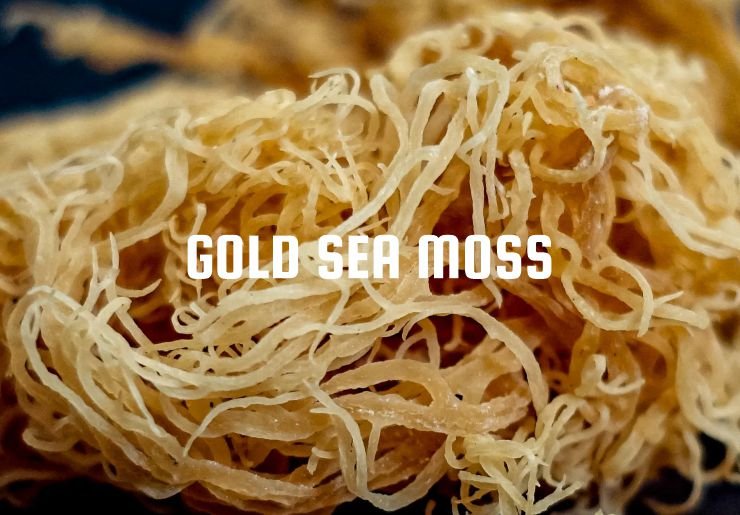
Gold sea moss is a lighter-colored variety of red algae, most commonly sold as wildcrafted Caribbean sea moss.
As with purple sea moss, most commercially sold gold sea moss is Gracilaria, a different genus from true Chondrus crispus, or Irish moss, which grows in cold North Atlantic waters.
Its golden or pale yellow tone is the lightest of the common commercial colors, alongside purple and green.
Why Gold Sea Moss Is Actually Gold
Red algae color depends on the ratio between phycobiliproteins, which produce red and purple tones, and carotenoids, which produce yellow and gold tones.
This is detailed in this review of red seaweed pigment biology.
This ratio isn’t purely a drying artifact. Light exposure during growth actually influences which pigments the algae produce, since red algae growing in higher light tend to favor different pigment ratios than those in deeper, lower-light water.
Extended sun-drying after harvest further lightens the visible color on top of this, breaking down some pigment further.
Gold sea moss most likely reflects both factors together: growing conditions that favor a lighter starting pigment ratio, and drying methods that lighten it further.
Gold vs. Purple vs. Green: What Actually Differs
Gold sea moss typically produces a smoother, lighter gel with a milder taste and scent than purple sea moss, which tends toward a denser gel and stronger marine flavor.
Green sea moss, colored by chlorophyll, can rehydrate faster with a softer texture.
These differences come primarily from pigment ratios and drying method.
They don’t necessarily represent entirely separate plants, though sellers sometimes use “gold,” “purple,” and “Gracilaria” loosely across actually different species.
Does Color Affect Nutrition or Health Benefits?
Gold sea moss doesn’t have a fundamentally different nutrient profile just because of its lighter color.
Core minerals like iodine, magnesium, calcium, and potassium depend far more on growing water quality, depth, and species than on color category.
See our sea moss nutrition facts page for the full mineral picture.
One honest distinction worth naming: purple sea moss’s phycoerythrin has documented antioxidant properties that scale with concentration.
This includes activity measured in Gracilaria specifically, detailed in this study of R-phycoerythrin antioxidant activity in Gracilaria.
Gold sea moss’s lower phycoerythrin content plausibly means somewhat lower antioxidant activity from that specific compound.
This doesn’t make gold sea moss less nutritious overall, just different in this one specific respect, and no study has directly tested this comparison in commercial sea moss products.
How Gold Sea Moss Is Processed
- Wildcrafted vs. farmed. Wildcrafted gold sea moss grows naturally on ocean rocks, while farmed sea moss grows in more controlled conditions with different light exposure. Both can produce authentic gold coloration; the difference is more about consistency than authenticity.
- Drying methods. Sun-drying develops gold sea moss’s lighter shade gradually as pigments break down further and moisture leaves the plant. Machine-drying with controlled heat can speed up processing but sometimes produces a slightly darker or less even color, depending on temperature.
- Cleaning. Gentle washing removes sand, salt, and debris without stripping natural pigment. Over-washing or chemical treatment can strip color unnaturally, producing a flatter, less authentic-looking gold tone.
How to Identify Authentic Gold Sea Moss
Look for pale gold, light yellow, or beige tones with natural, uneven variation rather than a perfectly uniform color.
The texture should feel rough and slightly brittle when dry, with a mild ocean scent rather than a chemical or artificial smell.
An unnaturally bright, glossy, or perfectly even gold color is a common sign of bleaching or overprocessing rather than natural sun-drying.
Safety Considerations
Gold sea moss carries the same core safety considerations as sea moss generally: variable iodine content and the possibility of heavy metal contamination from its growing water.
For the full breakdown, including who should be cautious, see the safety section of our sea moss guide.
Conclusion
Gold sea moss’s lighter color comes from an actual combination of growing conditions and drying method, not purely one or the other.
Carotenoid pigments become more dominant relative to the reddish phycobiliproteins found in purple varieties.
Most commercial gold sea moss is Gracilaria rather than true Chondrus crispus, matching the pattern seen in purple sea moss.
Its core mineral content isn’t meaningfully different from other colors, though it likely carries somewhat less phycoerythrin-related antioxidant activity specifically.
Choosing quality gold sea moss comes down to natural, uneven color and proper sourcing, not assumptions about potency based on shade.
Frequently Asked Questions
What actually makes gold sea moss gold?
A combination of growing conditions that favor carotenoid pigments over reddish phycobiliproteins, plus sun-drying, which further lightens the color after harvest.
Is gold sea moss weaker or less potent than purple sea moss?
Not in terms of core minerals, though it likely has somewhat lower phycoerythrin-related antioxidant activity specifically- a difference in one compound rather than overall potency.
Is gold sea moss a different species from purple sea moss?
Not necessarily; color can vary within a species, though most commercial gold and purple sea moss is Gracilaria rather than true Chondrus crispus to begin with.
How can you tell if gold sea moss is authentic?
Look for pale gold or beige tones with natural, uneven variation, a rough and slightly brittle texture, and a mild ocean scent rather than a chemical smell.

Chims Clements writes about herbs from personal experience and careful research. Growing up in Aba, Nigeria, moringa and tamarind were everyday household plants long before they became globally recognised superfoods. He uses both regularly in his home today. At Six Herbs he goes deep on moringa, tamarind, fenugreek, and sea moss — building honest, experience-backed content that separates what tradition knows from what science confirms. The content on this site is for informational purposes only and is not medical advice. Always consult a healthcare provider before using herbs medicinally.