
Last updated on September 20th, 2026 at 10:32 am
Most articles say purple sea moss gets its color from “natural pigments” without saying which one. The actual answer is phycoerythrin, a well-studied red algae pigment protein, not the anthocyanins many sites incorrectly credit.
This guide covers what purple sea moss actually is, the actual pigment science behind its color, and how it compares to gold and green varieties in texture, taste, and nutrition.
It also covers how to tell authentic purple sea moss from dyed or overprocessed products.
For the broader picture of sea moss varieties and species, see our sea moss guide.
Disclaimer: Six Herbs is an educational resource, not a medical service. Nothing in this article constitutes medical advice, diagnosis, or treatment. Always consult a qualified healthcare provider before using any herb or supplement, particularly if you are pregnant, breastfeeding, taking medication, or managing a health condition.
Table of Contents
What Is Purple Sea Moss?
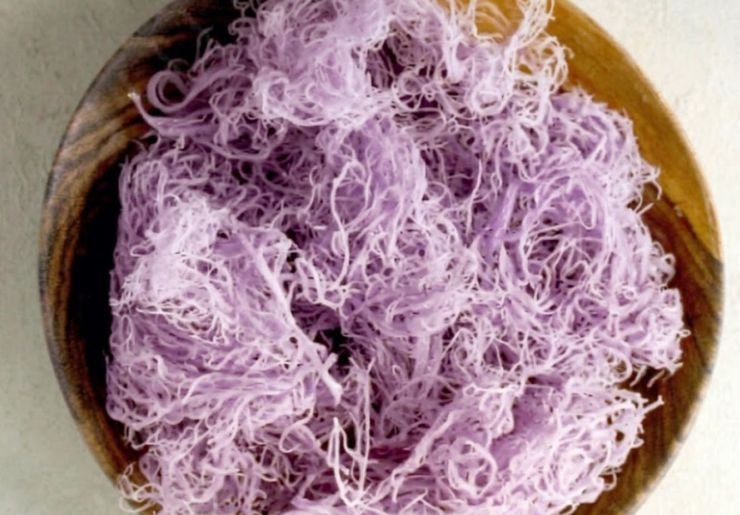
Purple sea moss is a deep-colored variety of red algae, most commonly sold as wildcrafted Caribbean sea moss from sources like Jamaica or St. Lucia.
Most commercially sold purple sea moss is Gracilaria, a different genus from true Chondrus crispus, or Irish moss, which grows in cold North Atlantic waters.
Within Gracilaria and related species, color actually varies from gold to purple to green, driven by pigment differences that are both genetic and environmental.
Why Purple Sea Moss Is Actually Purple
Red algae get their color from phycobiliproteins, a family of pigment proteins that includes phycoerythrin, which produces red, pink, and purple tones.
Purple sea moss’s deeper coloration reflects a higher concentration of phycoerythrin relative to other pigments, as detailed in this review of phycobiliproteins in red seaweed.
Growing conditions actually influence this: lower light exposure in deeper water tends to increase phycoerythrin production, since the pigment helps the algae capture available light more efficiently.
Gold sea moss’s lighter tone comes from carotenoid pigments becoming more dominant, commonly after longer sun exposure during drying. Green sea moss’s color comes from chlorophyll.
Purple vs. Gold vs. Green: What Actually Differs
Color is the most obvious difference, but texture, taste, and gel behavior vary too.
Purple sea moss tends to produce a denser, thicker gel with a stronger marine flavor and scent.
Gold sea moss typically gels more smoothly and has a milder taste, making it a common choice for people new to sea moss.
Green sea moss can rehydrate faster with a softer texture.
These differences come primarily from pigment ratios, growing depth, and drying method.
They don’t necessarily represent entirely separate plants, though buyers should know that “purple,” “gold,” and “gracilaria” are sometimes used loosely across different actual species by different sellers.
Does Color Affect Nutrition or Health Benefits?
This deserves a precise answer rather than the usual “it’s basically the same” or “purple is better” extremes.
Phycoerythrin itself has documented antioxidant properties that scale with its concentration, including in Gracilaria specifically, as detailed in this study of R-phycoerythrin antioxidant activity in Gracilaria.
A higher concentration in purple sea moss is therefore a plausible reason to expect somewhat higher antioxidant activity.
No study has directly compared purple and gold sea moss for antioxidant differences or measurable health outcomes, so this remains a reasonable inference rather than a proven advantage.
Core minerals like iodine, calcium, magnesium, and potassium are influenced far more by growing water and species than by color category.
See our sea moss nutrition facts page for the fuller mineral picture.
How Purple Sea Moss Is Processed
Harvesting
Purple sea moss comes from either wildcrafted collection off ocean rocks or farmed cultivation in controlled marine areas.
Wildcrafted sources tend to show deeper, more variable pigmentation, while farmed sources offer more consistency batch to batch.
Cleaning and drying
After harvest, the moss is washed to remove sand and debris without stripping its pigments, then dried using sun or low-heat methods.
Shade-drying or lower-heat drying tends to preserve darker pigments better than prolonged direct sun exposure, which can gradually lighten color.
Overprocessing risks
Bleaching or harsh chemical treatment can fade purple sea moss’s natural color into something artificially uniform.
Properly processed purple sea moss should show natural, uneven color variation rather than a flat, bright, or dyed-looking purple.
How to Identify Authentic, Quality Purple Sea Moss
Look for deep purple, reddish-purple, or brownish-purple tones with natural, uneven variation rather than a bright, uniform color.
The texture should feel firm and slightly fibrous when dry, with a mild ocean scent rather than a chemical smell.
Avoid products that look unnaturally bright or neon, have a powdery texture, or carry any artificial or chemical odor.
These are common signs of dyeing or overprocessing rather than natural pigmentation.
Safety Considerations
Purple sea moss carries the same core safety considerations as sea moss generally: variable iodine content and the possibility of heavy metal contamination from its growing water.
For the full breakdown, including who should be cautious, see the safety section of our sea moss guide.
Conclusion
Purple sea moss earns its color from phycoerythrin, a documented red algae pigment, concentrated by lower light exposure during growth rather than food dye or marketing invention.
Most commercial purple sea moss is Gracilaria rather than true Chondrus crispus.
Its deeper color plausibly means somewhat higher antioxidant content, though no study has confirmed a measurable health difference from gold or green varieties directly.
Choosing quality purple sea moss comes down to natural, uneven color, firm texture, and an actual ocean scent, not marketing claims about potency.
For the broader safety and sourcing picture, see our full sea moss guide.
Frequently Asked Questions
What actually makes purple sea moss purple?
Its color comes from phycoerythrin, a pigment protein found in red algae, concentrated by lower light exposure during growth rather than any added coloring or dye.
Is purple sea moss a different species from gold sea moss?
Not necessarily; color can vary within the same species, though most commercial gold and purple sea moss is Gracilaria rather than true Chondrus crispus to begin with.
Does purple sea moss have more health benefits than gold?
It may have somewhat higher antioxidant content due to its pigment concentration, but no study has directly compared the two for measurable health outcome differences.
How can you tell if purple sea moss is authentic?
Look for deep, unevenly colored purple tones, a firm and slightly fibrous texture, and a mild ocean scent rather than a bright, uniform color or chemical smell.

Chims Clements writes about herbs from personal experience and careful research. Growing up in Aba, Nigeria, moringa and tamarind were everyday household plants long before they became globally recognised superfoods. He uses both regularly in his home today. At Six Herbs he goes deep on moringa, tamarind, fenugreek, and sea moss — building honest, experience-backed content that separates what tradition knows from what science confirms. The content on this site is for informational purposes only and is not medical advice. Always consult a healthcare provider before using herbs medicinally.