
Last updated on September 21st, 2026 at 10:02 am
Most sea moss content claims sun-drying always preserves more nutrients than heat-drying. Actual seaweed research doesn’t back that up cleanly, and in several studies, sun-drying performed worse due to prolonged exposure and leaching.
Dry sea moss gets treated online as either weaker than gel or somehow more potent, when neither claim really holds up particularly well.
This guide covers what actually happens when sea moss is dried, including which specific nutrients stay stable and which compounds can degrade.
It also covers why the common claim that sun-drying always preserves more than heat-drying doesn’t match the actual research.
And it covers when raw dried moss makes more sense than gel, based on storage, cost, and control rather than any true nutritional advantage.
For the full preparation method, see our dedicated sea moss gel guide.
Disclaimer: Six Herbs is an educational resource, not a medical service. Nothing in this article constitutes medical advice, diagnosis, or treatment. Always consult a qualified healthcare provider before using any herb or supplement, particularly if you are pregnant, breastfeeding, taking medication, or managing a health condition.
Table of Contents
What Dry Sea Moss Actually Is
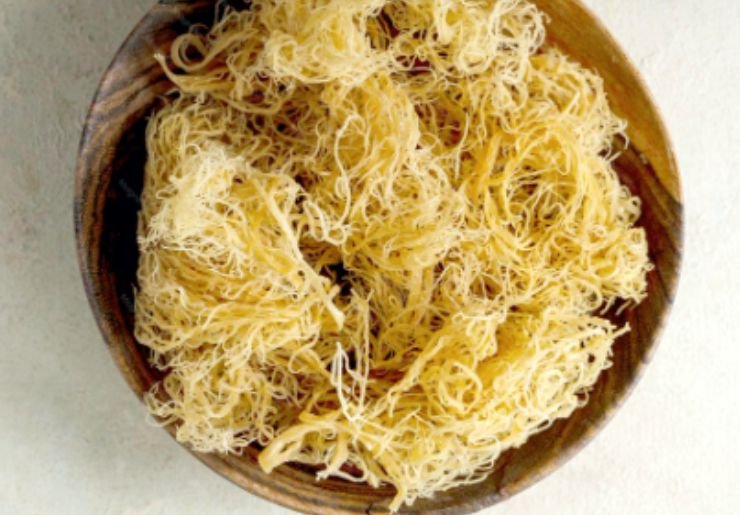
Dry sea moss is sea moss in its raw, dehydrated state after harvesting, cleaned and then dried by sun exposure or mechanical dehydration.
Removing moisture prevents spoilage and extends shelf life, but the moss isn’t ready to eat in this state; it requires soaking before use.
Does Drying Actually Change the Nutrients?
Drying primarily removes water, and stable minerals like iodine, magnesium, calcium, and potassium generally remain present afterward.
What’s less settled is how drying method affects more delicate compounds like vitamin C and antioxidants.
Contrary to the common claim that sun-drying is gentler and better, published research on seaweed drying methods shows mixed results.
A study on Kappaphycus alvarezii, a species commonly sold commercially as sea moss, tested several drying methods.
Sun-dried samples had the lowest antioxidant and enzyme-inhibitory activity among them, detailed in this comparative study of drying methods on Kappaphycus alvarezii.
Other seaweed studies have found similar results, with sun-drying’s prolonged exposure time and leaching effect sometimes reducing vitamin C and mineral retention more than controlled oven-drying does.
The honest takeaway: drying method matters, but “natural sun-drying is always better” isn’t a reliable rule.
Dry Sea Moss vs. Gel: The Actual Differences
The two forms come down to a tradeoff between control and convenience rather than a nutrition gap.
Dry moss has a brittle, wiry texture and stores for months without spoilage, but needs cleaning, soaking for 12 to 24 hours, and blending before use.
Gel is already prepared, soft, and ready to use directly in food or drinks, at the cost of needing refrigeration and a shorter shelf life.
For the full step-by-step method for turning dry moss into gel, see our sea moss gel guide.
When Raw, Dried Moss Makes More Sense
Dry moss suits people who want long-term storage without refrigeration, buying in bulk to reduce cost per serving, or full control over soaking time and final gel consistency.
If convenience matters more than any of that, gel remains the simpler choice.
Common Misconceptions
- “Dry sea moss is weaker than gel.” Its core minerals remain present after drying; once soaked and blended, it forms gel with a broadly similar nutrient profile.
- “Gel is more nutritious than dry moss.” Gel offers convenience, not extra nutrients, since soaking simply rehydrates what was already there.
- “Drying destroys all the benefits.” Drying removes water, not the core minerals, though as covered above, some delicate compounds can be affected depending on the specific drying method used.
How to Prepare Dry Sea Moss
Rinse thoroughly to remove sand and salt, then soak in clean water for 12 to 24 hours until it softens and expands.
Blend with water until smooth to form gel. For the fuller method, including ratios and storage tips, see this post .
Health Considerations
Dry sea moss carries the same core health profile as sea moss generally, covered in full on our sea moss benefits page.
The same iodine and heavy metal safety considerations apply too, detailed on our sea moss safety and side effects.
Conclusion
Drying sea moss changes its texture, storage life, and convenience, not its core mineral content, though the drying method itself matters more than most content admits.
Sun-drying isn’t automatically the gentlest option; several studies on commercially relevant seaweed species found it retained fewer antioxidants than controlled oven-drying.
Whichever form you choose, quality sourcing and proper preparation determine your results more than the form itself.
Frequently Asked Questions
Is dry sea moss as nutritious as gel?
Yes, core minerals remain present after dehydration, and once soaked and blended, dry moss forms gel with a broadly similar nutrient profile to store-bought versions.
Does sun-drying really preserve more nutrients than heat-drying?
Not reliably; several studies on seaweed, including species used commercially as sea moss, found sun-drying sometimes retained fewer antioxidants than controlled oven-drying.
How long should dry sea moss be soaked?
Most guidance recommends soaking for 12 to 24 hours, allowing it to fully expand and soften before blending into a smooth gel.
Which is better, dry sea moss or gel?
Neither is nutritionally superior. The choice depends on your priorities: long-term storage and control favor dry moss, while convenience favors gel.

Chims Clements writes about herbs from personal experience and careful research. Growing up in Aba, Nigeria, moringa and tamarind were everyday household plants long before they became globally recognised superfoods. He uses both regularly in his home today. At Six Herbs he goes deep on moringa, tamarind, fenugreek, and sea moss — building honest, experience-backed content that separates what tradition knows from what science confirms. The content on this site is for informational purposes only and is not medical advice. Always consult a healthcare provider before using herbs medicinally.