
Last updated on September 21st, 2026 at 05:38 am
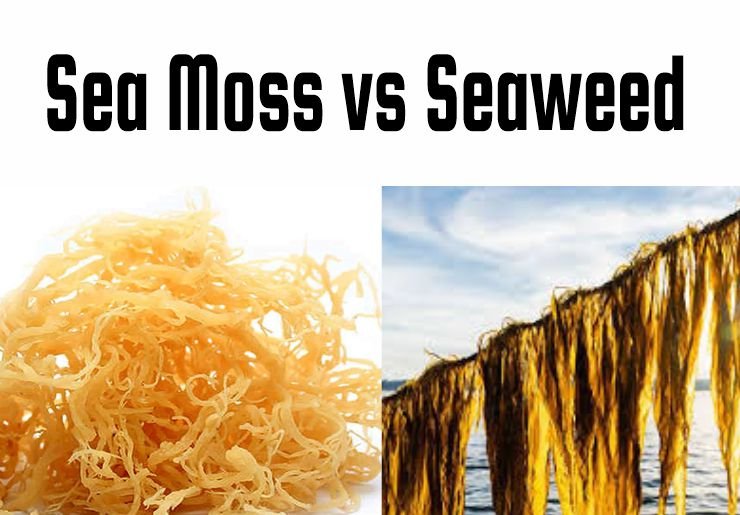
Sea moss and seaweed look alike online, yet the two names describe different things, and that changes how you shop for, cook with, and dose them. Here is the short answer, followed by what the evidence says about each one.
Sea moss and seaweed get lumped together online, and the confusion costs shoppers money and sometimes health.
The plants of my childhood in Aba, such as uziza and alligator pepper, grow on land.
I therefore treat ocean plants as a subject to study rather than one I know from home, which keeps me skeptical of bold claims about either one.
I hold no medical or herbalist license, and I lean on published research and food safety agencies for every claim below.
Sea moss is one of our founding six herbs, and our sea moss section covers it in great depth.
Health note: This guide compares two ocean foods and does not give medical advice. Always consult your personal healthcare provider before adding new supplements to your routine, especially if you are pregnant, nursing, or taking prescription medications.
Table of Contents
The Short Answer: Sea Moss Is a Seaweed
Seaweeds, also called macroalgae, fall into three groups by pigment: brown, green, and red, according to a seaweed iodine meal study.
Sea moss belongs to the red group, while kelp, kombu, and wakame are brown seaweeds and nori is red.
Sellers apply the name sea moss to several red seaweeds, including Irish moss (Chondrus crispus), Gracilaria, and Eucheuma, so always check the label for the species.
The useful comparison, then, is between sea moss and the wider seaweed family.
Sea Moss vs Seaweed at a Glance
- Type: Sea moss is a red seaweed, while “seaweed” covers red, brown, and green species with very different traits.
- Kitchen role: Sea moss is usually sold dried or as a gel for blending, while whole seaweeds such as nori and wakame are eaten as sheets, flakes, or salad.
- Iodine: Irish moss is modest, and kelp can be extreme, so the species matters more than the word on the jar.
- Gel power: Sea moss is prized for the gelling compound carrageenan, which is also used in food manufacturing.
- Evidence: Seaweed diets show promising associations in population studies, while sea moss itself rests on smaller research.
The Differences That Matter
Iodine: The Biggest Gap
Iodine content is the clearest difference, and the numbers below show why the species matters.
The same seaweed-meal study reports a range from 16 micrograms per gram in nori to over 6,000 in sugar kelp, a brown seaweed.
A risk assessment of red seaweeds found Irish moss averaged about 3.86 micrograms per gram.
It calculated that a person would need to eat 286 grams a day to exceed the adult upper limit of 1,100 micrograms.
That result applies to Irish moss, and other species sold as sea moss may differ.
Nutrition: Comparable, Not Magical
A peer-reviewed comparison of dulse, knotted wrack, and Irish moss found Irish moss richest in calcium, iron, manganese, and zinc.
That is a useful detail, yet it describes concentrations in dried seaweed, not what a spoonful of gel delivers.
I found no published analysis supporting the popular claim that sea moss contains 92 minerals, so treat that number as marketing.
In the Kitchen: Blending vs Seasoning
Sea moss is usually cleaned, soaked, and blended into a gel before it goes into smoothies or soups.
Nori and wakame need far less preparation, because they come as sheets or flakes that you can add straight to rice, soups, and salads.
These preparation notes come from kitchen practice, not from research, and they explain why the two suit different meals.
Carrageenan: Gel Power and a Safety Debate
Carrageenan is the gelling polysaccharide from red seaweeds, and it gives sea moss gel its texture.
The European Food Safety Authority’s carrageenan re-evaluation stresses that degraded carrageenan, called poligeenan, is not authorized as a food additive and is not used in food.
Online alarm usually confuses the two, although people with sensitive digestion should still watch how they respond and ask their provider.
What the Health Evidence Says
A review of seaweed intake notes that two large Japanese cohort studies linked seaweed intake with a lower risk of cardiovascular disease.
Cohort studies show association, not proof, and the same review warns that seaweeds also contain iodine and arsenic species with possible adverse effects.
Our summary of sea moss studies explains what has and has not been tested in this specific seaweed.
Safety: Iodine and Heavy Metals
The American Thyroid Association says more than 1,100 micrograms of iodine daily may cause thyroid dysfunction.
It advises against iodine or kelp supplements above 500 micrograms daily and names pregnancy, lactation, and existing thyroid disease as higher-risk situations.
Seaweeds can also carry cadmium and arsenic, and a European Food Safety Authority exposure assessment found that seaweed consumers’ exposure to both was similar to estimates for the whole diet.
Always consult your personal healthcare provider before adding new supplements to your routine, especially if you are pregnant, nursing, or taking prescription medications.
Which Should You Choose?
- Choose sea moss gel if you want a smooth, neutral add-in for smoothies or soups, and read our guide to sea moss gel first.
- Choose nori or wakame if you want a savory seasoning or side dish, and avoid daily kelp or kombu because of its extreme iodine range.
- Choose products that name the species, the harvest region, and their iodine and heavy metal testing, following our advice on choosing herbs carefully.
- Choose small, occasional portions if you use both, and count iodine from every source, including salt, seafood, and supplements.
Conclusion
Sea moss and seaweed are not rivals, because sea moss is simply one red seaweed sold in gel-friendly forms.
The useful questions are which species you are buying, how much iodine it carries, and how it is tested.
Sea moss suits blending, nori and wakame suit cooking, and kelp deserves the most caution.
Neither one is a miracle food, so keep portions modest and involve your provider if you are pregnant or have thyroid disease.
Read the label on your jar, and browse our sea moss guides for next steps.
FAQ
Is sea moss a seaweed?
Yes, because seaweed is the wide group of marine macroalgae, and sea moss is one red seaweed that sellers usually offer dried, as powder, or as a gel.
Which has more iodine, sea moss or seaweed?
It depends on the species, since nori is near 16 micrograms per gram and sugar kelp exceeds 6,000, while Irish moss averaged about 4 micrograms in one study.
Is carrageenan in sea moss safe?
EFSA’s 2018 re-evaluation covered food-grade carrageenan and stressed that degraded carrageenan, called poligeenan, is not authorized as a food additive, so the two names should never be confused.
Can I eat sea moss and seaweed together?
Yes, in small amounts, but count iodine from every source, avoid kelp supplements above 500 micrograms, and ask your provider if you are pregnant or have thyroid disease.

Chims Clements writes about herbs from personal experience and careful research. Growing up in Aba, Nigeria, moringa and tamarind were everyday household plants long before they became globally recognised superfoods. He uses both regularly in his home today. At Six Herbs he goes deep on moringa, tamarind, fenugreek, and sea moss — building honest, experience-backed content that separates what tradition knows from what science confirms. The content on this site is for informational purposes only and is not medical advice. Always consult a healthcare provider before using herbs medicinally.