
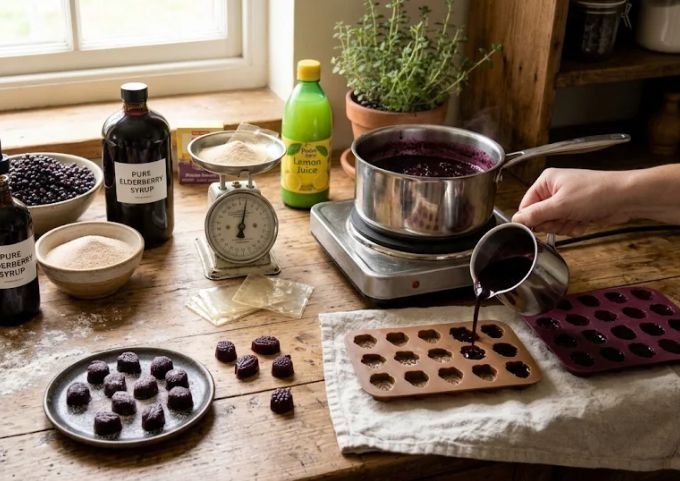
A children’s hospital dietitian sets 1 cup of fruit juice with 3 tablespoons of gelatin, a ratio for chewy homemade gummies. This elderberry gummies recipe swaps that juice for cooked elderberry syrup, then adds firm rules on storage and serving.
In our Aba household, moringa goes into food and drinks rather than candy, and I have never made elderberry gummies myself.
The ratio, steps and storage times below come from a hospital dietitian’s recipe and university extension guidance, clearly cited throughout.
This recipe turns a jar of cooked syrup into bite-size gummies using unflavored gelatin and small silicone molds.
We will also discuss blooming gelatin, avoiding a runny set, flavor options, fridge storage, child safety and how store-bought gummies differ.
For the shrub itself, its safety rules and every other elderberry topic, visit the main Six Herbs elderberry page.
Safety note: make gummies only from fully cooked elderberry syrup or juice, and keep them away from babies and toddlers, who can choke on gummy candies.
Always consult your personal healthcare provider before adding new supplements to your routine, especially if you are pregnant, nursing, or taking prescription medications.
Table of Contents
Start With Cooked Syrup
Gummies are never boiled, so the elderberry base must already be fully cooked before the gelatin goes in.
The NIH’s elderberry overview links uncooked and underripe fruit to substances that release cyanide, and notes that cooking eliminates this toxin.
That makes homemade syrup the natural base, since it has already simmered for a long stretch on the stove.
The method behind that base is set out in making the syrup base, from berries to strained jar.
Dried berries make a good syrup base out of season, as compared in choosing dried berries for syrup.
Never use raw pressed juice here, for reasons covered in why fresh juice is risky.
The Gelatin Ratio
A rainbow gummy recipe from CHOC, published July 2026 by a culinary medicine dietitian, uses 3 tablespoons of unflavored gelatin per cup of juice.
That ratio produces a firm, chewy gummy that holds its form once it leaves the mold.
This elderberry gummies recipe applies the same ratio to cooked syrup, an adaptation rather than a separately tested formula.
| Ingredient | Amount |
|---|---|
| Cooked elderberry syrup, cooled | 1 cup |
| Unflavored powdered gelatin | 3 tablespoons |
| Extra honey or maple syrup | Optional, 1 to 2 tablespoons |
Homemade syrup is already sweet, so taste it first before deciding to add any extra sweetener at all.
Equipment
Most of the tools are ordinary, though silicone molds make the job far easier than metal trays.
- A small saucepan and a whisk for warming the syrup and dissolving the gelatin.
- Silicone gummy molds, set on a baking sheet so they move to the fridge without spilling.
- A dropper or a small spouted jug for filling tiny mold cavities neatly.
- An airtight container lined with parchment paper for storing the finished gummies in the fridge.
Elderberry Gummies Recipe Step by Step
The whole process takes about 15 minutes of work, plus at least half an hour of chilling.
Bloom the Gelatin
Pour about half the cooled syrup into a bowl and sprinkle the gelatin evenly over the surface.
Let it stand for about 5 minutes, the blooming time a University of Guam Extension gummy recipe uses.
The CHOC recipe explains that blooming lets gelatin absorb liquid first, which helps it dissolve smoothly later.
Warm the Remaining Syrup
Heat the rest of the syrup gently in the saucepan, along with any extra sweetener, until it is warm and steaming.
The CHOC dietitian warns never to boil gelatin, because high heat weakens its gelling power and leaves a runny set.
Dissolve and Combine
Remove the saucepan from the burner, then whisk in the bloomed gelatin until no grains remain visible.
Skim off any foam that rises, since bubbles leave small holes in the finished gummies.
Fill the Molds
Fill the molds right away with a dropper, before the mixture starts to thicken in the pan.
Work quickly but carefully, and wipe up drips so the gummies release with clean edges.
Chill Until Firm
CHOC chills its gummies for 20 to 30 minutes, until they feel firm when pressed.
Thicker molds may need longer, so test one gummy before popping out the whole tray.
Fixing Common Problems
Most gummy failures come down to heat, ratio or timing, and each has a simple fix.
Gummies Stay Soft
Boiling the mixture or skimping on gelatin are the usual causes, so measure carefully and keep the heat low.
Remelt a soft batch gently with a little extra bloomed gelatin, then refill the molds.
Mixture Sets in the Pan
Rewarm the pan over very low heat, stirring until the mixture loosens, then continue filling the molds.
Cloudy or Grainy Texture
Grainy gummies usually mean the gelatin did not fully dissolve, so whisk longer before filling the molds.
Flavor Variations
Small additions change the taste of each batch without disturbing the gelatin ratio at all.
- Use a spiced syrup with ginger and cinnamon, following the spice list in the syrup recipe.
- Swap a quarter of the syrup for cooled, strained simmered elderberry brew for a lighter flavor.
- Stir in a teaspoon of lemon juice after removing the pan from the heat for a sharper bite.
For a softer, spreadable result from the same berries, try a pectin-set berry spread instead.
Storing Homemade Gummies
Gummies from this elderberry gummies recipe are perishable, so the refrigerator is the only sensible place to keep them.
CHOC advises storing its gummies in an airtight container in the refrigerator, giving a window of five days to one week.
That is shorter than the two weeks UMaine Extension’s syrup guidance allows, so follow the gummy window rather than the syrup one.
Use freshly made syrup, since how long the syrup stays good shows older jars have used part of their fridge life.
Discard any gummies that turn slimy, sticky, sour-smelling or show spots of mold.
Children, Honey and Choking
Gummies look like candy, which raises three safety points for any household with young children.
- The CDC’s choking hazards list names gummy candies and gum drops among sweetened foods to avoid for babies and toddlers.
- Honey is unsafe for infants, so do not give honey-sweetened gummies to any child younger than 12 months.
- Store gummies out of reach, because children may treat them as sweets and eat several at once.
Check with a pediatrician first if a child will eat these, especially a child taking medication.
Store-Bought Elderberry Gummies
Commercial gummies are sold as dietary supplements, and their labels follow different rules from homemade kitchen recipes.
Read the label for the species, the amount of elderberry and any added sugars or other herbs.
The checks in picking a trustworthy supplement help compare brands on origin and testing.
Always consult your personal healthcare provider before adding new supplements to your routine, especially if you are pregnant, nursing, or taking prescription medications.
Conclusion
This elderberry gummies recipe sets 1 cup of cooked syrup with 3 tablespoons of gelatin, following a dietitian’s ratio.
Bloom the gelatin, warm the syrup gently without boiling, then fill the molds and chill until firm.
Keep gummies in an airtight container in the fridge, using them within five days to one week.
Keep them well away from babies and toddlers, since the CDC lists gummy candies as a choking hazard.
Six Herbs walks through every elderberry step, so start with the syrup recipe and make your gummy base first.
Frequently Asked Questions
Can you make elderberry gummies with raw juice?
No, gummies are never boiled, so this elderberry gummies recipe starts with fully cooked syrup instead.
Proper cooking removes the cyanide-producing compounds found in raw or underripe elderberries.
How much gelatin do elderberry gummies need?
CHOC’s dietitian recipe uses 3 tablespoons of unflavored gelatin with every cup of fruit juice.
This guide applies that same ratio to one cup of cooked elderberry syrup.
How long do homemade elderberry gummies last?
CHOC stores gelatin gummies airtight in the refrigerator for five days to one week.
Throw away any gummies that turn slimy, smell sour or show any mold.
Are elderberry gummies safe for toddlers?
The CDC lists gummy candies as choking hazards for young children, so keep them from toddlers.
Ask a doctor who treats children before an older child tries any elderberry product.
Disclaimer: Six Herbs is an educational resource, not a medical service. Nothing in this article constitutes medical advice, diagnosis, or treatment. Always consult a qualified healthcare provider before using any herb medicinally, particularly if you are pregnant, breastfeeding, taking medication, or managing a health condition.

Chims Clements writes about herbs from personal experience and careful research. Growing up in Aba, Nigeria, moringa and tamarind were everyday household plants long before they became globally recognised superfoods. He uses both regularly in his home today. At Six Herbs he goes deep on moringa, tamarind, fenugreek, and sea moss — building honest, experience-backed content that separates what tradition knows from what science confirms. The content on this site is for informational purposes only and is not medical advice. Always consult a healthcare provider before using herbs medicinally.