
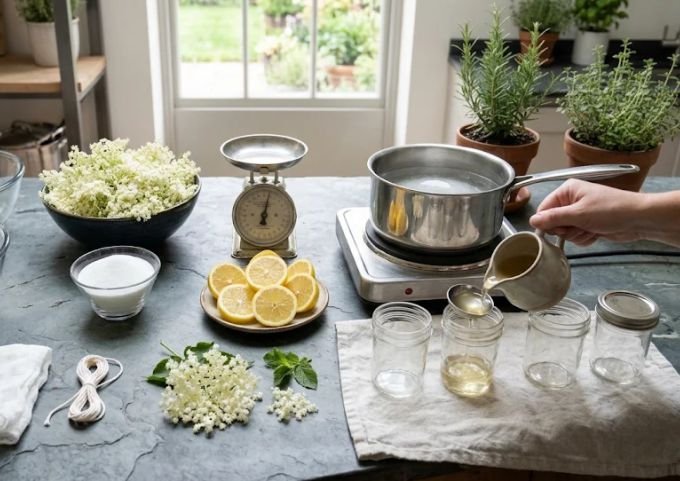
Elder shrubs open flat heads of white blossoms during June and July, weeks before a single berry turns dark. This elderflower cordial recipe captures that brief bloom in a sweet lemon syrup, following a tested method from Penn State Extension.
Uziza and utazi leaves were everyday knowledge in our Aba compound, but elderflowers have never grown there or reached my kitchen.
I have never made this cordial myself, so every quantity and safety rule comes from Penn State and Oregon State extension publications.
This elderflower cordial recipe covers picking flower heads, removing stems, making the syrup, infusing it cold and straining it well.
It goes further to explain why the cordial must stay chilled, how to freeze it and good ways to serve it.
Anyone new to the plant should read the Six Herbs elder overview first for species and safety basics.
Safety note: confirm the plant is elder before picking, remove all stems and leaves, and keep homemade cordial refrigerated or frozen, never canned.
Always consult your personal healthcare provider before adding new supplements to your routine, especially if you are pregnant, nursing, or taking prescription medications.
Table of Contents
Cordial or Syrup?
In Britain, a cordial is a concentrated sweet syrup diluted with water, and American recipes usually call the same drink elderflower syrup.
Both names describe flowers steeped in sugar syrup with lemon, then strained and mixed with still or sparkling water.
The contrasts between blossom and fruit, from timing to kitchen use, are set out in comparing blossoms and berries.
Identify the Plant First
White flower clusters appear on several plants, and some of them are deadly, so identification comes before anything else.
A UF/IFAS Extension comparison notes that elderberry is a woody shrub, while water hemlock is herbaceous with a hollow main stem.
Elder stems contain pith when snapped, and elder leaves grow in opposite pairs, while water hemlock leaves alternate.
The same article warns that every part of water hemlock can kill you, with the roots being the most deadly.
Never pick flowers from any plant you cannot name with certainty, and study identifying elder plants before your first harvest.
A fuller list of dangerous plants appears in plants that resemble elder.
When to Pick Elderflowers
Penn State Extension’s elder guide, updated February 2025, says the white flower clusters bloom from June through July.
The guide advises harvesting first thing in the morning, after the dew dries and before the day’s heat warms the flowers.
- Choose fully open clusters that are still bright white or cream in color.
- Skip any heads that have started to turn brown, which signals they are past their best.
- Cut each whole flower head where it meets the main stem, then carry it gently in a basket.
Leave Some for Berries
Every flower picked is a berry cluster lost, so plan your harvest if you also want fruit later.
Wisconsin Extension’s elderberry page says research shows growers can take up to 15 to 20 percent of flowers without harming fruit production.
Ripe berry timing later in summer is covered in reading fruit for ripeness.
Elderflower Cordial Recipe Ingredients
These amounts come from the Penn State recipe, which Oregon State Extension also republishes in its elderberry safety guide.
- 2 cups water
- 2 cups granulated white sugar
- 2 large lemons, one zested and juiced, one thinly sliced
- 15 to 20 elderflower clusters
- 1 1/2 teaspoons citric acid
Citric acid is sold in canning aisles and online, and it gives the cordial its sharp, clean finish.
How to Make Elderflower Cordial
This elderflower cordial recipe takes about 20 minutes of work, followed by one to three days of infusing in the refrigerator.
Clean Everything
Wash the work surface, pot, container and utensils thoroughly before the flowers come indoors.
Shake, Do Not Rinse
Shake each flower head to remove insects, dirt and loose debris, as both extension guides direct.
Penn State advises against rinsing the flowers, because water washes away much of their flavor.
Remove the Stems
Snip or rub the tiny flowers away from the green stems into a bowl, discarding stray stem and leaf pieces.
The Oregon State elderberry safety guide explains that stray leaf and stem pieces contain higher toxin levels.
The same compounds in stems and unripe fruit are discussed in toxins in raw elder parts.
Make the Syrup
Dissolve the sugar in the water in a medium pot, bring it to a boil, then simmer for 10 minutes.
Stir in the zest and juice of one lemon, along with the citric acid, until it dissolves.
Infuse
Place the flowers and the second, thinly sliced lemon in a clean covered container.
Pour the syrup over them, cover the container and let it infuse in the refrigerator for one to three days.
Taste after the first day, since a longer steep gives a stronger floral flavor.
Strain and Bottle
Strain the cordial through a colander lined with cheesecloth, pressing gently on the flowers to release the syrup.
Pour it into clean bottles or jars, write the date on every label, then refrigerate or freeze it straight away.
Storing Elderflower Cordial
Homemade cordial is not shelf stable, which is the most important rule in this elderflower cordial recipe.
Penn State states that syrup made from its recipe cannot be safely consumed after room-temperature storage or canning.
- Refrigerate bottles and use the cordial within a few weeks, as both extension guides advise.
- Freeze extra cordial in small containers or ice cube trays for use later in the year.
- Discard any bottle that turns cloudy, fizzy, slimy or develops mold or a sour smell.
The same cold-storage logic applies to berry syrup, as covered in fridge times for elder syrups.
Ways to Serve It
Penn State suggests adding the syrup to seltzer water for a refreshing summer drink.
- Dilute about one part cordial to five parts still or sparkling water, then adjust to taste.
- Drizzle it over cake, or stir a spoonful into plain yogurt, as the Penn State guide suggests.
- Use it to flavor sorbets and homemade ice cream, two more uses the guide lists.
- Freeze diluted cordial into ice pops for a cold treat on hot summer afternoons.
The one-to-five dilution is my suggestion for taste, not a published standard, so mix a small glass first.
Drying Elderflowers for Later
Flowers can also be dried for winter use, which suits anyone without freezer space for cordial.
Oregon State recommends drying whole clusters on parchment paper at 80 degrees Fahrenheit or less to preserve flavor.
Elderflower tea is mentioned briefly in brewing elder teas, alongside the berry method.
Always consult your personal healthcare provider before adding new supplements to your routine, especially if you are pregnant, nursing, or taking prescription medications.
Conclusion
This elderflower cordial recipe follows Penn State’s tested method, using flowers, sugar, water, lemons and citric acid.
Identify elder with certainty, pick fresh white clusters in the morning and remove every single stem.
Infuse the syrup in the refrigerator for one to three days, then strain it and bottle it straight away.
Keep the cordial refrigerated for a few weeks or frozen, and never can it or store it warm.
Six Herbs follows elder from blossom to berry, so read the flower and berry comparison next before your summer harvest.
Frequently Asked Questions
Should elderflower stems be removed?
Yes, Oregon State Extension notes that stray stem and leaf pieces contain higher toxin levels.
Rub the tiny blossoms off over a bowl, discarding any green bits.
Should you wash elderflowers before making cordial?
No, Penn State advises shaking off insects and dirt, because rinsing removes much of the flavor.
Pick from clean plants growing well away from busy roadsides and sprayed areas.
How long does homemade elderflower cordial last?
Penn State says to refrigerate the syrup and use it within a few weeks, or freeze it.
The guide warns it cannot be safely consumed after room-temperature storage or canning.
Can you make an elderflower cordial recipe without citric acid?
The Penn State recipe includes citric acid, so leaving it out creates an untested version.
Keep any changed version refrigerated, and use it up within a few days.
Disclaimer: Six Herbs is an educational resource, not a medical service. Nothing in this article constitutes medical advice, diagnosis, or treatment. Always consult a qualified healthcare provider before using any herb medicinally, particularly if you are pregnant, breastfeeding, taking medication, or managing a health condition.

Chims Clements writes about herbs from personal experience and careful research. Growing up in Aba, Nigeria, moringa and tamarind were everyday household plants long before they became globally recognised superfoods. He uses both regularly in his home today. At Six Herbs he goes deep on moringa, tamarind, fenugreek, and sea moss — building honest, experience-backed content that separates what tradition knows from what science confirms. The content on this site is for informational purposes only and is not medical advice. Always consult a healthcare provider before using herbs medicinally.