
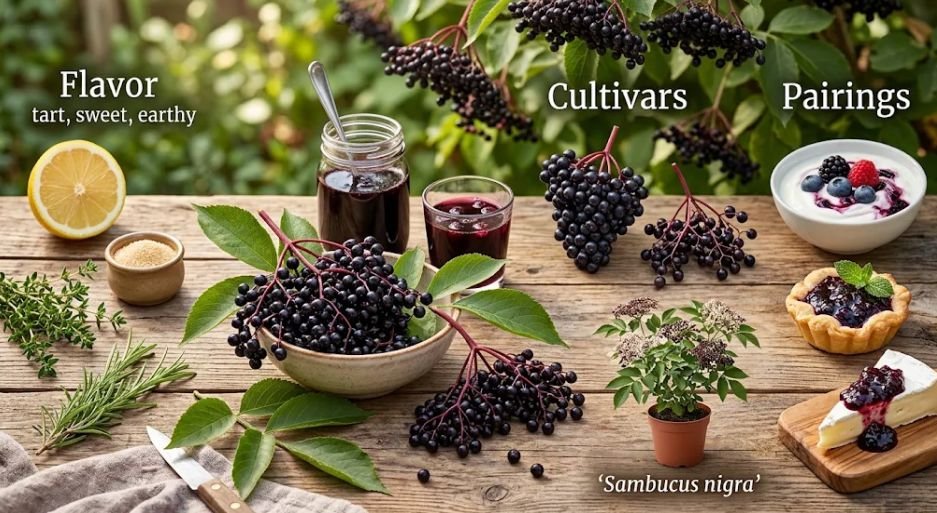
Trained tasters at the University of Missouri needed 24 separate terms to describe juice from six elderberry cultivars. This vocabulary is the reason what do elderberries taste like has no one-word answer, as tartness, sweetness and bitterness shift between bushes.
Nigerian cooks wash and squeeze bitter leaf until its harsh edge fades, proof that preparation can change how a plant tastes.
Elderberries follow a similar rule, because every safe mouthful comes cooked, sweetened or blended rather than straight from the shrub.
Borrowed taste notes can mislead, so the descriptions lean on trained panels and extension researchers rather than anyone’s memory, mine included.
What do elderberries taste like in juice, syrup, jam and wine, and why do two jars from different shrubs taste so different?
Recipes, safety rules and growing advice for the plant all branch out from our elderberry overview.
Safety note: taste elderberries only after cooking, because uncooked or underripe fruit can bring on nausea, vomiting and diarrhea.
Always consult your personal healthcare provider before adding new supplements to your routine, especially if you are pregnant, nursing, or taking prescription medications.
Table of Contents
What a Tasting Panel Found
The clearest answer to what do elderberries taste like comes from a 2016 study of juice pressed from Missouri-grown American elderberries.
The HortScience study led by Michele Warmund tested juice from six cultivars, including Bob Gordon, Ozark, Wyldewood and York.
Panelists described the juices as strongly marked by a processed aroma, along with processed, elderberry, fruity and sweet flavors.
They also picked out notes of apple, beet, caramelized sugar, fermented fruit and pomegranate, plus an astringent, mouth-drying feel.
Those comparisons give newcomers a fair starting point, since most people already know beet, pomegranate and cooked apple.
Why Cooked Flavor Is the Only Flavor That Counts
Raw elderberries are not a safe snack, so the taste most people know is the taste of cooked fruit.
The Oregon State elderberry guide calls the berries very tart and says to cook them every time.
The processed and caramelized notes in the Missouri juice likely reflect heat, while sugar softens the sharp edge.
The safety reasons for cooking are covered in what happens with raw berries, including the symptoms to watch for.
Five Things That Change the Taste
Two batches of elderberry syrup can taste quite different, and five factors account for most of that gap.
Cultivar
The Missouri panel found that York juice scored high for sweet aromatics and sweet flavor, with less bitter aftertaste and astringency.
Juices from the six cultivars also differed in fruity, floral, bitter, sour and sweet ratings, so the named variety matters.
Subspecies
UC ANR’s blue and black comparison passes on informal descriptions of blue elder as brighter and grassier, and American black elder as smoother, with more caramel.
The same page stresses that no formal tasting study has compared them directly, so treat those notes as a rough guide.
Growing differences between the black-fruited types appear in how the two subspecies compare.
Ripeness
Extension guides tell pickers to wait for fully dark clusters, partly because green berries hold higher levels of the harmful compounds.
Leaving fruit to ripen fully also gives recipes the deep color that elderberry dishes are known for.
Fresh or Dried
Drying removes most of the water, which concentrates flavor and means the fruit needs a longer simmer in more liquid.
How each form behaves in the pot is compared in fresh and dried berry swaps.
Sugar and Acid Balance
UC ANR reports soluble solids of about 10.9 to 13.2 grams per 100 grams of fresh American black elderberries.
Citric acid ranges from 0.45 to 1.13 grams per 100 grams in the same data, so cooks adjust sweetness by taste.
What Do Elderberries Taste Like Next to Familiar Fruits?
These comparisons combine the Missouri panel’s descriptors with other published notes, so they describe tendencies rather than exact matches.
| Familiar flavor | How it relates to cooked elderberry | Source |
|---|---|---|
| Pomegranate | Named as a flavor note in juice | Missouri panel, 2016 |
| Beet | Named as a flavor note in juice | Missouri panel, 2016 |
| Cooked apple | Named as a flavor note in juice | Missouri panel, 2016 |
| Caramel | Named for juice, and in informal notes on American black elder | Missouri panel; UC ANR |
| Grape | Blends well, per a Czech juice study | Vítová and colleagues, 2015 |
Pairings That Work
Cooks rarely serve elderberry alone, and a few partners show up again and again in tested recipes and studies.
Grape Juice
A 2015 study of mixed elderberry juices favored a grape and elderberry blend, describing it as pleasantly sweetish with elderberry flavor.
The authors settled on a ratio of seven parts elderberry to three parts grape juice by volume.
Warm Spices
Cinnamon, clove and fresh ginger appear in the extension syrup recipes behind our spiced syrup method, rounding out the tart fruit.
Honey and Sugar
Honey adds its own floral sweetness, while plain sugar lets the fruit flavor lead, as in a classic double-crust pie.
Lemon
A squeeze of lemon sharpens cooked elderberry, especially in jams and teas where the flavor can turn flat.
Elderflowers taste quite different from the berries, a contrast laid out in blossom and berry differences.
Taste in Common Products
Ask what do elderberries taste like in a finished product, and the answer depends on processing and partners.
- Syrup tastes sweet and spiced, since honey and cinnamon soften the fruit’s tart edge.
- Jam keeps more of the seedy texture and a jammy, cooked-berry depth.
- Wine carries the fermented note the Missouri panel recorded, and bottles change as they age in a homemade elderberry wine.
- Tea from dried berries tastes lighter and less sweet than syrup unless honey is added.
Always consult your personal healthcare provider before adding new supplements to your routine, especially if you are pregnant, nursing, or taking prescription medications.
Conclusion
What do elderberries taste like comes down to tart, fruity and slightly astringent flavors that cooking and sugar soften.
A Missouri panel used 24 terms, including apple, beet, caramelized and pomegranate notes, plus an astringent finish.
Cultivar, subspecies, ripeness and the choice of dried or fresh fruit all shift the balance between tart and sweet.
Grape juice, warm spices, honey and lemon make reliable partners in syrups, jams and drinks.
Six Herbs has tested recipes for every style, so start with the spiced syrup and taste the difference for yourself.
Frequently Asked Questions
Do elderberries taste sweet or sour?
Both, since Oregon State calls them very tart while a Missouri panel still noted sweet flavors.
The cultivar and the amount of added sugar decide which side wins in a recipe.
Is it safe to taste raw elderberries?
No, raw and unripe elderberries can cause nausea and vomiting, so taste them only once cooked.
The caramelized notes trained tasters described came from processed juice, not raw fruit.
What do elderberries taste like compared to blueberries?
The Missouri panel likened elderberry juice to pomegranate, beet and apple, with a noticeable astringent finish.
Expect tartness and a drying finish, which sugar and spices soften in recipes.
Which elderberry variety tastes the sweetest?
In the Missouri study, York juice rated high for sweet flavor, with less bitter aftertaste.
Results from one Missouri trial may differ in other climates and growing seasons.
Disclaimer: Six Herbs is an educational resource, not a medical service. Nothing in this article constitutes medical advice, diagnosis, or treatment. Always consult a qualified healthcare provider before using any herb medicinally, particularly if you are pregnant, breastfeeding, taking medication, or managing a health condition.

Chims Clements writes about herbs from personal experience and careful research. Growing up in Aba, Nigeria, moringa and tamarind were everyday household plants long before they became globally recognised superfoods. He uses both regularly in his home today. At Six Herbs he goes deep on moringa, tamarind, fenugreek, and sea moss — building honest, experience-backed content that separates what tradition knows from what science confirms. The content on this site is for informational purposes only and is not medical advice. Always consult a healthcare provider before using herbs medicinally.