
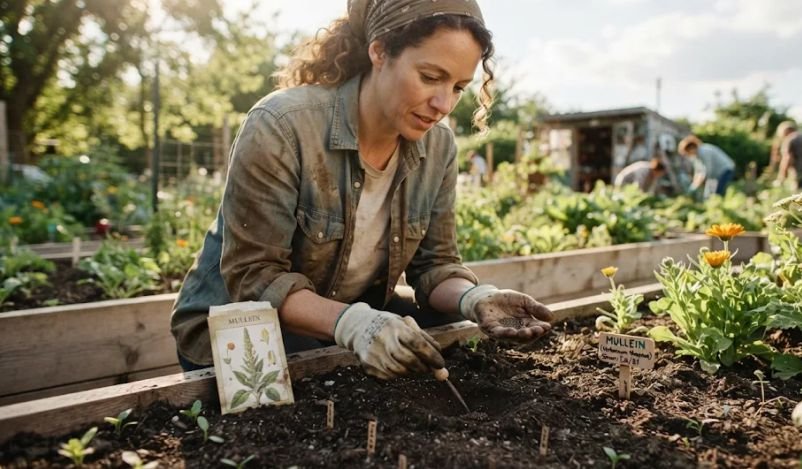
Kansas State’s herb bulletin reports mullein seed germinating in about two weeks at roughly 80 percent, sown without any soil covering. That light-touch sowing is the very first lesson in how to grow mullein from seed in any sunny garden.
Mullein ranks among the easier herbs to raise, because its tiny seeds want sun, lean soil and very little fuss.
Crop work around Abia State has occupied me since 2010, but mullein seed has yet to pass through my hands, so every step here is sourced.
Kansas State’s herb trials, the RHS and US Forest Service research supply all the sowing, spacing and soil advice.
Learning how to grow mullein from seed gives a clean, known source of leaves, free from roadside pollution entirely.
General plant background, including its history and folk uses, sits in mullein from root to flower.
Safety note: mullein spreads readily and is a listed weed in some places, so check local rules, and ask a doctor before medicinal use.
Always consult your personal healthcare provider before adding new supplements to your routine, especially if you are pregnant, nursing, or taking prescription medications.
Table of Contents
Quick Growing Facts of The Mullein Plant
These figures sum up the growing basics, drawn from Kansas State and RHS guidance for home growers.
| Factor | Recommendation | Source |
|---|---|---|
| Sowing depth | Surface sow, do not cover seed | Kansas State |
| Germination | About two weeks, roughly 80 percent | Kansas State |
| Light | Sprouts best exposed at the soil surface | USDA Forest Service |
| Sowing time | Spring outdoors, or start indoors and transplant in May or June | RHS, Kansas State |
| Spacing | 24 inches apart in the row | Kansas State |
| Soil | Well-drained, pH 6.5 to 7, low fertility | Kansas State |
| Position | Full sun | RHS |
| Hardiness | H6, -20 to -15°C | RHS |
| Flowering | Second year, after winter cold | UW-Madison |
Choosing a Site
Mullein needs sun above all, and the RHS great mullein page recommends full sun on an east, south or west-facing sheltered site.
Shade is a poor bet, since the federal FEIS species account reports shaded adults usually dying or failing to set seed.
The RHS suggests herbaceous borders and gravel gardens, where tall spikes stand out.
A spot away from lawns helps too, since established grass sharply cuts seedling growth, the same federal account notes.
Wild plants favor open, disturbed ground with little competition, as mullein’s natural habitat describes.
Preparing the Soil
Kansas State recommends well-drained soil with a pH of 6.5 to 7, and notes that mullein needs little fertility.
The RHS goes further, recommending poor, alkaline soil, and lists chalk, loam or sand as suitable.
Both sources agree that rich, heavily fed beds are unnecessary for this plant.
Loosen the top layer, rake it smooth and remove weeds, so tiny seeds can touch bare soil.
Sowing the Seed
Mullein seed is very small, and Kansas State’s mullein herb bulletin says it should not be covered with soil.
Light seems to matter, since federal research found seeds sprouting best when left exposed at the surface.
- Scatter seed thinly over moist, raked soil, or mix it with dry sand for more even spreading.
- Press the seed gently onto the surface with a board or your palm, without burying it.
- Water with a fine mist so seeds stay put rather than washing into clumps.
- Keep the surface lightly moist until seedlings appear, which Kansas State puts at about two weeks.
- Thin seedlings once they show several woolly leaves, keeping the strongest plants.
Kansas State reports germination near 80 percent, so a light scatter of seed goes a long way.
California’s mullein weed report adds that mullein seeds do not appear to need a dormancy period, so fresh seed can sprout readily.
Starting Indoors
Kansas State notes that starting seed indoors gives better germination than direct sowing.
Its trial plants were raised in a greenhouse and moved to the field in May or June.
Sow on the surface of a seed tray, keep it bright and moist, then transplant once seedlings are sturdy.
Handle rosettes gently, setting the crown level with the soil rather than burying the center.
Indoor starts especially suit gardeners in regions with short, cool or unpredictable growing seasons each year.
Spacing and Watering
Kansas State recommends spacing plants 24 inches apart in the row, because the lower leaves grow large.
Its trial assumed 2 by 3 foot spacing, giving about 7,260 plants per acre before losses.
Water needs are low to moderate, and plants did poorly when water sat around the base.
The RHS lists well-drained soil, which matches that warning about soggy crowns.
Avoid Mulching the Crown
Mulch is a common gardening habit that can harm mullein, according to Kansas State.
In its trial, wood chip mulch caused rosettes to rot from the center.
Second-year survival fell to just 8.3 percent, which the bulletin blamed on mulch.
Keep any mulch well away from the crown, or leave the soil bare around each rosette.
NC State’s Verbascum growing notes say a 2-inch mulch layer early in the season suppresses seedlings, useful only when fewer plants are wanted.
The Two-Year Timeline
Because mullein is biennial, seed sown this spring usually flowers the following summer.
Winter cold is part of the recipe, since UW-Madison’s mullein weed article says vernalization triggers the next spring’s flowering.
Leaf picking peaks before bolting, as Kansas State saw leaves shrink once the flower stalk took over.
Each stage is described in the mullein life cycle, while leaf timing appears in picking home-grown mullein.
Once flowers fade, the plant sets seed and dies, so leave a stalk standing if you want another generation.
Saving that seed for another season is covered in gathering your own mullein seed.
Pests and Problems
The RHS lists caterpillars and figwort weevil as possible pests, along with powdery mildew.
The RHS calls great mullein a main food source for mullein moths, so chewed leaves are no surprise.
Crown rot from wet mulch or soggy soil is the bigger risk, based on the Kansas State trial.
Wildlife visitors, both welcome and unwelcome, get their own page in moths, bees and mullein.
Keeping Mullein in Bounds
Mullein self-seeds freely, and some regions list it as a noxious weed.
Common mullein sits on Colorado’s state noxious weed list, so check local rules before sowing.
Cutting spikes before seed ripens keeps a planting contained, with more methods in controlling a mullein patch.
Weed status in other regions is covered in where mullein is regulated.
Responsible planting belongs in any home mullein growing plan, given the plant’s weedy streak and long-lived seed.
Always consult your personal healthcare provider before adding new supplements to your routine, especially if you are pregnant, nursing, or taking prescription medications.
Raising Other Herbs From the Site
Yellow dock can also be raised from seed, as growing curled dock at home explains.
Elder shrubs can be started from cuttings instead, a method set out in rooting elderberry cuttings.
Conclusion
Mullein grows easily from seed scattered on the surface of lean, well-drained soil in full sun.
Kansas State reports germination in about two weeks, with plants spaced 24 inches apart and kept free of mulch.
Indoor starts improve germination, and transplants can go out in May or June.
Following these sowing and spacing steps gives you a clean, home-grown leaf supply and a tall golden flowering spike in year two.
Check local weed rules, raise medicinal plans with a physician first, and follow along with this Six Herbs mullein series.
Frequently Asked Questions
Can you start mullein seeds indoors?
Sow seed on a tray’s surface without covering it, then keep it bright and moist. Kansas State’s trial plants moved from greenhouse to field in May or June.
Should mullein seeds be covered?
No, Kansas State advises against covering the very small seeds with soil. Forest Service research found that germination works best with full light right at the soil surface.
How far apart should mullein be planted?
Kansas State recommends 24 inches between plants in the row, because the lower leaves grow large. Its field trial assumed 2 by 3 foot spacing across a planting.
Why did my mullein not flower?
Mullein is biennial and normally flowers in its second year, after winter cold triggers flowering. Shade also matters, since federal researchers found shaded plants frequently fail to reproduce.
Disclaimer: Six Herbs is an educational resource, not a medical service. Nothing in this article constitutes medical advice, diagnosis, or treatment. Always consult a qualified healthcare provider before using any herb medicinally, particularly if you are pregnant, breastfeeding, taking medication, or managing a health condition.

Chims Clements writes about herbs from personal experience and careful research. Growing up in Aba, Nigeria, moringa and tamarind were everyday household plants long before they became globally recognised superfoods. He uses both regularly in his home today. At Six Herbs he goes deep on moringa, tamarind, fenugreek, and sea moss — building honest, experience-backed content that separates what tradition knows from what science confirms. The content on this site is for informational purposes only and is not medical advice. Always consult a healthcare provider before using herbs medicinally.