
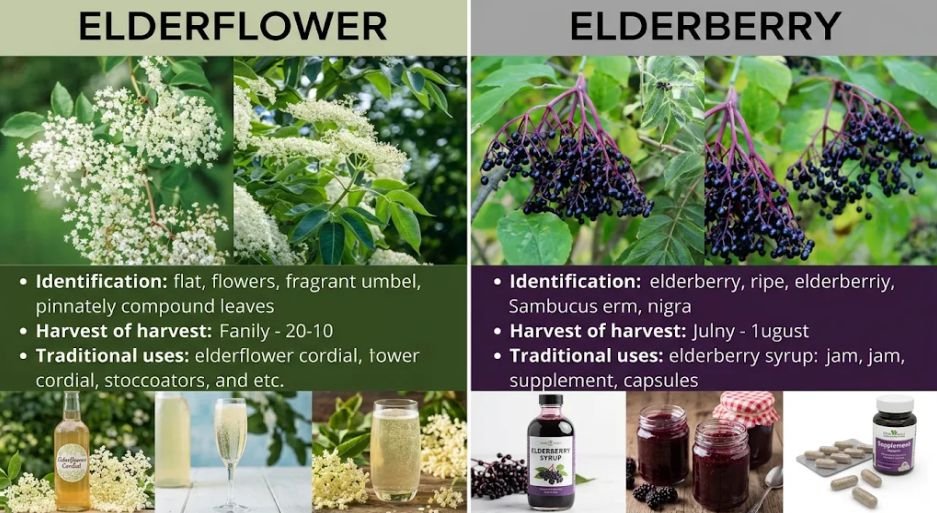
Every flower cluster cut from an elder shrub in June means less fruit to pick in late summer. That trade sits at the center of elderflower vs elderberry, since both crops grow on one plant yet suit very different kitchens.
In Igbo cooking, uziza supplies two ingredients from one vine, peppery leaves and pungent seeds, and elder offers a similar double harvest.
Elder is not a plant I have tended, so my notes on both crops rest on extension bulletins and European regulators.
The blossoms and berries differ in timing, flavor, preparation, safety rules, storage and even price per pound.
Ten elderflower vs elderberry traits are set side by side, followed by a summary table and advice on planning one shrub for both.
Background on the whole shrub, including species and safety basics, lives on the Six Herbs elderberry hub.
Safety note: strip stems and leaves from both flowers and berries, cook berries before eating, and identify elder with certainty before any harvest.
Always consult your personal healthcare provider before adding new supplements to your routine, especially if you are pregnant, nursing, or taking prescription medications.
Table of Contents
Same Shrub, Two Harvests
Elderflower vs elderberry starts with timing, since every pollinated blossom left on the branch becomes a small berry weeks later.
That simple sequence means flower picking and berry picking compete for the same clusters on the same canes.
How Much to Take
Wisconsin Extension’s crops page cites research showing growers can take a 15 to 20 percent share of blossoms without hurting fruit yields.
Wisconsin also places flowering in June and berry ripening in August, roughly two months apart.
Elderflower vs Elderberry, Trait by Trait
Each comparison below sets the blossom against the berry on one point, with the evidence named in the text.
Harvest Season
Penn State’s garden and kitchen guide puts the bloom between June and July, depending on cultivar and placement. Berries follow later in summer, once the clusters droop and darken, so a single shrub can feed two separate harvests each year.
Appearance at Harvest
Flowers are picked as flat, creamy-white clusters, fully open and still free of browning, according to Penn State. Ripe American berries are dark purple, and Oregon State notes they lack the dusky, powdery coating found on blue elderberries.
Flavor and Aroma
Flowers bring a floral, perfumed note, and Wisconsin’s fruit researcher describes European blossoms adding a muscatel flavor to jams and stewed fruit. Berries taste very tart, as Oregon State puts it, so most recipes balance them with sugar or honey.
Preparation
Penn State advises shaking flowers clean rather than rinsing them, since water carries away flavor, then infusing them in syrup. Berries need destemming, sorting and thorough cooking before eating, which makes them the more labor-intensive harvest of the two.
Safety Rules
The Oregon State preserving guide flags stray stems and leaves as higher in toxins, so both harvests need careful cleaning. Its berry rule is plain, since elderberries must be cooked every time, dried ones included.
Drying
Oregon State keeps flower drying at or below 80 degrees Fahrenheit to protect their delicate flavor. Berries tolerate more heat, and extension guides commonly dry fruit near 140 degrees Fahrenheit, as covered in the Six Herbs drying article.
Storage of Homemade Products
Penn State rules out pantry storage and canning for its elderflower syrup, so every bottle stays chilled or frozen. Homemade elderberry syrup follows the same cold-storage rule, because Oregon State classes American berries as low in acid.
Typical Products
Flowers end up in cordials, syrups for seltzer, sorbets and herbal teas, while berries go into syrup, jam, pie, gummies and wine. Wisconsin adds that elderflowers also flavor beer, liqueurs and even maple syrup products.
Market Price
Wisconsin lists dried elderflowers at about $4 to $4.50 per ounce, against a pound of dried berries at $20 to $30 online. By weight, that makes dried flowers the pricier product, partly because they are so light.
Regulatory View in Europe
The EMA’s herbal assessment of elderflower accepts flower preparations for early cold symptoms on traditional use, limited to people aged over 12. For the berries, the agency issued a public statement in 2014 instead of adopting a monograph.
Summary Table
The table below condenses the ten traits, drawing on the extension and regulatory sources cited in each comparison.
| Trait | Elderflower | Elderberry |
|---|---|---|
| Harvest season | June to July | Late summer, around August |
| Look at harvest | Flat creamy-white clusters | Drooping dark purple clusters |
| Flavor | Floral, muscatel notes | Very tart |
| Preparation | Shake, do not rinse, infuse | Destem, sort, cook thoroughly |
| Main safety step | Remove stems and leaves | Remove stems and cook berries |
| Drying temperature | 80 degrees Fahrenheit or less | Around 140 degrees Fahrenheit |
| Homemade storage | Refrigerate or freeze | Refrigerate or freeze |
| Typical products | Cordial, seltzer syrup, sorbet, tea | Syrup, jam, pie, gummies, wine |
| Dried price | About $4 to $4.50 per ounce | About $20 to $30 per pound |
| EMA position | Monograph, traditional use | Public statement, no monograph |
Planning a Shrub for Both
Settling elderflower vs elderberry on one shrub works best when you plan the split before the first flower opens.
- Mark the clusters you intend to leave for fruit, and pick flowers only from the remaining heads.
- Stay within the 15 to 20 percent flower harvest that Wisconsin’s research supports, if berries matter more to you.
- Cut blossoms early in the day once dew has dried, then return in late summer for ripe fruit.
Signs that the fruit is ready to pick are described in knowing when berries ripen.
Both harvests start with confident identification, so review elder plant identification and hemlock and pokeweed warnings first.
Turning Each Harvest Into Food
Flowers and berries lead to different recipes, with separate safety steps for each harvest.
From the Blossoms
Fresh flower clusters make a chilled elderflower cordial, steeped in lemon syrup sharpened with citric acid.
Dried blossoms are mentioned alongside the berry method in elder tea basics.
From the Berries
Ripe fruit becomes stovetop elderberry syrup, and surplus berries keep well using low-heat berry drying.
Why berries always need heat is laid out in cooking rules for elderberries.
Always consult your personal healthcare provider before adding new supplements to your routine, especially if you are pregnant, nursing, or taking prescription medications.
Conclusion
Elderflower vs elderberry is a choice between two harvests from one shrub, ripening about two months apart.
Flowers arrive in June and July, taste floral, dry below 80 degrees Fahrenheit and suit cordials and teas.
Berries ripen later, taste very tart, must be cooked and suit syrup, jam, pie and wine.
Remove stems from both, keep homemade syrups cold, and leave most flowers on the shrub if fruit matters more.
Six Herbs walks through both harvests, so start with the cordial recipe in June and return for the berries later.
Frequently Asked Questions
Is elderflower the same plant as elderberry?
Yes, a single elder shrub produces both, with berries ripening roughly two months after the blossoms.
Every flower cluster you pick removes a future cluster of berries from that cane.
Which is safer, elderflower or elderberry?
Both need stems and leaves removed, and berries must also be cooked, according to Oregon State.
Confident plant identification is equally important for a flower harvest and a fruit harvest.
Do elderflowers taste like elderberries?
No, flowers taste floral with muscatel notes, while Oregon State describes the berries as very tart.
The difference explains why recipes for each rarely overlap in the kitchen.
Can you pick elderflower vs elderberry from one bush?
Yes, Wisconsin Extension cites research showing a 15 to 20 percent blossom harvest leaves fruit production unharmed.
Tag the clusters you want to keep for berries before cutting any flowers.
Disclaimer: Six Herbs is an educational resource, not a medical service. Nothing in this article constitutes medical advice, diagnosis, or treatment. Always consult a qualified healthcare provider before using any herb medicinally, particularly if you are pregnant, breastfeeding, taking medication, or managing a health condition.

Chims Clements writes about herbs from personal experience and careful research. Growing up in Aba, Nigeria, moringa and tamarind were everyday household plants long before they became globally recognised superfoods. He uses both regularly in his home today. At Six Herbs he goes deep on moringa, tamarind, fenugreek, and sea moss — building honest, experience-backed content that separates what tradition knows from what science confirms. The content on this site is for informational purposes only and is not medical advice. Always consult a healthcare provider before using herbs medicinally.