
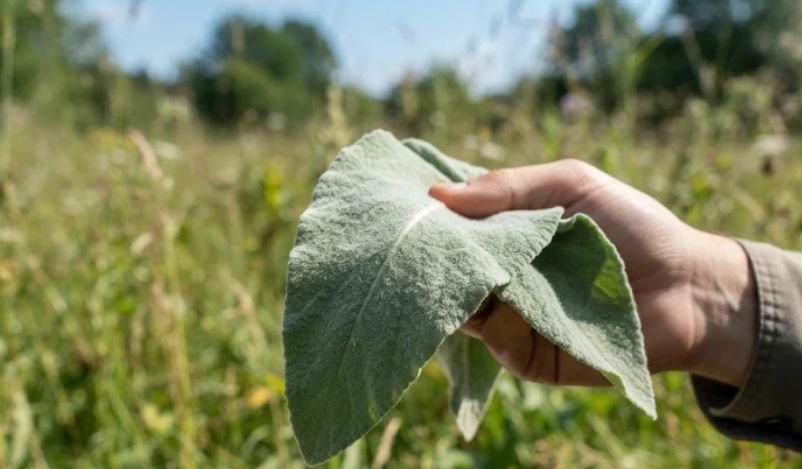
Cowboys in the American West reportedly called mullein leaves their loo paper, a nickname Country Life repeated in an October 2025 feature. The soft, broad leaves look the part, yet the trail habit comes with several cautions worth knowing first.
Few plant nicknames are as memorable as cowboy toilet paper, and one touch of the woolly leaves explains it.
Hikers, campers and preppers pass the tip along, though it usually travels without the safety details that belong with it.
This is a trail trick I can only report on, since mullein has never turned up along the paths I walk in Eastern Nigeria.
Using mullein as toilet paper safely depends on picking the right plant, the right leaf and the right spot to use it.
Everything else about the plant, from tea to torches, sits in our mullein reference hub.
Safety note: mullein hairs can irritate sensitive skin, and toxic foxglove rosettes look similar, so identify carefully and test a leaf first.
Always consult your personal healthcare provider before adding new supplements to your routine, especially if you are pregnant, nursing, or taking prescription medications.
Table of Contents
Where the Nickname Comes From
A 2018 Herb Society article lists cowboy’s toilet paper among mullein’s folk names, noting occasional use of the leaves for exactly that purpose.
Country Life’s verbascum feature adds that leaves were known in the American West as cowboys’ loo paper.
Grieve’s 1931 herbal also lists Rag Paper and Blanket Herb among the older names.
More of those nicknames, and the stories behind them, are gathered in mullein’s folk name list.
Why the Leaves Appeal
Mullein leaves are large and soft, which is why the trail habit started in the first place.
Ohio State’s weed guide describes big rosette leaves covered in hairs on both faces, soft as flannel.
That thick coat makes the leaves feel gentle compared with most wild foliage, at least at first touch.
Mullein grows along trails, roadsides and open ground, so it is easy to find where hikers need it.
The Cautions
Skin Irritation
Those same hairs can irritate skin, and WebMD’s mullein page notes rare cases of rash after people handle the plant.
Sensitive areas react more strongly than hands, so a cautious first test makes sense.
Rub a leaf across your inner wrist and wait before relying on it, a simple patch test.
Anyone with sensitive skin or eczema may prefer to carry ordinary toilet paper instead.
Lookalikes
The bigger risk is picking the wrong plant, since young foxglove can pass for a mullein rosette.
Minnesota’s Grecian foxglove warning says that species carries chemicals the skin can absorb, so the agency advises gloves when handling it.
Using a misidentified foxglove leaf on sensitive skin is therefore a serious mistake, not a minor one.
Confirm every plant with our mullein field checklist before picking a single leaf for this purpose.
Lamb’s ear is another soft-leaved plant, compared with mullein in the fuzzy leaf comparison.
Dirty or Sprayed Leaves
Kansas State’s herb production notes warn that bottom leaves tend to be dusty and damaged by insects and wind.
The same bulletin warns against roadside stands, where pollution from traffic settles on foliage.
Avoid plants beside sprayed fields too, since herbicide residue is not something to wipe with.
How Trail Users Pick Leaves
For anyone set on using mullein as toilet paper, a careful routine reduces the risks.
- Confirm the plant by its woolly leaves, winged stalk or yellow flower spike, ruling out foxglove.
- Choose clean, dry leaves growing partway up the plant rather than dusty lower ones.
- Shake off insects and debris, then fold the leaf with its fuzzier underside facing out.
- Patch-test on the wrist before first use, and stop at any sign of itching.
- Take only a few leaves from each plant so the rosette keeps growing.
Leave No Trace Basics
Plant-based wipes still count as waste, so the usual backcountry rules apply.
Leave No Trace’s waste principle calls for catholes 6 to 8 inches deep and at least 200 feet from water, trails and camp.
It accepts natural alternatives such as vegetation or snow, but says they should be buried in the cathole.
The US Forest Service’s waste guidance gives the same 6 to 8 inch depth and 200 foot distance.
Where burial is not possible, the agency recommends a pack-out kit such as a WAG bag.
Leave No Trace also discourages burning toilet paper, because it can start wildfires.
Check local rules too, since some parks and fragile areas may require all waste to be packed out.
Other Outdoor Uses of Mullein
Toilet paper is only one of the camp-friendly roles that mullein has played over the centuries.
Country Life notes that dried stalks formed the basis of torches from Roman times.
Before cotton arrived, the stalks also served as the core of tallow candles, the same feature says.
Grieve adds that the leaf down made good tinder, a point covered in mullein torches and tinder.
Leaves gathered for the trail must still be clean, as gathering leaves the right way explains.
Always consult your personal healthcare provider before adding new supplements to your routine, especially if you are pregnant, nursing, or taking prescription medications.
Other Herbs on the Trail
Foragers who carry mullein may also meet yellow dock on the same disturbed ground, as spotting dock on the trail shows.
Trail foragers hunting elderberries can check safe identification in elder shrubs along trails.
Conclusion
Cowboy toilet paper is a fair nickname, since mullein’s large, flannel-soft leaves suit the job in a pinch.
The hairs can still irritate skin, so patch-test first and keep ordinary toilet paper as a backup in your pack.
Foxglove rosettes look similar and carry skin-absorbed toxins, which makes careful identification before picking completely non-negotiable.
Pick clean leaves away from roads and sprays, take only a few per plant, and bury used leaves properly.
Medicinal questions belong with a doctor, and the final Six Herbs mullein post, on torches, comes next.
Frequently Asked Questions
Can you use mullein as toilet paper?
Some people do, and the nickname cowboy’s toilet paper reflects that long history. Confirm the plant, choose clean leaves and patch-test first, since the hairs can irritate skin.
Is mullein soft enough for wiping?
Its leaves are large and covered in dense, flannel-like hairs, which makes them feel soft. Those same hairs can irritate sensitive skin, so test a single leaf first.
Which lookalike makes this risky?
Foxglove poses the biggest risk, because its first-year growth can pass for a young mullein rosette. Minnesota’s DNR says Grecian foxglove toxins can enter through bare skin too.
How should used leaves be disposed of?
Bury them in a cathole 6 to 8 inches deep, far from water and camp. Leave No Trace says natural alternatives such as leaves still belong buried there.
Disclaimer: Six Herbs is an educational resource, not a medical service. Nothing in this article constitutes medical advice, diagnosis, or treatment. Always consult a qualified healthcare provider before using any herb medicinally, particularly if you are pregnant, breastfeeding, taking medication, or managing a health condition.

Chims Clements writes about herbs from personal experience and careful research. Growing up in Aba, Nigeria, moringa and tamarind were everyday household plants long before they became globally recognised superfoods. He uses both regularly in his home today. At Six Herbs he goes deep on moringa, tamarind, fenugreek, and sea moss — building honest, experience-backed content that separates what tradition knows from what science confirms. The content on this site is for informational purposes only and is not medical advice. Always consult a healthcare provider before using herbs medicinally.