
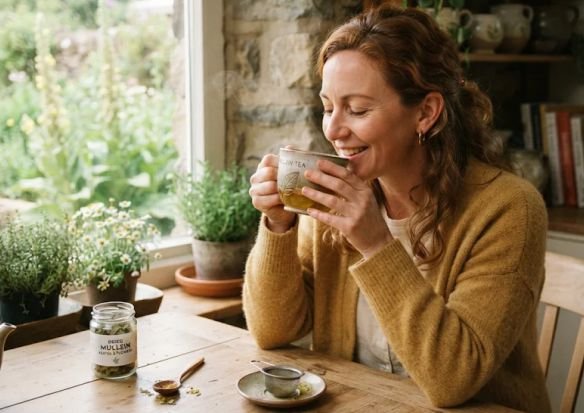
In 1918, the Dispensatory of the United States called mullein flower tea’s taste mucilaginous and not agreeable, yet modern drinkers describe it as mild. Answering what does mullein tea taste like means weighing a century of descriptions that rarely match.
Mullein has gone from a pharmacy shelf staple to a social media tea, and flavor is the first thing drinkers ask about.
Older pharmacopoeias, modern herbalists and medical writers each describe the taste differently, depending on the part used.
When a first cup finally reaches me, these published descriptions will be my yardstick, since none of them comes from my own tasting.
What does mullein tea taste like according to those written records, and why do leaf and flower cups differ?
Botany, history and safety for the whole plant are gathered in Six Herbs’ mullein hub, worth reading before tasting.
Safety note: mullein tea must be strained well to remove leaf hairs, and medical advice comes first during pregnancy, breastfeeding or medication use.
Always consult your personal healthcare provider before adding new supplements to your routine, especially if you are pregnant, nursing, or taking prescription medications.
Table of Contents
The Quick Answer
In short, most published descriptions settle on a mild, slightly bitter, earthy cup with a soft, slippery feel on the tongue.
The WebMD mullein tea overview, medically reviewed in January 2025, reports that some drinkers find it slightly bitter and earthy.
Other drinkers, the same page notes, describe it as mildly sweet instead.
That split makes sense once leaves and flowers are considered separately, because the historical sources describe them quite differently.
Leaf Tea: Earthy With a Bitter Edge
The 1918 edition of the US Dispensatory calls mullein leaves nearly odorless, with a mucilaginous and slightly bitter taste.
Herbalist Christopher Hobbs lists the herb as astringent and bitter in his mullein energetics profile, adding that it is cool in temperature.
Astringent means a dry, slightly puckering feel, which can sit alongside the slippery texture in the same cup.
Leaf tea is the version most people brew, using the ratios set out in steeping dried mullein leaves.
Flower Tea: Fragrant but Not Sweet
The same 1918 Dispensatory describes the flowers as having a peculiar, agreeable odor, but a taste that is mucilaginous and not agreeable.
Felter and Lloyd’s 1898 text, King’s American Dispensatory, gives leaves and flowers a faint, rather pleasant odor.
It also records a somewhat bitterish, albuminous taste, a word meaning something like egg white.
Fresh flowers appear only during a few summer weeks, as the mullein bloom calendar shows.
Mouthfeel: The Slippery Factor
Mucilage is a gel-forming plant substance that turns slick in water, and it explains the smooth texture many descriptions mention.
Europe’s medicines agency, in its 2008 mullein flower assessment, describes the flowers as containing a large amount of mucilage.
The same report lists polysaccharides at 2 to 3 percent of the flower, alongside flavonoids and iridoid glycosides.
It also notes only a small quantity of volatile oil, which fits the faint aroma described by the old pharmacopoeias.
That report is now marked superseded, so treat its figures as background chemistry rather than current regulatory guidance.
Flavor Profile at a Glance
| Part brewed | Aroma | Taste | Mouthfeel | Source |
|---|---|---|---|---|
| Dried leaves | Nearly odorless | Slightly bitter, earthy | Mucilaginous | US Dispensatory 1918, WebMD |
| Dried flowers | Peculiar, agreeable | Not agreeable | Mucilaginous | US Dispensatory 1918 |
| Leaves and flowers | Faint, rather pleasant | Somewhat bitterish | Albuminous, egg-white-like | King’s Dispensatory 1898 |
| Whole herb | Not described | Astringent, bitter | Drying edge | Christopher Hobbs |
What Changes the Flavor
Several factors in the kitchen can shift the flavor of mullein tea noticeably from one cup to the next.
- Steeping time: published steeps span 10 to 15 minutes, and the longer end should give a stronger, more bitter cup.
- Leaf amount: moving from one teaspoon to two per cup doubles the herb, so expect a fuller flavor.
- Leaves versus flowers: the Dispensatory gives flowers the more pleasant aroma but a less pleasant taste.
- Drying and storage: leaves kept dry and dark hold their character better, as keeping leaves green when drying describes.
- Straining: paper filters remove hairs without stripping flavor, a point covered in filters for mullein tea.
Pairings and Add-Ins
WebMD lists honey, lemon and milk among common additions, while noting a plain cup holds only about two calories.
A little honey softens the bitter edge, while lemon brightens a flat, earthy brew.
Pairing mullein with other herbs is common in commercial blends, though each added herb brings its own cautions.
Store-bought blends should list every ingredient by botanical name, a habit explained in reading herb product labels.
How Mullein Compares With Other Herbal Teas
Mullein sits at the gentle end of the bitter scale compared with some roots covered elsewhere on this site.
Yellow dock root is far sharper, described as bitter and astringent in the yellow dock flavor guide.
Elderberries bring fruity, tart notes instead, as elderberry taste notes explain in more detail.
Moringa leaves, which I use at home, taste earthy and peppery and brew in a similar way, as brewing moringa leaves describes.
Tasting Tips for a First Cup
Personal tasting settles the flavor question better than any book, so begin with a few small, careful test cups.
- Begin with a single teaspoon of dried leaf and a 10-minute steep, then adjust upward.
- Taste it plain before adding honey or lemon, so the base flavor is clear.
- Brew leaves and flowers separately once, to compare the two profiles side by side.
- Keep a short note of amount, time and taste for each cup.
Leaves gathered at the right stage and from clean ground give the best starting point, as picking leaves for tea explains.
Always consult your personal healthcare provider before adding new supplements to your routine, especially if you are pregnant, nursing, or taking prescription medications.
Conclusion
Mullein leaf tea tastes mild, earthy and slightly bitter, with a smooth, slippery mouthfeel from mucilage.
The 1918 US Dispensatory gives flowers an agreeable aroma but a less agreeable, mucilaginous taste.
King’s Dispensatory called both parts faintly pleasant in odor and somewhat bitterish, while Hobbs adds an astringent edge.
In short, mullein tea tastes gentle and earthy overall, and a little honey or lemon softens it a bit further.
Ask your doctor before making it a daily drink, and let the Six Herbs mullein library handle every question still ahead.
Frequently Asked Questions
What does mullein tea taste like compared with green tea?
None of the published descriptions reviewed here compares mullein with green tea directly. Mullein is usually called earthy and slightly bitter, with a noticeably more slippery texture overall.
Is mullein tea bitter?
Only mildly, according to most of the published descriptions gathered for this page. The 1918 US Dispensatory calls the leaves slightly bitter, and Hobbs lists bitter and astringent.
Does mullein tea smell?
The leaves are nearly odorless, according to the 1918 edition of the US Dispensatory. Flowers carry a peculiar but agreeable scent, while King’s calls the overall odor faint.
How can I make mullein tea taste better?
WebMD lists honey, lemon and milk as common additions to a plain cup. A shorter steep and less dried leaf tend to produce a gentler, less bitter cup.
Disclaimer: Six Herbs is an educational resource, not a medical service. Nothing in this article constitutes medical advice, diagnosis, or treatment. Always consult a qualified healthcare provider before using any herb medicinally, particularly if you are pregnant, breastfeeding, taking medication, or managing a health condition.

Chims Clements writes about herbs from personal experience and careful research. Growing up in Aba, Nigeria, moringa and tamarind were everyday household plants long before they became globally recognised superfoods. He uses both regularly in his home today. At Six Herbs he goes deep on moringa, tamarind, fenugreek, and sea moss — building honest, experience-backed content that separates what tradition knows from what science confirms. The content on this site is for informational purposes only and is not medical advice. Always consult a healthcare provider before using herbs medicinally.