
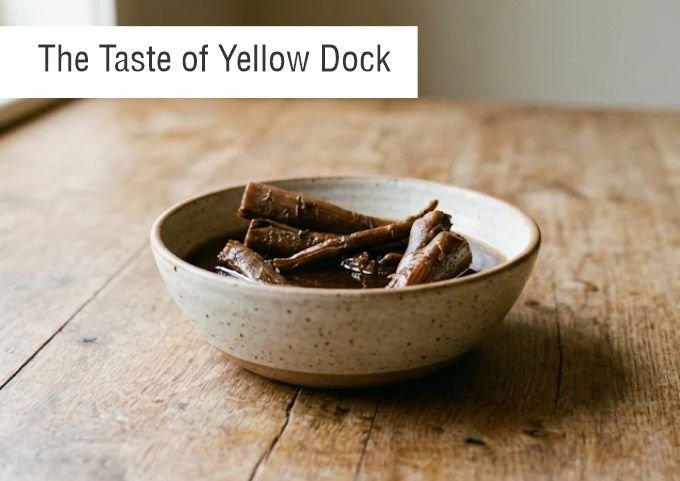
An 1898 dispensatory summed up dock root in two words, bitter and astringent, and modern herbalists still agree. Yet the yellow dock taste changes completely from root to leaf to seed, swinging from harsh bitterness to lemon and toasted grain.
Most people meet yellow dock as a dried root in a tea blend, so bitterness is usually their first impression.
But the full yellow dock taste goes further, since its leaves, stems and seeds each carry a flavor of their own.
Utazi leaves, still growing in the Aba compound my grandmother Kanka once tended, taught me bitterness, yet I have never tasted yellow dock myself.
Every flavor note below therefore comes from old pharmacopoeias, herbalists and foragers, each named alongside the description.
First-time readers of this series can find the basics at our yellow dock root primer before returning here.
Safety note: yellow dock root is a laxative herb, and the leaves contain oxalic acid, so avoid both during pregnancy or with kidney stones.
Always consult your personal healthcare provider before adding new supplements to your routine, especially if you are pregnant, nursing, or taking prescription medications.
Table of Contents
The Root: Bitter and Astringent
Henriette’s Herbal hosts the text of King’s American Dispensatory, the 1898 reference by Felter and Lloyd describing dock root.
It records the root as having a slight, peculiar odor and a taste that is bitter and astringent.
Herbalist Christopher Hobbs gives the same pairing in his yellow dock herb profile, adding that the herb is cool in temperature.
Forager Ellen Zachos goes further, calling the root intensely bitter and noting its use in cocktail bitters.
Astringency is that dry, puckering feel on the tongue and gums, and it is commonly linked to tannins.
Drugs.com’s yellow dock entry names tannins and anthraquinones among the root’s main constituents, which fits the harsh, drying profile described.
How Preparation Changes the Root
- Tea: a simmered decoction delivers the bitterness most directly, as the dock root decoction guide explains.
- Tincture: alcohol extracts carry the bitterness in a few drops, covered in making dock tincture at home.
- Syrup: honey or molasses rounds off the edge, as shown in a sweetened dock syrup.
- Vinegar: acidity adds a sour layer over the root’s bitterness, detailed in dock root steeped in vinegar.
- Powder: capsules bypass the tongue almost entirely, which is why dock powder in capsules appeals to people who dislike the flavor.
The Leaves: Lemony When Young
Leaf flavor is where the yellow dock taste surprises people, because young leaves are sour rather than bitter.
In her dock foraging profile, Zachos describes young leaves as having the best lemony flavor, coming from oxalic acid.
She adds that raw leaves can feel quite mucilaginous, a slippery texture some people enjoy and others avoid.
Mature leaves turn bitter, and Zachos says heat and dry conditions make them more fibrous and astringent.
Missouri Conservation’s dock page agrees, linking older leaves to high tannin levels and noticeable bitterness.
Cooking softens that astringency into a mild lemony taste, according to Zachos, which suits the boiling method in how to cook dock leaves.
The Stems: Pleasantly Sour
Zachos calls the larger leaf stems pleasantly sour, comparing their use to rhubarb or Japanese knotweed.
She suggests chopping and cooking them, since bigger stems can be tough when eaten raw.
That same oxalic acid sourness means stems deserve the same portion caution as the leaves.
The Seeds: Nutty and Toasted
Seeds offer the gentlest side of the yellow dock taste, especially once roasted in a hot oven.
Edible Inland Northwest compares dock seed flour to buckwheat, a fitting match because both plants belong to one family.
Zachos notes a dark, caramel-like aroma once the seeds come out of the oven.
Harvesting and grinding steps for that flour appear in roasting dock seed for flour.
Flavor at a Glance
| Plant part | Main flavor | Texture or feel | Source |
|---|---|---|---|
| Root | Bitter and astringent | Dry and puckering | King’s Dispensatory, Hobbs |
| Young leaves | Lemony and sour | Mucilaginous when raw | Zachos |
| Older leaves | Bitter | Fibrous and astringent | Zachos, Missouri Conservation |
| Stems | Pleasantly sour | Tough when large | Zachos |
| Roasted seeds | Nutty, caramel-like | Dense flour | Edible Inland Northwest, Zachos |
Taming the Bitterness
Softening the yellow dock taste with sweeter herbs is common in blends, but no published trial has compared which partners work best.
Sweeteners in a syrup and acidity in a vinegar both soften harsh notes, and those are the preparations herbal writers lean on.
Dandelion root is another bitter herb sold alongside dock, and their flavors are compared in dock compared with dandelion.
Avoid strengthening a tea to chase flavor, because stronger brews also deliver more of the root’s laxative compounds.
Safety Notes Linked to Flavor
That sour leaf flavor is a reminder of oxalic acid, which Missouri Conservation links to kidney stone risk in large amounts.
Whatever form or flavor you choose, Drugs.com lists pregnancy, nursing and kidney disease among the reasons to skip this root.
Fuller cautions sit in the dock side effects page and should pregnant women use dock.
Always consult your personal healthcare provider before adding new supplements to your routine, especially if you are pregnant, nursing, or taking prescription medications.
Conclusion
Yellow dock root tastes bitter and astringent, a description shared by an 1898 dispensatory and modern herbalists alike.
Young leaves taste lemony from oxalic acid, while older leaves turn bitter, fibrous and noticeably more astringent.
Large stems are pleasantly sour, and roasted seeds bring nutty, caramel-like notes close to buckwheat.
The yellow dock taste therefore depends on which part you use, when you pick it and how you prepare it.
Get your doctor’s view before treating dock as medicine, then browse the remaining Six Herbs dock guides at your pace.
Frequently Asked Questions
What is the yellow dock taste like in tea?
King’s American Dispensatory and Christopher Hobbs both describe the root as bitter and astringent. Expect a dry, puckering finish, which honey can soften without removing the bitterness entirely.
Why do dock leaves taste lemony?
Zachos credits oxalic acid for the sour, lemony flavor of young dock leaves. That same compound is why leaves should be cooked and eaten only in modest portions.
Do older dock leaves taste different?
Yes, older leaves turn bitter, fibrous and astringent, especially after heat and dry weather. Missouri Conservation links that bitterness to tannins, so pick young spring leaves for eating.
Can capsules avoid the bitter flavor?
Yes, powdered root in capsules bypasses the tongue, an option for anyone averse to bitterness. Capsules still contain the same laxative compounds, so medical advice remains important first.
Disclaimer: Six Herbs is an educational resource, not a medical service. Nothing in this article constitutes medical advice, diagnosis, or treatment. Always consult a qualified healthcare provider before using any herb medicinally, particularly if you are pregnant, breastfeeding, taking medication, or managing a health condition.

Chims Clements writes about herbs from personal experience and careful research. Growing up in Aba, Nigeria, moringa and tamarind were everyday household plants long before they became globally recognised superfoods. He uses both regularly in his home today. At Six Herbs he goes deep on moringa, tamarind, fenugreek, and sea moss — building honest, experience-backed content that separates what tradition knows from what science confirms. The content on this site is for informational purposes only and is not medical advice. Always consult a healthcare provider before using herbs medicinally.