
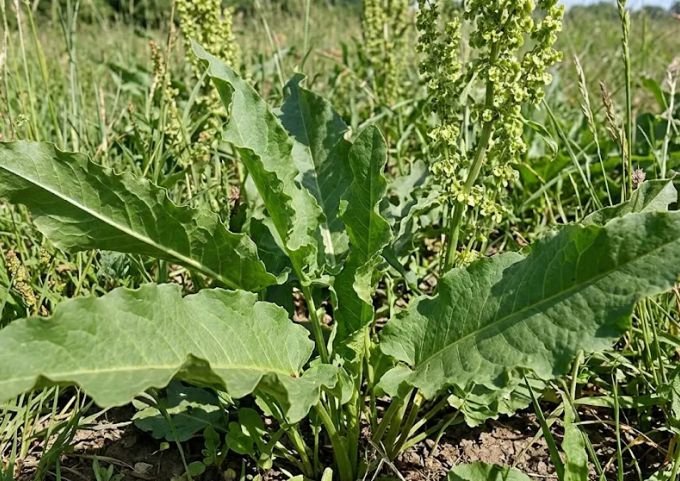
Lab tests on curly dock picked in Oakland, California found 36 milligrams of vitamin C and 1.3 milligrams of iron in every 100 grams. Figures like those prompt the question are curly dock leaves edible, and the answer carries conditions.
Curly dock leaves are a familiar wild green, and Swedish and English settlers in North America cooked them much like spinach.
Today the honest answer to are curly dock leaves edible is yes for young, cooked leaves eaten in sensible amounts.
Taming bitter leaves is familiar from Igbo kitchens in Aba, where bitterleaf for ofe onugbu is washed and squeezed until its sharpness eases.
Dock itself was never on our table, so the method here follows conservation agencies and published research.
Background on the root and the wider plant sits in the full yellow dock profile for those new to it.
Safety note: dock leaves contain oxalic acid, so cook them, keep portions modest and avoid them with kidney problems or kidney stones.
Always consult your personal healthcare provider before adding new supplements to your routine, especially if you are pregnant, nursing, or taking prescription medications.
Table of Contents
The Short Answer
Missouri Conservation’s curly dock field guide says young, early-season leaves can go into mixed salads or be cooked as a potherb with several changes of water.
The same guide warns against overeating them, because the leaves carry plenty of oxalic acid.
Drugs.com’s dock monograph goes further, advising against raw leaves, which it links to stomach upset and kidney damage.
Putting those together, the answer to are curly dock leaves edible is a careful yes: young, cooked and in moderation.
What the Leaves Contain
The East Bay wild greens study published in PLoS ONE in 2019 tested curly dock picked in West Oakland and compared it with kale.
| Nutrient, per 100 g of fresh dock | Amount |
|---|---|
| Vitamin A | About 5,400 IU |
| Vitamin C | 36 mg |
| Calcium | 68 mg |
| Iron | 1.3 mg |
| Potassium | 310 mg |
| Total oxalic acid | 0.39 mg per gram |
| Soluble oxalic acid | 0.18 mg per gram |
The authors say dock compares favorably with kale overall, though kale carries more vitamin C than dock in their results.
They also detected no pesticides, glyphosate or PCBs in the rinsed dock samples.
Those results come from one city’s plants, so leaves from other soils may differ.
Dock is sometimes called an iron source, but 1.3 milligrams per 100 grams is modest, and the dock and iron question looks at that claim.
Picking the Right Leaves
Pick in early spring, when the leaves are young and before the flowering stalk rises, as Missouri Conservation advises.
Older leaves are high in tannins, the same guide notes, which makes them noticeably bitter.
Choose leaves that are still partly rolled or folded, since these are the youngest on the plant.
Confirm the plant first using curly dock identification steps, because spring rosettes are the stage most open to mistakes.
Toxic plants that mimic dock, including foxglove, are worth reviewing before your first harvest.
Pick away from roads, sprayed lawns and polluted soil, following the site advice in clean dock foraging sites.
Cooking Curly Dock Leaves
Boiling is the method best supported by research for cutting oxalate, which is why it comes first here.
A 2005 oxalate cooking study by Chai and Liebman found boiling cut soluble oxalate in vegetables by 30 to 87 percent.
Steaming removed only 5 to 53 percent, and the lost oxalate ended up in the cooking water.
Dock was not among the vegetables tested, so read those percentages as a general guide for leafy greens.
A Simple Boiled Method
- Rinse the young leaves well and strip out any thick central ribs.
- Bring a pot of water to a rolling boil and add the leaves for a few minutes.
- Drain them, discard the water, and repeat with fresh boiling water, as Missouri Conservation’s several changes suggest.
- Drain again, squeeze the greens gently, and season them with oil, salt or a splash of dock vinegar.
Never reuse the cooking water for soup or stock, since that is where the removed oxalate goes.
Are Curly Dock Leaves Edible Raw?
Missouri Conservation allows a few young raw leaves in mixed salads, but Drugs.com advises against uncooked leaves altogether.
Given that split, cooking is the safer choice, and raw leaves are best kept to a small garnish if used at all.
How the leaves and root taste is described in notes on dock’s flavor.
Who Should Skip Dock Greens
Missouri Conservation links excess oxalic acid to urinary tract irritation and a higher risk of kidney stones.
Anyone with kidney disease or a history of stones should leave dock greens off the menu.
Livestock show what large amounts can do, since serious oxalate poisonings in sheep are recorded on Georgetown’s curled dock page.
The same page notes a published human death linked to curled dock, a 1990 case report.
Some people also develop dermatitis after handling the plant, according to Missouri Conservation.
For most healthy adults, are curly dock leaves edible comes down to cooking well and eating them occasionally.
The root carries separate cautions, listed in root side effect warnings and dock during pregnancy and nursing.
Always consult your personal healthcare provider before adding new supplements to your routine, especially if you are pregnant, nursing, or taking prescription medications.
Conclusion
Young curly dock leaves are edible once boiled, ideally with the water changed more than once.
Oakland samples held 36 milligrams of vitamin C and 1.3 milligrams of iron per 100 grams, plus measurable oxalic acid.
Boiling cut soluble oxalate by 30 to 87 percent in tested vegetables, while raw leaves remain questionable.
The answer to are curly dock leaves edible is yes for healthy adults in modest amounts, but not with kidney problems.
Ask your doctor about any health doubts, and keep Six Herbs nearby for your next harvest.
Frequently Asked Questions
Are curly dock leaves edible in late summer?
Older leaves turn bitter with tannins, Missouri Conservation notes, so spring leaves are the better pick. Late summer plants are better saved for their seeds than their leaves.
How many times should dock leaves be boiled?
Missouri Conservation advises several changes of water, so two or three fresh boils work well. Pour every batch of cooking water down the drain rather than reusing it.
Are dock leaves high in iron?
Not especially, since Oakland samples held 1.3 milligrams of iron per 100 grams. Vitamin A stands out more, reaching roughly 5,400 IU in that 2019 Oakland analysis.
Do dock leaves contain pesticides?
The 2019 Oakland study found no pesticides, glyphosate or PCBs in rinsed dock samples. Leaves from sprayed lawns or roadsides could differ, so pick from clean, unsprayed ground.
Disclaimer: Six Herbs is an educational resource, not a medical service. Nothing in this article constitutes medical advice, diagnosis, or treatment. Always consult a qualified healthcare provider before using any herb medicinally, particularly if you are pregnant, breastfeeding, taking medication, or managing a health condition.

Chims Clements writes about herbs from personal experience and careful research. Growing up in Aba, Nigeria, moringa and tamarind were everyday household plants long before they became globally recognised superfoods. He uses both regularly in his home today. At Six Herbs he goes deep on moringa, tamarind, fenugreek, and sea moss — building honest, experience-backed content that separates what tradition knows from what science confirms. The content on this site is for informational purposes only and is not medical advice. Always consult a healthcare provider before using herbs medicinally.