
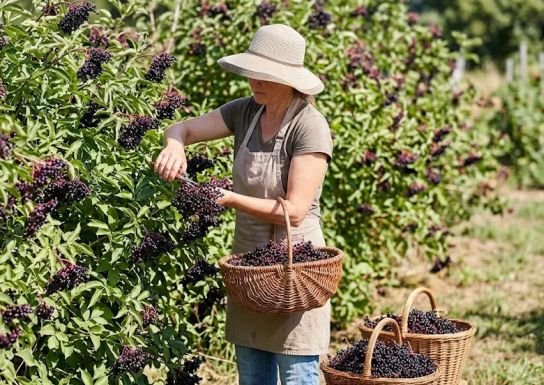
Elderberry clusters on a single shrub can ripen up to three weeks apart, depending on cane age and shade. Knowing when to harvest elderberries means reading each cluster, not the calendar, and returning to the same plant several times over.
Harvest timing decides quality in every crop I grew up around in Aba, from tender moringa leaves to ripe pods.
Elder shrubs are not among them, and I have never picked elderberries, so this guide relies on published US extension research and grower guides.
It covers when to harvest elderberries by region, how to judge ripeness and how to cut whole clusters cleanly.
You will also find steps for cooling the harvest and sorting out green fruit before anything reaches the kitchen.
For background on the plant, its growth and kitchen uses, start with the full elderberry overview.
Safety note: pick only fully ripe berries, because green berries and stems carry more cyanide-forming compounds than ripe fruit.
Always consult your personal healthcare provider before adding new supplements to your routine, especially if you are pregnant, nursing, or taking prescription medications.
Table of Contents
When to Harvest Elderberries in the US
Elderberries ripen in late summer across most of the United States, several weeks after the flat white flower clusters fade.
A University of Missouri growing guide describes white blooms opening in June, with dark purple berries following later in the summer months.
The Oklahoma State fact sheet places harvest from mid-August to mid-September, depending on location and cultivar.
The same sheet notes that fruit clusters usually ripen over a period of five to 15 days.
Species matters too, and differences in habit and timing are compared in the two main elder species.
Harvest Timing by Region
Regional climate shifts when to harvest elderberries, so local extension offices remain the best guide for exact dates.
| Region or zone | Typical harvest window | Source |
|---|---|---|
| Missouri and the Midwest | Mid to late summer | University of Missouri Extension |
| Oklahoma | Mid-August to mid-September | Oklahoma State Extension |
| USDA Zones 4 to 5 | Mid-August to mid-September | SARE elderberry primer |
| Appalachian region | July to late September | WVU Extension, cited in the SARE primer |
A recent SARE elderberry primer for Appalachia cites WVU Extension describing a six to eight week ripening period from July to late September.
Warmer southern areas can see earlier fruit, so start checking shrubs as soon as the first clusters darken.
Why Clusters Ripen Unevenly
Clusters on the same shrub rarely ripen together, which is why one harvest day is seldom enough.
The SARE primer reports that fruit on younger canes can ripen 14 to 21 days later than fruit on mature canes.
It also notes that shaded berries ripen later than those in full sun, even on the same plant.
Cane age depends on pruning, and how growers manage older and younger canes is covered in pruning for better crops.
Newly established plants take time to bear, and Missouri extension notes large crops from the second year, as described in new plants from cuttings.
Signs a Cluster Is Ready
Use several signs together, because color alone can mislead in poor light or on partly shaded clusters.
Darkest Color
Ripe berries reach their darkest shade, from deep purple to near black, with no green or red berries left in the cluster.
Dull, Dusty Look
The SARE primer describes ripe berries turning dull or dusty rather than shiny, a sign growers check alongside color.
Deep Juice Color
Crush a single berry between your fingers, and ripe juice shows a deep reddish purple rather than a pale or watery tint.
Sugar Reading
Some commercial growers use a Brix meter, and the SARE primer cites a harvest target of 12 to 13 percent sugar.
Why Green Berries Must Stay on the Shrub
Unripe fruit is a safety issue as well as a flavor problem, so timing matters more here than with most berries.
A 2021 study of American elderberry tissues ranked whole green berries second for cyanide-forming potential, behind only the stems.
Fully ripe fruit scored lowest of every tissue type the research team measured.
The full safety picture, including symptoms and cooking advice, is set out in why green fruit is risky.
How to Pick Elderberries
These steps follow the SARE primer’s harvest advice, with a few practical additions for home gardeners.
Confirm the Plant First
Wild elder grows beside several toxic plants, so check leaves, stems and flower heads carefully before picking.
Key features appear in confirming elder before picking, and dangerous resemblances in toxic plants resembling elder.
Pick in the Morning
The Appalachian harvest primer advises harvesting in the morning before the day warms, which keeps the berries cooler.
Cool fruit holds its quality better and stays firmer during the sorting and destemming that follow.
Cut Whole Clusters
Clip each cluster at its base, where the primer describes the stem as the cluster’s wrist, using clean shears or by hand.
Cutting whole clusters is faster than picking single berries, and it leaves stem removal for a later, easier step.
Use a Food-Grade Container
Collect clusters in a clean, food-grade bucket, laying them loosely so the berries on the bottom are not crushed.
Avoid stacking heavy layers, since crushed fruit leaks juice and stains everything it touches.
Return Every Few Days
Knowing when to harvest elderberries on a large shrub means revisiting it, cutting only fully dark clusters each time.
With clusters ripening over five to 15 days, several short visits give a cleaner harvest than one large one.
Leave Partly Ripe Clusters
Leave any cluster still showing green or red fruit, or trim away the unripe section with scissors before collecting.
Discard any green berries that slip into the bucket, rather than hoping cooking will make them acceptable.
Handling Elderberries After Picking
Freshly picked clusters need quick attention, so plan your processing time before you start cutting.
- Move clusters into shade or a cool room straight after picking, keeping them out of direct sun.
- Remove stems promptly, because the same 2021 research ranked stems as the riskiest tissue of all.
- Wash berries after destemming or before freezing, as the SARE primer recommends for clean processing.
- Freeze clusters if you cannot process them the same day, and avoid thawing and refreezing them.
The primer warns that thawing and refreezing lowers berry quality, which matters for frozen destemming methods.
Methods for removing berries quickly are covered in separating berries from stems.
Surplus fruit can be preserved by drying a large harvest, and the trade-offs between forms sit in fresh and dried elderberries.
Flowers or Berries
Each flower cluster you pick in early summer is one fewer berry cluster later, so decide your priorities early.
The SARE primer advises harvesting flowers when all the flowers on a cluster are open, weeks before any fruit forms.
Growers who want both can pick only a share of the flower heads and leave the rest to set fruit.
How the two harvests differ in use is compared in picking flowers versus berries.
Expected Yields
Oklahoma’s extension yield figures show a small crop in the first year after planting and much larger crops from year three.
Mature plants produce about 12 to 15 pounds each, according to the same fact sheet, or up to 12,000 pounds per acre.
That volume explains why fast destemming and freezing matter once a planting reaches full production.
Most home harvests end up in the kitchen, and a good first project is turning berries into syrup.
Always consult your personal healthcare provider before adding new supplements to your routine, especially if you are pregnant, nursing, or taking prescription medications.
Conclusion
When to harvest elderberries depends on region, cane age and shade, but most US harvests fall between mid-August and mid-September.
Pick clusters that are fully dark and dull, with deep purple juice and no green or red berries.
Cut whole clusters in the morning, keep them cool and remove stems promptly.
Return every few days, since clusters ripen over five to 15 days and younger canes lag behind.
Read the Six Herbs destemming guide next, so your harvest becomes clean berries ready for the kitchen.
Frequently Asked Questions
What month do elderberries ripen?
For most US growers, when to harvest elderberries falls between mid-August and mid-September.
Appalachian fruit can ripen from July to late September, and southern areas may start earlier.
How can you tell if elderberries are ripe?
Ripe berries are darkest purple to black, look dull or dusty and give deep reddish purple juice.
Clusters with green berries should stay on the shrub a few more days.
Can you pick elderberries that are still red?
No, unripe red or green berries carry more cyanide-forming compounds than ripe fruit, so leave them.
Cut unripe sections away with clean scissors before you collect the remaining berries.
Should you harvest the whole cluster?
Yes, cutting whole clusters at the base is faster and gentler on the berries than picking them singly.
Remove stems promptly after harvest, since stems carry the most risky compounds.
Disclaimer: Six Herbs is an educational resource, not a medical service. Nothing in this article constitutes medical advice, diagnosis, or treatment. Always consult a qualified healthcare provider before using any herb medicinally, particularly if you are pregnant, breastfeeding, taking medication, or managing a health condition.

Chims Clements writes about herbs from personal experience and careful research. Growing up in Aba, Nigeria, moringa and tamarind were everyday household plants long before they became globally recognised superfoods. He uses both regularly in his home today. At Six Herbs he goes deep on moringa, tamarind, fenugreek, and sea moss — building honest, experience-backed content that separates what tradition knows from what science confirms. The content on this site is for informational purposes only and is not medical advice. Always consult a healthcare provider before using herbs medicinally.