
Last updated on September 15th, 2026 at 10:15 am
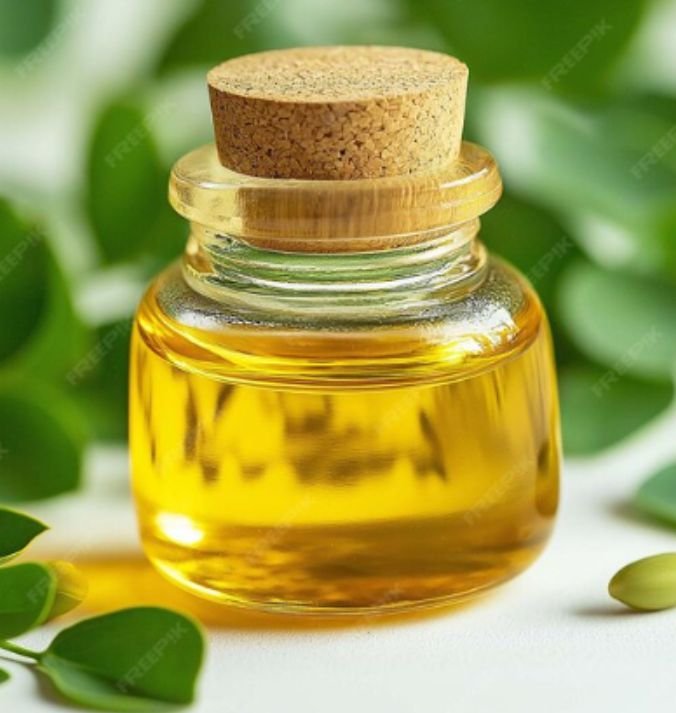
Moringa oil, pressed from the tree’s seeds, has real chemistry behind it, though not every vitamin claim about it holds up. This guide covers what the oil actually contains, its culinary and cosmetic uses, and where each claim comes from.
Moringa oil is the part of the plant I understand best now, though it is the last part I came to.
Learning how pressing affects nutrient content, and how the oil behaves differently from the seed, took real study.
This guide corrects a common inaccuracy: vitamin E is well documented in the oil, but vitamins A and C mostly stay behind in the leaf.
This guide briefly covers culinary use, cosmetic use, extraction methods, storage, and safety, with links to our more detailed guides.
Each dedicated post goes far deeper than a single page reasonably could.
Medical Disclaimer: This article is for informational purposes only and does not replace professional medical advice. Consult a qualified healthcare professional before using herbs or supplements.
Table of Contents
What Is Moringa Oil
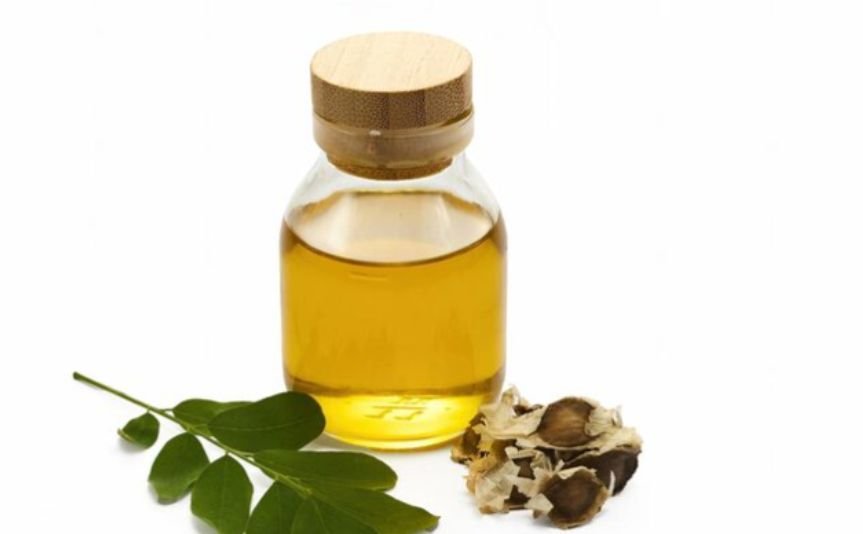
Moringa oil, also called ben oil or behen oil, is pressed from the seeds of Moringa oleifera.
It has a light texture, mild nutty taste, and pale yellow color when properly extracted.
For the seeds it comes from, see our complete guide to moringa seeds, which also covers the detailed fatty acid and nutrient tables behind this oil.
What’s Actually in the Oil
Moringa oil is dominated by oleic acid, typically 73 to 77% of its fatty acid content, giving it a profile close to olive oil.
Vitamin E, in the form of alpha, gamma, and delta tocopherols, is genuinely well documented, with alpha-tocopherol usually the largest share.
Plant sterols, mainly beta-sitosterol, campesterol, and stigmasterol, make up a meaningful part of the oil as well.
Despite common claims, vitamins A and C are not meaningfully present in the pressed oil itself; both are water-soluble or concentrated mainly in the leaf.
| Component | Amount | Note |
|---|---|---|
| Oleic acid | 73–77% of fatty acids | Same primary fatty acid as olive oil |
| Behenic acid | Notable, distinctive | Gives the oil its alternate name, “behen oil” |
| Palmitic acid | Minor component | Common saturated fat found in many plant oils |
| Vitamin E (tocopherols) | Well documented | Alpha-tocopherol usually the largest share |
| Plant sterols | Meaningful part of the oil | Beta-sitosterol, campesterol, stigmasterol |
| Vitamin A | Not meaningfully present | Water-soluble; concentrated in the leaf, not the seed oil |
| Vitamin C | Not meaningfully present | Water-soluble; concentrated in the leaf, not the seed oil |
Health Benefits: Where the Evidence Actually Stands
Human trials specific to moringa oil, rather than the seed or leaf generally, stay very limited.
Most heart-health and anti-inflammatory claims made about the oil borrow from broader moringa research rather than oil-specific human trials.
Our complete health benefits guide and research roundup sort every claim by which part was actually tested and in what species.
Cooking with Moringa Oil
Moringa oil’s smoke point sits around 198 to 202 degrees Celsius, roughly 388 to 396 Fahrenheit, comparable to many refined vegetable oils.
Its mild, nutty flavor works well in dressings, marinades, drizzled over vegetables, or light sautéing.
Its high oleic acid content gives it decent oxidative stability, similar to olive oil, which helps it hold up reasonably well under moderate heat.
How to Use Moringa Oil for Skin, Face, Eczema, Stretchmarks, and Hair
Moringa oil absorbs quickly and is commonly used to moisturize skin and condition hair without feeling greasy, largely due to its high oleic acid content.
Its comedogenic rating sits low, generally cited around 0 to 1 on the standard 0-to-5 scale, meaning it is unlikely to clog pores for most skin types.
That rating is a real, established classification system, not a marketing claim.
Specific claims about the oil treating acne, eczema, dry skin, or stretch marks circulate widely online.
Essentially no published research tests moringa oil against any of these specific conditions directly.
What limited human research exists on moringa and skin focuses on leaf preparations, not the pressed oil.
Hair evidence is similarly thin: a 2026 systematic review found just five qualifying moringa-and-hair studies total, most in animals.
Use moringa oil topically as a general moisturizer with a reasonable safety profile, not as a treatment for a specific diagnosed skin condition.
Moringa Oil vs. Other Carrier Oils
Moringa oil compares to other popular carrier oils mainly through fatty acid composition, a genuine, measurable difference rather than a marketing claim.
- Jojoba oil is technically a liquid wax ester, not a true triglyceride oil, giving it a different molecular structure and exceptional shelf stability.
- Argan oil carries more linoleic acid than moringa oil, along with a well-documented vitamin E content.
- Castor oil is dominated by ricinoleic acid, a fatty acid essentially unique to it among common carrier oils, giving it a distinctly thick texture.
- Rosehip oil genuinely does contain vitamin A in the oil itself, unlike moringa oil, along with meaningful linoleic and linolenic acid.
- Marula oil actually shares a similar oleic acid dominance with moringa oil, both in the high-60s to high-70s percent range. That makes them closer to each other chemically than either is to jojoba or argan oil.
- Coconut oil sits at the opposite extreme, dominated by lauric acid and other saturated fats rather than oleic acid. That composition gives it a solid texture at room temperature, unlike the liquid moringa oil.
No published research directly compares these oils against each other for skin or hair outcomes in humans, so treat any specific superiority claim between them as unverified.
Extraction and Quality
Cold pressing uses mechanical pressure without heat or chemicals, generally preserving more nutrients than solvent extraction does.
Solvent-extracted oil yields more per batch but can leave chemical residue and reduced nutrient content behind.
When buying, look for a label that names Moringa oleifera seed oil as the sole ingredient, not a vague term like moringa extract.
Genuine cold-pressed oil has a pale yellow color, mild nutty smell, and light texture; a strong, rancid, or crayon-like smell signals a poor-quality or degraded product.
Storing Moringa Oil
Keep moringa oil in a cool, dark place, ideally in an opaque, airtight glass container.
Refrigeration can extend freshness further, especially in warm or humid climates year-round.
An unopened, properly stored bottle generally lasts up to two years, while an opened bottle is best used within six to twelve months.
A rancid, crayon-like smell means the oil has gone bad and should be discarded regardless of the timeline.
Precautions
Moderate amounts, generally one to two tablespoons daily if consumed, are unlikely to cause problems for most healthy adults.
Larger amounts can cause nausea or digestive upset in some sensitive people.
The oil may interact with blood pressure, blood sugar, or blood-thinning medication.
Topical allergic reactions are uncommon but possible, showing up as redness, itching, or mild swelling in sensitive individuals.
Patch-test on a small area before wider topical use, waiting 24 hours to check for a reaction.
Our complete warnings guide covers medication interactions and specific risk groups in full.
Conclusion
Moringa oil has real chemistry, with high oleic acid and vitamin E, though vitamins A and C mostly belong to the leaf.
Health claims specific to the oil have less human evidence than the plant generally, so treat each claim with caution.
Comparisons to other carrier oils come down to real fatty acid differences, not proven superiority.
Extraction method, quality, and proper storage genuinely affect how well the oil performs and lasts.
Start with a small amount, patch-test before wider use, and check with your own doctor on regular medication.
Frequently Asked Questions
Does moringa oil really contain vitamins A and C?
Not meaningfully: real composition studies find genuine vitamin E in the oil, but vitamins A and C stay concentrated in the leaf rather than the pressed oil itself.
Is moringa oil better than argan, jojoba, or rosehip oil for skin?
No single oil is proven superior: each has a genuinely different fatty acid profile, and no published research compares them head-to-head for real skin or hair outcomes at all.
Is cold-pressed moringa oil better than solvent-extracted oil?
Generally yes: cold pressing preserves more nutrients and avoids chemical residue entirely, though solvent extraction typically produces a larger yield per batch of seeds commercially used overall today.
How long does moringa oil last once opened?
Properly stored moringa oil generally lasts about twelve to eighteen months, though a rancid, crayon-like smell means it should be discarded regardless of the stated timeline itself entirely.

Chims Clements writes about herbs from personal experience and careful research. Growing up in Aba, Nigeria, moringa and tamarind were everyday household plants long before they became globally recognised superfoods. He uses both regularly in his home today. At Six Herbs he goes deep on moringa, tamarind, fenugreek, and sea moss — building honest, experience-backed content that separates what tradition knows from what science confirms. The content on this site is for informational purposes only and is not medical advice. Always consult a healthcare provider before using herbs medicinally.