
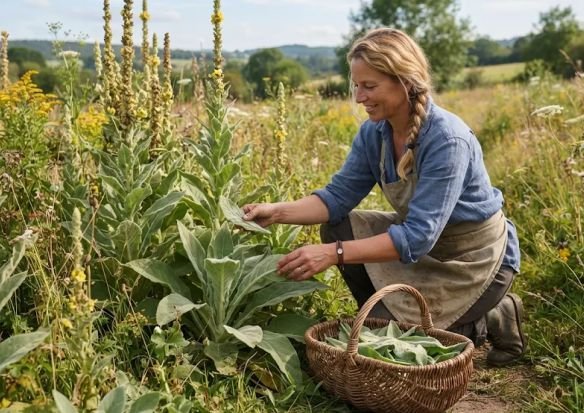
Kansas State University field trials found mullein’s biggest leaf crop comes in the fall of year one or spring of year two. That finding answers when to harvest mullein leaves better than any calendar date, because plant stage matters most.
Mullein grows on a two-year cycle, and its leaves change in size and quality as the plant moves toward flowering.
Working with crops and plants across Eastern Nigeria from 2010 onward has taught me how much timing decides a harvest, though mullein grows far away.
For this plant, the schedule below rests on Kansas State trials, an Ask Extension answer and a respected herb grower’s handbook.
Knowing when to harvest mullein leaves means reading the plant’s stage first and the month second.
Its full profile, from rosette to seed, sits in our mullein plant reference for anyone meeting it fresh.
Safety note: wear gloves if mullein hairs irritate your skin, avoid roadside plants, and ask a doctor before using any harvest medicinally.
Always consult your personal healthcare provider before adding new supplements to your routine, especially if you are pregnant, nursing, or taking prescription medications.
Table of Contents
Timing at a Glance
This table sums up when to harvest mullein leaves, flowers and roots across the plant’s two-year cycle.
| Plant stage | Season | What to harvest | Source |
|---|---|---|---|
| First-year rosette, late in the season | Fall, year one | Large basal leaves, best overall leaf crop | Kansas State Extension |
| Overwintered rosette, before bolting | Spring, year two | Large leaves before the stalk rises | Kansas State Extension |
| Flowering stalk | Mid to late summer, year two | Flowers as they open, some stalk leaves | Ask Extension, Kansas State |
| Rosette or young plant | Fall of year one or spring of year two | Roots, dug with a narrow spade | Kansas State Extension |
The Best Window for Leaves
Kansas State’s mullein crop guide, written by Rhonda Janke in 2004, says leaves can be picked any time.
The same publication adds that the largest crop comes from fall of the first year or spring of the second.
That timing captures the big rosette leaves before the plant pours its energy into a flowering stalk.
In the second year, the Kansas trials found leaves grew smaller as the plant shifted toward flowering.
For sheer volume, then, the best leaf-picking window is clearly late in year one or early in year two.
Each stage’s features sit side by side in first-year versus second-year plants.
A Different View: Harvesting at Flowering
An Ask Extension answer from 2023 suggests harvesting during the second year, when the plant is mature and flowering.
That expert advised waiting until flowers are fully open, then cutting the flowering stalk just below the lowest blooms.
On the timing question, the two sources fit together once goals are separated, since Kansas State aims for volume and Ask Extension for flowers.
Leaves picked from a flowering plant are fewer and smaller, but flowers and leaves can be gathered in one trip.
Harvesting Mullein Flowers
Flowers open over several weeks, climbing the spike from bottom to top, so a single stalk can be picked repeatedly.
UW-Madison Extension’s mullein article notes that blooms unfurl before sunrise and shut again by mid-afternoon.
Morning picking therefore catches flowers fully open, which matches herbalist Maria Noel Groves’ advice to harvest flowers just as they open.
Regional bloom dates, from early summer in the north to longer seasons in the south, appear in the mullein flowering season.
Time of Day and Weather
In an excerpt from Grow Your Own Herbal Remedies, Groves recommends harvesting after the morning dew has evaporated.
Leaves picked dry finish drying faster and resist mold, which matters for mullein’s thick, woolly foliage.
Groves also suggests checking the forecast first if you plan to sun-dry the harvest.
Picking on a dry morning after several rain-free days gives the cleanest, quickest-drying leaves.
How to Pick the Leaves
- Check the plant’s identity with mullein identification tips and rule out the lamb’s ear lookalike.
- Put on gloves if the woolly hairs bother your skin, since WebMD’s mullein safety notes say handling can rarely cause a rash.
- Skip the lowest leaves, which Kansas State says can carry dust, insect damage and wind damage.
- Choose large, healthy, green leaves from the middle of the rosette or lower stalk.
- Snap or cut each leaf close to its base, leaving the crown and central growth untouched.
- Leave several leaves on every plant, as the Ask Extension expert advises.
- Lay leaves flat in a basket or paper bag rather than packing them tightly in plastic.
Tools That Help
- Gloves: cotton or leather gloves protect your hands from the dense, irritating hairs.
- Scissors or a small knife: cleaner cuts reduce tearing at the leaf base.
- Basket or paper bag: airflow keeps freshly picked leaves from sweating and spotting.
- Narrow spade: needed only if you plan to dig roots, as Kansas State describes.
Choosing a Clean Site
Kansas State advises against harvesting from roadside stands because of pollution from passing traffic.
Mullein thrives on disturbed ground, so many plants sit beside roads, railways and sprayed field edges.
Look instead for plants in clean meadows, private land with permission or your own garden.
The same caution applies to every wild herb, as clean dock-digging sites explains for yellow dock.
Harvesting With Restraint
Mullein is abundant and even weedy in many regions, yet careful picking still keeps a patch productive.
Taking a few leaves per plant lets rosettes keep growing, and leaving some stalks allows seed for future plants.
In places where mullein spreads aggressively, regional weed rules matter too, covered in mullein’s weed status by region.
After the Harvest
Dry the leaves promptly, since Kansas State stresses thorough drying to prevent mold in such thick leaves.
Screens, racks and dehydrators each get their own steps in drying mullein for storage.
Once dry, the leaves brew into tea using the ratios in making a mullein leaf infusion.
Always consult your personal healthcare provider before adding new supplements to your routine, especially if you are pregnant, nursing, or taking prescription medications.
Harvest Timing for Other Herbs
Every plant has its own window, and elderberries follow a very different schedule from mullein leaves.
Ripe elder clusters are picked in late summer, as the elderberry harvest window explains.
Conclusion
Kansas State trials found the biggest mullein leaf crop in fall of year one or spring of year two.
An Ask Extension expert prefers harvesting at flowering, cutting stalks just below the lowest open blooms.
Pick on dry mornings, skip the dusty lower leaves, avoid roadsides and leave several leaves on each plant.
Good harvest timing for mullein leaves comes down to plant stage, clean ground and a light hand.
Get medical advice before any medicinal use of your harvest, and visit Six Herbs again as your mullein patch grows.
Frequently Asked Questions
When should mullein leaves be picked for the biggest crop?
Kansas State reports peak leaf crops in fall of year one or spring of year two. Picking then gets ahead of the stalk and its pull on energy.
Can you harvest mullein leaves in the second year?
Yes, though Kansas State found the leaves grow smaller once the plant shifts toward flowering. An Ask Extension expert still recommends second-year harvesting alongside the newly opened flowers.
What time of day should mullein be picked?
Herbalist Maria Noel Groves advises harvesting only after the morning dew has evaporated. Mullein flowers open before dawn and close by mid-afternoon, so mornings suit flower picking best.
Should you pick the bottom leaves of mullein?
Kansas State suggests discarding the lowest leaves, which collect dust, insect damage and wind damage. Choose large, healthy leaves from the middle of the rosette or stalk instead.
Disclaimer: Six Herbs is an educational resource, not a medical service. Nothing in this article constitutes medical advice, diagnosis, or treatment. Always consult a qualified healthcare provider before using any herb medicinally, particularly if you are pregnant, breastfeeding, taking medication, or managing a health condition.

Chims Clements writes about herbs from personal experience and careful research. Growing up in Aba, Nigeria, moringa and tamarind were everyday household plants long before they became globally recognised superfoods. He uses both regularly in his home today. At Six Herbs he goes deep on moringa, tamarind, fenugreek, and sea moss — building honest, experience-backed content that separates what tradition knows from what science confirms. The content on this site is for informational purposes only and is not medical advice. Always consult a healthcare provider before using herbs medicinally.