
Last updated on September 17th, 2026 at 08:43 am
The tamarind tree behind my family compound in Aba has outlived three generations, and it still isn’t done growing. Botanists say the species can live over a century. My grandmother’s tree proves this isn’t just a distant database number somewhere.
The tamarind tree is the long-lived structure behind everything else on this site: the fruit, leaves, seeds, and bark all grow on one tree that can live for over a hundred years.
This guide covers what the tree looks like, how it grows, and what published botanical sources say about its size, lifespan, and habitat.
It also covers the difference between true tamarind varieties, like sweet and sour cultivars, and a different tree that shares part of its name: velvet tamarind.
For the fruit, leaves, seeds, and bark, I link to their own dedicated guides for much deeper detail instead.
Table of Contents
What Is a Tamarind Tree?
Tamarindus indica is a long-lived, evergreen tree in the legume family, Fabaceae, and the sole species in its genus.
It grows widely across Africa, Asia, and Latin America, prized for its curved pods, feathery foliage, and dense, spreading canopy.
Native to tropical Africa, the tree spread through early trade routes to India and Southeast Asia, where it became so well established that Linnaeus originally named it based on the Arabic phrase for “date of India.”
Botanical Description and Physical Characteristics
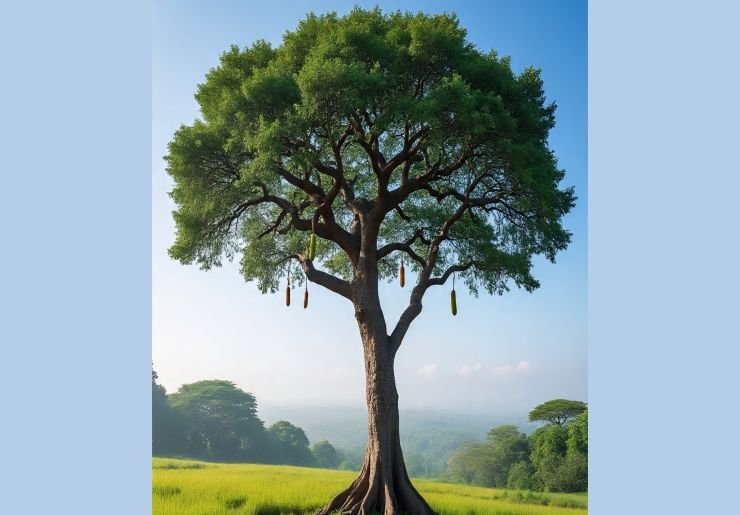
According to the World Agroforestry Centre’s species profile, Tamarindus indica grows up to 30 meters tall with a trunk diameter up to 2 meters and a dense, widely spreading, rounded crown.
Missouri Botanical Garden notes that cultivated trees more commonly reach 40 to 60 feet (roughly 12 to 18 meters), with taller specimens less frequent.
The bark is rough, fissured, and greyish-brown, thickening and cracking further with age.
Branches grow wide and low, giving the tree a stable, wind-resistant structure that supports heavy pod production.
The compound leaves consist of 10 to 18 pairs of small, oblong leaflets that fold slightly at night, a response that helps reduce water loss.
Flowers are small, fragrant, and pale yellow with reddish streaks, growing in loose clusters that attract pollinating insects.
After pollination, the tree produces indehiscent pods, typically 10 to 18 centimeters long, with a brittle shell protecting sticky pulp and several hard, glossy seeds.
Lifespan estimates vary by source: the National Tropical Botanical Garden documents specimens living over a century, while some horticultural sources suggest productive lifespans up to 200 years under favorable conditions.
Either way, this is a tree built for the long term, regularly outliving the people who plant it.
Types of Tamarind: True Varieties vs. a Common Case of Mistaken Identity
“Types of tamarind” actually covers two different things, and conflating them causes lasting confusion.
True cultivar variation
Tamarindus indica itself comes in sweet and sour varieties, influenced by climate, soil, and regional growing conditions rather than being separate species.
Indian tamarind tends to be more sour and tart, while African and Mexican varieties are typically sweeter and milder.
This is a well-documented culinary distinction. What isn’t well documented is a precise, published nutrient-by-nutrient difference between them; see our tamarind nutrition facts page for the honest version of that comparison.
Velvet tamarind: a different tree entirely
Velvet tamarind, also called icheku, comes from Dialium guineense, a genus completely separate from Tamarindus indica, sharing only the broader legume family as a common ancestor.
As a tree, it’s smaller and hardier than true tamarind, with rounded, dark green leaves that grow in dense clusters, compared to true tamarind’s larger, feathery, open canopy.
It’s native to West and Central Africa specifically, rather than the wider African, Asian, and Latin American range of true tamarind.
The two trees get confused constantly because of the shared name, but they are not the same plant, and their pods, pulp, and uses differ accordingly.
Parts of the Tamarind Tree
Each part of the tree has its own detailed guide on this site; here’s a brief structural overview of how each part fits into the tree itself.
- Fruit: Curved, brittle-shelled pods containing sticky pulp and seeds, described further in our tamarind fruit.
- Leaves: Small, feathery, compound leaflets that fold at night; covered in depth in our tamarind leaves.
- Flowers: Small, fragrant, pale yellow blooms with red streaks that appear before fruiting and attract pollinators. Young flowers are edible in some culinary traditions, though this isn’t covered elsewhere on the site. More on tamarind flower here.
- Seeds: Hard, glossy seeds embedded in the pulp, covered in our tamarind seeds and, for the seed’s industrial gum specifically, our seed gum.
- Bark and roots: Thick, fissured bark and deep taproots used in traditional medicine, detailed in our tamarind bark and tamarind root.
Natural Habitat and Distribution
Tamarind is native to the savannas and dry woodlands of tropical Africa, from where it spread early to India and Southeast Asia, becoming closely linked to local farming systems in both regions.
Today it grows across South Asia, Southeast Asia, Central America, the Caribbean, and parts of South America, along with tropical zones of Australia and the Middle East, commonly planted along roadsides, farms, and village spaces.
The tree prefers well-drained sandy or loamy soil and tolerates drought well once established, though it grows faster with seasonal rainfall.
Ecological and Biological Importance
Tamarind’s deep root system helps anchor soil and reduce erosion from wind and heavy rainfall, making it useful on farmland and slopes prone to degradation.
Its wide canopy creates cooling shade that supports habitat for birds, insects, and small animals, while fallen leaves enrich the soil with organic matter that supports microorganisms and soil fertility.
According to Plants For A Future’s database entry, tamarind can fix nitrogen in the soil, and the species is used in agroforestry systems as a windbreak and shade tree, though its dense canopy and allelopathic effects mean it doesn’t always coexist well with nearby crops.
Economic and Cultural Significance
Tamarind wood is dense, durable, and insect-resistant, making it valued for furniture, tool handles, mortars, and pestles in rural and traditional woodworking.
The tree’s wide canopy makes it a popular shade tree in villages, schools, and markets across its growing range, where people gather beneath it for rest and community activities.
Culturally, tamarind trees appear in local customs, folklore, and festivals across Africa and Asia, sometimes marking community boundaries or serving as meeting points, with leaves, bark, and fruit used in traditional ceremonies passed down through generations.
Growing and Caring for a Tamarind Tree
Tamarind trees grow best in tropical and subtropical climates with full sunlight and well-drained sandy or loamy soil, slightly acidic to neutral in pH.
Waterlogged ground should be avoided, since it can damage roots and slow development.
Planting from seed versus sapling
Growing from seed is cost-effective, though germination takes time and trees typically take six to eight years to bear fruit.
Soaking seeds overnight before planting improves germination.
Saplings, or grafted trees, establish and fruit faster, usually within three to four years, making them a better choice if you want quicker results.
Watering and sunlight
Young trees need regular watering to establish strong roots, while mature trees are drought-tolerant and need less frequent watering.
Full sunlight supports steady growth; shaded conditions slow development considerably.
Fertilization and pruning
Light organic compost supports early growth, and pruning helps remove weak branches and improve airflow through the canopy.
Once mature, tamarind trees rarely need heavy pruning.
Pests and disease
Tamarind resists most pests, though caterpillars and beetles occasionally appear.
Proper spacing, clean soil, and regular inspection help prevent buildup of either.
Conclusion
The tamarind tree earns its long lifespan and wide reach through sheer resilience: drought tolerance, deep roots, and slow, steady growth that can outlast several human generations.
True tamarind comes in sweet and sour varieties influenced by region, while velvet tamarind, despite the name, is a different tree entirely.
Growing one takes patience, well-drained soil, and full sun, but the payoff is a tree that supports food, shade, soil health, and local economies for a century or more. See our guides to the fruit, leaves, seeds, and bark for more.
Frequently Asked Questions
How tall does a tamarind tree grow?
Tamarind trees typically grow between 20 and 30 meters tall with a wide, spreading canopy, though some sources report specimens reaching closer to 40 meters in ideal conditions.
Is velvet tamarind the same tree as true tamarind?
No, velvet tamarind (Dialium guineense) is a completely different tree genus that only shares a common name and a distant family tie through the much wider legume family.
How long does it take a tamarind tree to fruit?
Grafted tamarind trees can bear fruit in three to four years, while trees grown from seed typically take a full six to eight years before regular fruiting begins.
What soil does a tamarind tree need?
Tamarind trees grow best in well-drained sandy or loamy soil with a slightly acidic to neutral pH, and they tolerate drought once established, needing very little extra care.

Chims Clements writes about herbs from personal experience and careful research. Growing up in Aba, Nigeria, moringa and tamarind were everyday household plants long before they became globally recognised superfoods. He uses both regularly in his home today. At Six Herbs he goes deep on moringa, tamarind, fenugreek, and sea moss — building honest, experience-backed content that separates what tradition knows from what science confirms. The content on this site is for informational purposes only and is not medical advice. Always consult a healthcare provider before using herbs medicinally.