
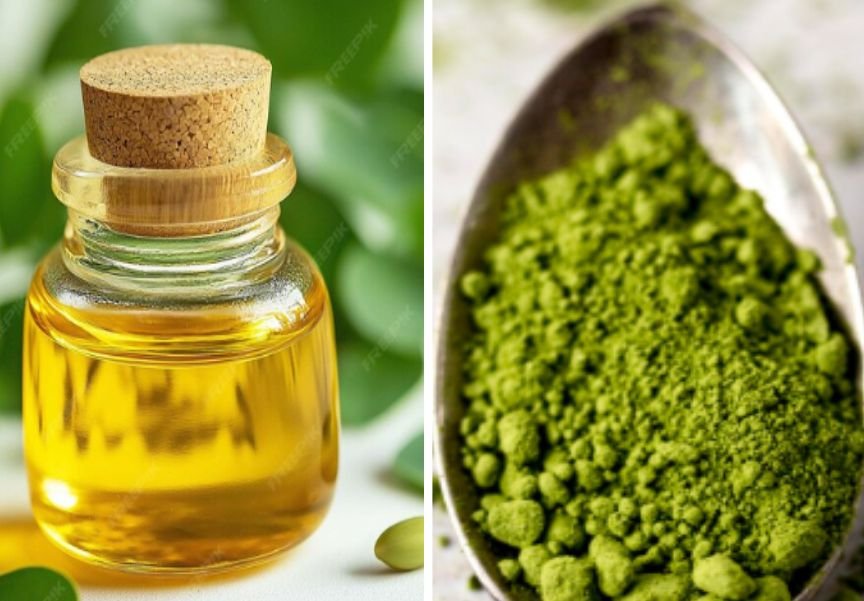
Moringa oil vs moringa powder, which delivers better nutrition benefits for skin, hair, cooking, health, daily use, and lifestyle goals?
Interest in moringa, the drumstick, keeps growing as more people add it to wellness routines, beauty care, and everyday nutrition.
From skin care shelves to kitchen cabinets, its presence keeps expanding because your needs are no longer one size fits all.
Choosing between oil and powder shapes how results show up in your routine, from topical care to daily meals.
Comparing moringa oil vs moringa powder helps match your goals with the right form, saving time and money.
Skin moisture, hair softness, joint massage, energy support, and nutrient intake all depend on how each option fits your lifestyle.
Clear comparisons give your routine direction, helping your body and skin get support that feels practical, consistent, and easy to maintain.
Table of Contents
What Are Moringa Oil and Powder?
What is Moringa Oil
Moringa oil, also called Behen oil, is a natural oil extracted from the seeds of the moringa tree.
It is valued for its stability, light texture, and high oleic acid content, making it popular for skincare, hair care, massage, and some culinary uses. More on Behen oil here.
What is Moringa Powder
Moringa powder is made from dried moringa leaves ground into a fine green powder.
It is used as a dietary supplement and food ingredient, providing vitamins, minerals, protein, and antioxidants to support everyday nutrition and wellness. More on moringa powder here.
Moringa Oil vs Moringa Powder: Key Differences
Both forms come from the same plant, yet they serve different purposes in your routine.
The real difference shows in how they are processed, how nutrients work in your body, and how each feels in daily use.
Source and processing methods
Moringa oil is pressed from mature seeds, focusing on extracting natural oils for topical and light culinary use.
Moringa powder comes from dried leaves, keeping the whole leaf structure.
This difference shapes shelf life, usage style, and how each fits skincare, hair care, or daily nutrition.
Nutrient concentration and bioavailability
Oil provides fatty acids and fat-soluble antioxidants that absorb well through the skin and scalp.
Powder delivers fiber, plant protein, vitamins, and minerals that work internally.
Your goal matters here; external nourishment leans toward oil, internal nutrition points to powder.
Texture, taste, and absorption
Moringa oil feels smooth, lightweight, and absorbs gradually without sticky residue. Its flavor stays mild.
Moringa powder has a green, earthy taste and fine texture, blending into foods while digesting more slowly due to fiber content.
Skin, hair, and body benefits
Oil supports skin hydration, barrier comfort, hair softness, and massage use.
Powder supports overall wellness that reflects on skin and hair from within. One works on the surface, the other supports results that start internally.
Dietary and lifestyle use
Moringa oil fits skincare routines, hair care, massage, and some cooking. Moringa powder suits smoothies, teas, soups, and supplements.
Choosing depends on how you want to include moringa in your daily life.
Related Posts
Moringa Oil Comedogenic Rating
Moringa Oil Fatty Acid Profile
Health Benefits of Moringa Powder
How Moringa Oil Compares with Jojoba Oil
Nutritional Comparison
Moringa oil and moringa powder provide nutrients in very different ways.
Oil focuses on fat-soluble compounds for skin, hair, and light culinary use, while powder delivers vitamins, minerals, and fiber that support daily nutrition and internal wellness.
Choosing the right form or combining both helps your routine cover all bases.
Fat-soluble nutrients in moringa oil
Moringa oil is rich in oleic acid, vitamin E, and plant sterols that absorb directly through skin and hair.
These compounds lock in moisture, support elasticity, and provide antioxidant protection.
Using oil in small culinary amounts adds healthy fats, making it useful both externally and for light internal nutrition.
Water-soluble nutrients and fiber in moringa powder
Moringa powder supplies vitamins B and C, potassium, calcium, magnesium, protein, and fiber.
These nutrients support digestion, energy, and overall nutrient intake.
Adding powder to smoothies, soups, or teas helps your body absorb vitamins naturally while providing daily fiber and plant-based nutrition.
Which nutrients are lost or preserved in each form
Oil preserves fat-soluble nutrients but loses most water-soluble vitamins and fiber from the leaves.
Powder retains water-soluble vitamins, minerals, and fiber but lacks the concentrated fatty acids found in the seeds.
Using both or selecting the one that matches your goals ensures your skin, hair, and internal health all get proper support.
Health Benefits Comparison
Moringa oil and moringa powder both support your health, but in different ways.
Oil works externally on skin and hair, while powder supports internal wellness.
Comparing them side by side helps you decide which fits your goals or how to combine both.
Skin hydration and barrier support
Moringa oil locks in moisture, softens rough patches, and strengthens the skin barrier, absorbing quickly without feeling heavy.
Powder indirectly supports skin health by providing vitamins and antioxidants that nourish from within, helping maintain elasticity, improve complexion, and reduce signs of stress on the skin.
Hair nourishment and scalp care
Moringa oil directly coats hair strands, nourishes roots, and reduces dryness or flakiness.
Powder supports hair growth and strength internally through protein, iron, and nutrients, promoting shinier, healthier hair when included in a consistent diet or supplement routine.
Anti-inflammatory and antioxidant properties
Oil delivers fat-soluble antioxidants that protect skin and scalp from environmental stress and calm irritation.
Powder provides water-soluble antioxidants, vitamins, and minerals that support immune function and reduce inflammation systemically, benefiting skin, hair, and overall health from the inside.
Immune system and energy support
Oil benefits focus on external comfort, hydration, and calming minor inflammation.
Powder boosts immunity, stabilizes energy, and supports metabolic balance through vitamins, minerals, and fiber, helping you feel more alert, nourished, and resilient throughout the day.
Digestive, metabolic, and heart health
Moringa oil has minimal direct effects internally but supports heart health when used in light culinary applications.
Powder supplies fiber, protein, and micronutrients that aid digestion, help regulate blood sugar, support healthy cholesterol, and maintain steady metabolism, contributing to long-term wellness.
Skincare and Hair Care Uses
Moringa oil and moringa powder can both support skin and hair, but they work in very different ways.
Oil targets the surface, locking in moisture and nutrients, while powder works mainly from the inside.
Comparing them helps decide which fits your routine or how to combine both for maximum effect.
When moringa oil works best for topical use
Moringa oil absorbs quickly into skin and hair, providing hydration, softness, and a protective barrier.
It works well for dry areas, rough patches, and scalp massage.
Lightweight and non-greasy, it can be used daily on face, body, and hair to improve texture and shine.
Whether moringa powder can be used externally
Moringa powder is usually better for internal use, but it can be mixed into masks, scrubs, or hair treatments.
When combined with oils, yogurt, or aloe, it delivers antioxidants and vitamins directly to skin or scalp, offering a natural boost for nourishment and soothing care.
Which is better for acne, dryness, and hair growth
For dryness, hair nourishment, and scalp care, oil works best because it locks in moisture and nutrients.
Acne-prone skin may benefit from light oil use, while powder supports hair growth and skin health internally through protein, iron, and antioxidants.
Using both together can provide complementary benefits for stronger results.
Culinary and Supplement Uses
Moringa oil and moringa powder can both be added to your diet, but they serve different purposes.
Powder provides broad nutritional support in meals and supplements, while oil delivers healthy fats and a light flavor for cooking.
Comparing both helps match form to taste, convenience, and health goals.
Cooking and edible uses of moringa powder
Moringa powder blends easily into smoothies, soups, sauces, and baked goods, adding vitamins, minerals, protein, and fiber.
Its subtle earthy flavor works best when mixed with other ingredients, helping boost nutrition without overpowering taste, making it simple to include in everyday meals.
Can moringa oil be consumed?
Moringa oil can be consumed in small amounts for light cooking or salad dressings.
It provides oleic acid, vitamin E, and antioxidants, but high-heat cooking may degrade nutrients.
Using oil sparingly preserves its nutritional benefits and adds mild flavor while supporting healthy fats in your diet.
Taste, dosage, and safety considerations
Powder has an earthy, slightly bitter taste, and small daily amounts are sufficient, gradually increasing as your body adjusts.
Oil is mild and pleasant, with a light nutty flavor.
Both forms should be stored properly, used in recommended amounts, and incorporated consistently to maintain freshness and safe daily intake.
Moringa Oil vs Moringa Powder: How to Use
How you use moringa depends on the form and your goals.
Oil works best for external care, moisturizing skin and hair, while powder supports internal wellness through nutrition.
Knowing when and how to use each helps you get results consistently without overcomplicating your routine.
Application tips for skin and hair
Moringa oil spreads easily on clean, slightly damp skin, locking in moisture and improving softness.
Massage small amounts into hair ends or scalp before washing to reduce dryness.
Powder can be used externally in masks or hair treatments when mixed with oils, yogurt, or aloe, providing antioxidants and vitamins directly to the skin or scalp.
Best times and methods for use
Oil absorbs best after bathing or before bedtime, allowing skin and hair to soak in nutrients.
Morning use works in dry climates or during protective styling.
Powder supports internal care when added to breakfast smoothies, teas, or meals, letting nutrients work gradually throughout the day for energy and overall wellness.
Mixing into drinks, meals, and supplements
Powder blends well into smoothies, soups, teas, sauces, and baked goods, delivering vitamins, minerals, and fiber.
Capsules offer convenience for busy days. Oil can be used lightly in salad dressings or low-heat cooking to provide healthy fats, antioxidants, and mild flavor without losing nutrients.
Recommended usage tips
Start with small portions of powder to allow your body to adjust, and use oil sparingly for external care or culinary purposes.
Consistent daily use matters more than quantity.
Store both oil and powder properly to maintain freshness, nutrient quality, and effectiveness for skin, hair, and internal wellness.
Possible Side Effects and Precautions
Both moringa oil and moringa powder are generally safe, but how you use them and in what amounts can affect results.
Knowing precautions, dosage limits, and potential interactions helps you enjoy benefits without discomfort or risk.
Dosage considerations
Moringa oil is safe in small amounts for topical use or light culinary applications. Overuse can leave skin greasy or cause mild irritation.
Moringa powder should start with small daily portions, gradually increasing to avoid digestive upset.
Consistent, moderate use ensures benefits without overloading your system.
Who should avoid moringa products?
Pregnant or breastfeeding individuals, people with certain medical conditions, or those taking specific medications should consult a healthcare professional before using moringa products.
Certain seed and leaf extracts may not be suitable in large amounts for sensitive populations.
Safety depends on form, dosage, and personal health.
Allergies and interactions
Allergic reactions to moringa are rare but possible. Skin may react to topical oil, or digestive discomfort can occur with powder.
Moringa may interact with medications for blood sugar, blood pressure, or thyroid.
Monitoring your response and consulting a professional helps avoid unwanted reactions while keeping your routine safe.
Can You Use Moringa Oil and Moringa Powder Together?
Using both forms in the same routine supports care from the inside and outside.
Oil focuses on surface nourishment, while powder supports internal balance, making combined use practical for well-rounded daily support.
Complementary benefits
Moringa oil supports skin moisture, hair softness, and scalp comfort, while moringa powder supports nutrient intake, digestion, and energy.
Using both allows external care to reflect internal support.
This pairing suits people who want visible skin and hair results alongside steady wellness habits.
Simple routine ideas
Morning routines can include moringa powder blended into smoothies or tea, followed by light oil use on skin or hair.
Evening routines suit scalp massage or body care with oil. Keeping amounts small and consistent helps routines stay easy and effective.
Which Should You Choose: Moringa Oil or Moringa Powder?
Choosing the right form depends on how moringa fits into your daily routine.
Skin care needs, wellness goals, and nutrition habits all shape which option feels easier to maintain and more rewarding long-term.
Choosing based on goals: beauty, wellness, or nutrition
Skin hydration, hair softness, and massage care point toward moringa oil because it works directly where dryness shows.
Internal wellness, energy support, and daily nutrient intake favor moringa powder.
Goals decide direction, external care leans on oil, internal support comes from powder.
Lifestyle and preference considerations
Busy schedules favor simplicity. Oil suits quick skin and hair routines, while powder fits meal prep, smoothies, or supplements.
Taste preference, time, storage space, and consistency all matter. Choosing what fits your habits helps you stay consistent without forcing changes that feel hard to sustain.
Conclusion
Moringa oil and moringa powder each offer distinct benefits, from skin and hair care to nutrition and daily wellness.
Oil works externally to lock in moisture and improve texture, while powder supports internal health, energy, and nutrient intake.
Your goals, lifestyle, and routine determine which form fits best.
Using both strategically can deliver complementary benefits, combining surface care with internal support.
Comparing moringa oil vs moringa powder helps you make informed choices, ensuring skin, hair, and overall wellness get consistent, practical, and effective support every day.
Frequently Asked Questions
What is the main difference between moringa oil and moringa powder?
Moringa oil works externally for skin and hair, providing moisture and antioxidants, while moringa powder supports internal wellness with vitamins, minerals, protein, and fiber.
Can moringa powder be applied to the skin or hair?
Yes, it can be used in masks, scrubs, or hair treatments when mixed with oils or aloe, delivering vitamins and antioxidants topically.
Is it safe to consume moringa oil?
Moringa oil can be used in small amounts for salad dressings or low-heat cooking. Overuse or high-heat cooking may reduce nutrients or cause digestive issues.
Can you use moringa oil and powder together?
Yes, combining oil and powder supports skin, hair, and internal health. Powder nourishes from the inside, while oil provides external hydration and antioxidant protection.