
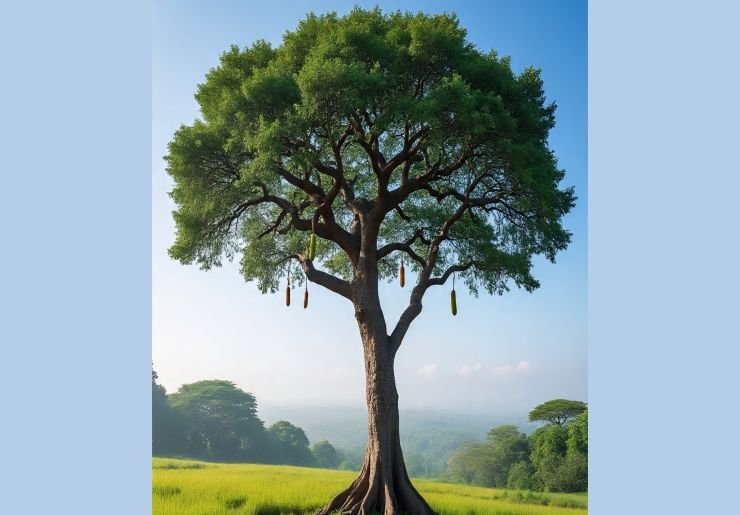
Tamarind tree stands as a timeless tropical giant, valued for its fruit, leaves, flowers, and deep-rooted cultural uses worldwide. Here’s everything to know.
The tamarind tree plays a steady role in daily life across many regions, and your kitchen, garden, and wellness habits may already reflect its value.
From cooking rich sauces to adding balance to soups and drinks, every part supports practical use.
Your interest may come from food, traditional practices, or natural ingredients that fit simple living.
The fruit, leaves, flowers, seeds, bark, and roots each serve a clear purpose, shaped by culture and routine use.
Recipes, home remedies, and local trade continue to rely on this resource.
As you read on, familiar uses may connect with new ideas, giving your meals, knowledge, and lifestyle more depth through trusted, plant-based traditions.
New to tamarind and its wonders? Start from the introduction to tamarind.
Table of Contents
What is a Tamrind Tree?
A tamarind tree is a long-lived tropical tree known for its broad canopy and pod-like fruits. It belongs to the legume family and grows widely in Africa, Asia, and Latin America.
The ripe pulp inside the pods tastes sweet-sour and is used in cooking, drinks, sauces, traditional medicine, and shade planting in warm climates worldwide, valued for food and enrichment.
Botanical Description of the Tamarind Tree
The tamarind tree, botanically known as Tamarindus indica, is a flowering, pod-bearing species within the Fabaceae or legume family.
This classification explains its seed pods, compound leaves, and shared traits with other legumes.
Native to tropical Africa, the tree spread widely through trade and migration, becoming established across South Asia, Central America, the Caribbean, and other warm regions.
Its woody structure and angiosperm features support long-term growth in tropical and semi-arid climates.
Recognition relies on its botanical classification, growth form, and pod-producing habit, which help distinguish tamarind from similar trees with different leaf patterns or flower structures.
Today, the species remains widely cultivated and easily identified in regions with suitable warmth and soil conditions.
Physical Characteristics of the Tamarind Tree
This section helps you recognize the tamarind tree by its visible features, making identification easier in farms, gardens, and natural landscapes across tropical and semi-arid regions.
Tree Height and Canopy Shape
A mature tamarind tree grows tall, usually between 20 and 30 meters, with a wide, rounded canopy that spreads outward.
That broad crown creates deep shade beneath the tree.
Strong horizontal branches extend from a solid central trunk, giving the tree a balanced, stable appearance that stands out in open landscapes.
Trunk, Bark, and Branch Structure
The trunk appears thick and sturdy, supporting the tree’s heavy canopy.
Bark color ranges from dark brown to gray, with a rough, cracked texture that becomes more visible with age.
Branches grow wide and low, forming a layered structure that helps the tree resist wind and support heavy pod production.
Leaf Structure and Arrangement
Tamarind leaves are compound and finely divided, forming pairs of small oval leaflets along a central stem.
This feathery leaf pattern allows light to filter through while still offering shade.
Leaflets fold slightly during low light or night hours, a natural response that helps reduce moisture loss.
Flowers and Pod Formation
Flowers grow in small clusters and show soft yellow petals marked with thin red lines. After pollination, curved brown pods begin to form.
Each pod holds hard seeds surrounded by sticky, fibrous pulp. Pod shape, color, and size make the tamarind tree easy to identify during fruiting seasons.
Lifespan and Growth Conditions
Tamarind trees are long-living and can survive for over 100 years under favorable conditions.
Growth thrives in warm climates with full sunlight.
Well-drained soil supports strong root development, while moderate rainfall or occasional watering helps young trees establish before becoming drought-tolerant once mature.
Related Posts
What Does Tamarind Taste Like?
Studies and Evidence on Health Potentials of Tamarind
Parts of the Tamarind Tree and Their Uses
Each part of the tree serves a practical purpose, from food preparation to traditional practices.
Knowing how these parts are used helps you understand the tree’s value beyond its appearance.
Tamarind Fruit
The tamarind fruit grows in brown, curved pods with a brittle shell that protects a sticky, fiber-rich pulp.
Inside the pod, the pulp surrounds hard seeds and ranges from very sour to mildly sweet, depending on the variety and ripeness.
This pulp is a key ingredient in many cuisines, used in sauces, soups, stews, marinades, chutneys, and drinks.
Sour tamarind is common in savory dishes, while sweeter types are used in snacks, candies, and beverages.
Beyond cooking, the fruit is valued for its natural acids, minerals, and role in traditional food preservation methods.
Tamarind Leaves
Tamarind leaves are small, green, and feathery, commonly harvested while young and tender.
They are used in cooking, especially in soups, stews, and vegetable dishes, where they add a mild, tangy flavor that is gentler than the fruit pulp.
In some regions, the leaves are brewed into herbal teas or added to rice dishes.
Traditionally, tamarind leaves are used in home remedies and general wellness practices.
They are also used in poultices and rinses, reflecting their long-standing role in local food culture and everyday household use.
Tamarind Flowers
Tamarind flowers are small, pale yellow with red or orange streaks, and grow in loose clusters.
They bloom before fruit formation and attract pollinators such as bees, supporting the tree’s productivity.
In some cultures, young tamarind flowers are edible and added to salads, soups, or lightly cooked dishes, offering a subtle sour taste.
The flowers are also used in traditional practices, sometimes prepared in simple herbal mixtures.
Though less known than the fruit or leaves, tamarind flowers contribute to both the culinary value and ecological importance of the tree.
Tamarind Seeds
Tamarind seeds are hard, smooth, and glossy, enclosed within the sticky fruit pulp.
Once cleaned and processed, they become a useful source of starch and protein.
In food applications, the seeds are ground into flour or processed into thickening agents used in sauces and snacks.
They are also used in animal feed. Industrially, tamarind seed starch is valued for textile sizing, paper production, and adhesives.
These wide-ranging uses show how tamarind seeds extend the fruit’s value beyond cooking, supporting both the nutrition and manufacturing industries.
Tamarind Bark and Roots
The bark and roots of the tamarind tree are mainly valued in traditional medicine systems. More on tamarind bark and uses.
They are typically dried, powdered, or boiled to prepare decoctions for external or internal use, depending on local practices.
The bark is rich in tannins and has been traditionally used for cleansing and preservation purposes.
Tamarind roots are less commonly harvested but still play a role in cultural remedies passed down through generations.
While not widely used in modern cooking, tamarind bark and roots remain important for their historical, medicinal, and cultural significance in many communities.
Natural Habitat and Distribution
The tree grows naturally in warm regions and adapts well to different tropical environments.
Its wide distribution reflects strong tolerance to heat and seasonal rainfall patterns.
Native Regions
The tamarind tree is native to tropical Africa, where it grows in savannas and dry woodland areas.
From Africa, it spread early to India and Southeast Asia, where it became well established and closely linked to local landscapes and farming systems.
Areas of Cultivation Worldwide
Today, the Tamarindus indica trees are cultivated across South Asia, Southeast Asia, Central America, the Caribbean, and parts of South America.
You also find them in tropical zones of Australia and the Middle East, mainly planted along roadsides, farms, and village spaces.
Soil and Climate Preferences
Tamarindus indica trees prefer tropical and subtropical climates with warm temperatures and plenty of sunlight.
Well-drained sandy or loamy soil supports healthy growth.
Once established, the tree tolerates drought well but grows faster with seasonal rainfall.
Ecological and Environmental Importance
The Tamarindus indica tree plays an important role in maintaining healthy landscapes and supporting natural ecosystems, especially in tropical and subtropical regions where it is widely grown.
Preventing Soil Erosion
A strong, deep root system helps anchor the soil, reducing erosion caused by wind and heavy rainfall.
Planting the trees on farmlands or slopes helps stabilize the ground, protect topsoil, and improve land resilience in areas prone to degradation.
Support for Local Ecosystems
The wide canopy provides shade that cools the surrounding environment, creating a suitable habitat for birds, insects, and small animals.
Fallen leaves enrich the soil with organic matter, supporting microorganisms and improving overall soil fertility.
Sustainable Landscaping and Agroforestry
Tamarindus indica trees are commonly used in sustainable landscaping because they require minimal maintenance once established.
In agroforestry systems, they coexist well with crops and livestock, offering shade, improving soil quality, and supporting long-term environmental balance.
Economic and Cultural Significance
The Tamarindus indica tree holds strong economic and cultural value in many tropical regions, supporting livelihoods while remaining deeply rooted in everyday community life.
Uses of Tamarind Wood
Tamarind wood is dense, durable, and resistant to insects, making it suitable for furniture, tools, and household items.
Carpenters use it for carts, mortars, pestles, and decorative crafts. Its strength allows long-term use, especially in rural and traditional settings.
Shade Tree in Communities
The wide canopy makes the tamarind tree a popular shade tree in villages, schools, markets, and along roads.
People gather beneath it for rest, meetings, and social activities, benefiting from the natural cooling it provides in hot climates.
Cultural and Traditional Importance
The trees appear in local customs, folklore, and festivals across Africa and Asia.
In some cultures, the tree marks community boundaries or serves as a meeting point.
Leaves, bark, and fruit are used in traditional ceremonies and everyday practices.
Interesting Facts About the Tamarind Tree
The Tamarindus indica tree stands out for its long life, steady growth, and ability to adapt to challenging environments, making it one of the most respected trees in tropical regions.
Long Lifespan
These trees are known for their longevity and can live for more than 100 years.
Some mature trees continue producing fruit and providing shade for several generations, making them lasting features in villages, farms, and natural landscapes.
Growth Rate in Different Climates
Growth speed varies by climate and soil conditions. In warm, well-watered tropical areas, the tree establishes faster.
In drier or cooler regions, growth slows, but the tree remains hardy and long-lasting once rooted.
Unique Natural Traits
The tree has a seasonal flowering pattern, producing pale yellow flowers with red markings.
It shows strong drought tolerance due to deep roots and can survive long dry periods without losing its canopy.
Growing and Caring for a Tamarind Tree
Growing a tamarind requires patience and basic care, but once established, it becomes a hardy, low-maintenance tree that thrives for decades in the right conditions.
Soil and Climate Requirements
Tamarind grow best in tropical and subtropical climates with warm temperatures and full sunlight.
Well-drained sandy or loamy soil supports healthy root growth. Slightly acidic to neutral soil works well.
Waterlogged ground should be avoided, as it can damage roots and slow development.
Planting Techniques: Seed vs Sapling
Planting from seed is common and cost-effective, though germination takes time.
Seeds should be soaked overnight before planting.
Saplings grow faster and establish more quickly, making them a good choice for home gardens or farms. Spacing is important due to the tree’s wide canopy.
Watering and Sunlight Needs
Young trees need regular watering to establish strong roots.
Mature tamarind trees are drought-tolerant and require less frequent watering.
Full sunlight supports steady growth and healthy branching, while shaded areas slow development.
Fertilization and Pruning
Light fertilization with organic compost supports early growth. Pruning helps shape the tree, remove weak branches, and improve airflow.
Heavy pruning is rarely needed once the tree matures.
Pests and Disease Management
Tamarind resists most pests, though caterpillars and beetles may appear.
Proper spacing, clean soil, and regular inspection help prevent disease and pest buildup.
Conclusion
The tamarind tree is a remarkable tropical tree valued for its strength, longevity, and wide environmental importance.
From its deep roots that protect soil to its broad canopy that provides shade and shelter, every part of the tree plays a role in supporting ecosystems and communities.
It supports local crafts, its presence enhances sustainable landscaping, and its adaptability allows it to thrive across many warm regions of the world.
Understanding the structure, growth habits, and care needs of the tamarind helps you appreciate its role beyond food use, highlighting why it remains an important and respected tree in tropical landscapes.
Frequently Asked Questions
What makes the tamarind tree valuable?
The tamarind tree offers edible fruit, leaves, flowers, seeds, bark, and wood, supporting cooking, traditional remedies, crafts, and shade in tropical and semi-arid regions worldwide.
How long does a tamarind tree live?
Healthy tamarind trees can live over 100 years, providing steady fruit production, shade, and environmental benefits for multiple generations in warm climates.
Where does the tamarind tree grow best?
Tamarind thrives in tropical or subtropical climates with full sunlight, well-drained sandy or loamy soil, tolerating seasonal rainfall and established drought conditions.
Which parts of the tamarind tree are used in daily life?
Fruit pulp, seeds, leaves, flowers, bark, and roots serve cooking, drinks, herbal remedies, industrial products, and sustainable crafts across communities.
Reference

Chims Clements writes about herbs from personal experience and careful research. Growing up in Aba, Nigeria, moringa and tamarind were everyday household plants long before they became globally recognised superfoods. He uses both regularly in his home today. At Six Herbs he goes deep on moringa, tamarind, fenugreek, and sea moss — building honest, experience-backed content that separates what tradition knows from what science confirms. The content on this site is for informational purposes only and is not medical advice. Always consult a healthcare provider before using herbs medicinally.