
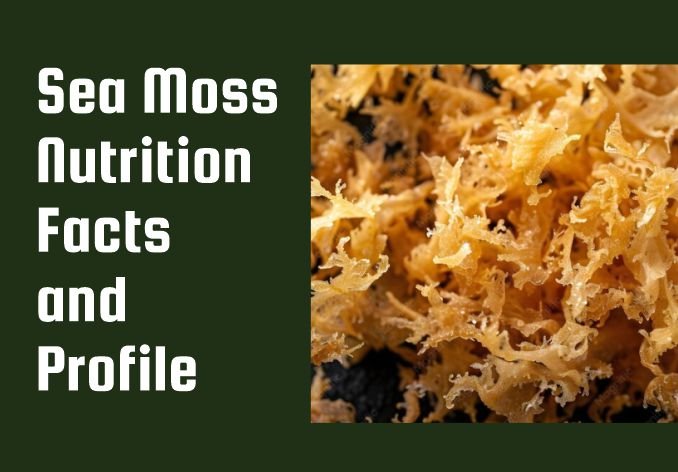
What makes sea moss stand out is not its claims, but its nutrient profile. Packed with minerals, vitamins, fiber, and trace compounds, sea moss nutrition facts reveal a dense natural source of elements your body typically gets from varied whole foods.
Sea moss nutrition facts and profile focus on what is inside this marine plant, rather than how it affects the body.
Its profile includes a wide range of minerals like iodine, potassium, calcium, magnesium, and trace elements, along with vitamins, fiber, and natural polysaccharides.
The nutrient density varies depending on type, source, and processing method, such as drying or gel preparation.
Understanding its composition helps you see why it is considered a mineral-rich sea vegetable.
This guide breaks down its full nutrient structure clearly so you can evaluate it from a nutritional standpoint alone.
Want to start from the beginning? See our introduction to sea moss.
Table of Contents
Macronutrient Composition in Sea Moss
Sea moss nutrition facts show a simple macronutrient profile made up mainly of carbohydrates, fiber, and very small amounts of protein and fat.
This section breaks down what you actually get in terms of basic energy nutrients.
Carbohydrates in Sea Moss (Natural Polysaccharides)
Sea moss contains natural carbohydrates mainly in the form of polysaccharides like carrageenan.
These compounds give it its gel-like texture when soaked and blended.
From a sea moss nutrition facts perspective, these carbohydrates are the dominant macronutrient, providing structure rather than quick energy like refined carbs.
This makes it different from grain-based carbohydrate sources in your diet.
Protein Content in Trace Amounts
Protein in sea moss is present only in small amounts, so it is not considered a major protein source.
Sea moss nutrition facts show that it contains trace amino acids, which contribute minimally to daily protein intake.
You would not rely on it for muscle building, but it still adds a small nutritional layer to its profile.
Low-Fat Profile
Sea moss contains almost no fat, which places it in the low-fat food category.
From a nutritional standpoint, this means it does not contribute significant dietary fat or calories from fat.
Sea moss nutrition facts highlight this as one reason it blends easily into different diets without affecting fat intake levels.
Dietary Fiber Presence
Sea moss includes soluble fiber that contributes to its thick, gel-like structure when prepared.
This fiber is part of its carbohydrate structure and plays a role in its texture.
In sea moss nutrition facts, fiber content is one of the key structural components that define how it behaves in food and drink preparation.
Here is a tabular representation of the macro nutrients of sea moss.
| Component | Key Points |
|---|---|
| Overall profile | Carbs, fiber, trace protein, almost no fat |
| Carbohydrates | Polysaccharides (carrageenan), gel-forming, structural energy |
| Protein | Trace amino acids, minimal daily contribution |
| Fat | Nearly zero, low-fat food category |
| Fiber | Soluble fiber, thick gel texture, food structure role |
Related Posts
All the Benefits of Sea Moss Summarized
How Sea Moss Capsule Differs from Other Forms
Mineral Content in Sea Moss
Sea moss nutrition facts highlight a dense mineral profile that sets it apart from many plant-based foods.
These minerals support everyday body functions like fluid balance, oxygen transport, and structural strength in your diet.
Major Minerals
Iodine
Iodine in sea moss nutrition facts stands out because it plays a key role in thyroid hormone production.
Your body uses these hormones to regulate metabolism and energy use.
Small, consistent intake matters since iodine levels in natural foods can vary, making sea moss a notable dietary source.
Potassium
Potassium supports fluid balance and normal muscle function. In sea moss nutrition facts, it appears as one of the core electrolytes.
Your body uses it to help maintain proper nerve signaling and hydration balance, especially when combined with other mineral-rich foods in your diet.
Calcium
Calcium contributes to structural support in bones and teeth.
Sea moss nutrition facts show it contains plant-based calcium that adds to daily intake.
While not a replacement for dairy or fortified foods, it still contributes to overall mineral diversity in your eating pattern.
Magnesium
Magnesium supports hundreds of biochemical reactions in the body.
From a sea moss nutrition facts perspective, it plays a role in energy processes and muscle function.
Your body relies on it alongside other minerals to maintain steady internal activity throughout daily routines.
Sodium
Sodium in sea moss appears in natural, balanced amounts.
Sea moss nutrition facts show it contributes to electrolyte balance along with potassium.
Your body uses it to help regulate fluid levels and support normal cellular function without relying heavily on processed salt sources.
Phosphorus
Phosphorus supports energy storage and bone structure.
In sea moss nutrition facts, it works alongside calcium to maintain structural balance.
Your body uses it in combination with other minerals for cellular energy processes and maintenance of healthy tissue function.
Trace Minerals
Zinc
Zinc appears in small amounts but still plays a role in overall mineral intake.
Sea moss nutrition facts include it as part of its trace mineral profile.
Your body uses zinc in enzyme activity and cellular repair processes as part of daily nutritional support.
Iron
Iron in sea moss contributes to oxygen transport in the blood.
Sea moss nutrition facts highlight it as a trace element that supports hemoglobin formation.
Your diet uses iron from multiple sources, and sea moss adds a small natural contribution to that intake.
Selenium
Selenium supports antioxidant activity in the body. Sea moss nutrition facts include it as a trace mineral involved in cellular protection processes.
Your body relies on selenium in small amounts to support normal metabolic and protective functions.
Copper
Copper supports iron metabolism and energy production. In sea moss nutrition facts, it appears in trace levels that contribute to enzyme activity.
Your body uses copper alongside other minerals to maintain proper biochemical reactions.
Manganese
Manganese supports bone formation and metabolism. Sea moss nutrition facts show it as a minor but relevant trace mineral.
Your body uses it in small amounts for enzyme activity and structural support processes within daily nutrition intake.
Mineral Content in Sea Moss (Tabulated)
| Category | Mineral | Key Point |
|---|---|---|
| Major | Iodine | Thyroid, metabolism, energy regulation |
| Major | Potassium | Fluid balance, nerve signaling |
| Major | Calcium | Bone and teeth structure |
| Major | Magnesium | Energy reactions, muscle function |
| Major | Sodium | Electrolyte balance, hydration |
| Major | Phosphorus | Energy storage, bone structure |
| Trace | Zinc | Enzyme activity, cell repair |
| Trace | Iron | Oxygen transport, hemoglobin |
| Trace | Selenium | Antioxidant protection |
| Trace | Copper | Iron use, energy production |
| Trace | Manganese | Enzyme support, bone metabolism |
Vitamin Content in Sea Moss
Sea moss nutrition facts show a modest vitamin profile that adds support to its mineral-rich composition.
These vitamins appear in small amounts, working alongside minerals to contribute to daily dietary intake and overall nutrient balance in your routine.
Vitamin A
Vitamin A in sea moss nutrition facts appears in small traces that contribute to general nutrient intake.
Your body uses vitamin A for basic cellular processes and tissue maintenance.
While not a major source, sea moss adds a natural plant-based contribution to your overall vitamin A intake from food.
Vitamin C
Vitamin C supports antioxidant activity and normal body functions.
In sea moss nutrition facts, it shows up in limited amounts compared to fruits, but still contributes to overall dietary diversity.
Your body uses vitamin C alongside minerals to support routine biochemical processes and nutrient absorption pathways.
Vitamin E
Vitamin E is present in trace levels in sea moss nutrition facts and contributes to antioxidant-related activity in the body.
Your diet relies on multiple sources of vitamin E, and sea moss adds a small natural contribution that complements other plant-based foods in your daily intake.
Vitamin K
Vitamin K in sea moss nutrition facts appears in minimal amounts but still plays a role in overall nutrient variety.
Your body uses vitamin K in processes related to normal physiological functions, and sea moss contributes a small natural addition alongside other dietary sources.
B-complex vitamins (B1, B2, B9 in trace amounts)
Sea moss contains trace levels of B-complex vitamins like B1, B2, and B9.
In sea moss nutrition facts, these vitamins contribute to general nutritional variety rather than being a primary source.
Your body uses B vitamins in energy-related processes, and sea moss offers a light natural contribution to this group.
Vitamin Content in Sea Moss (Tabulated)
| Vitamin | Key Point |
|---|---|
| Vitamin A | Trace, supports basic cell and tissue functions |
| Vitamin C | Limited amount, antioxidant support, nutrient diversity |
| Vitamin E | Trace levels, supports antioxidant activity |
| Vitamin K | Minimal amount, adds nutrient variety |
| B1 (Thiamine) | Trace, supports energy-related processes |
| B2 (Riboflavin) | Trace, supports metabolic reactions |
| B9 (Folate) | Small amounts, contributes to nutrient balance |
Bioactive Compounds in Sea Moss
Sea moss nutrition facts go beyond vitamins and minerals, showing a range of bioactive compounds that shape its structure and properties.
These compounds influence how sea moss behaves in food preparation and contribute to its unique chemical makeup.
Sulfated Polysaccharides (Carrageenan Content)
Carrageenan is one of the main sulfated polysaccharides found in sea moss nutrition facts.
It is responsible for the thick, gel-like texture when sea moss is soaked and blended.
Your body does not rely on it as a nutrient source, but it plays a major role in structure, texture, and how sea moss is used in foods and drinks.
Amino Acids Profile
Sea moss contains small amounts of amino acids that form part of its protein structure.
In sea moss nutrition facts, this amino acid profile is limited but still present.
Your diet uses amino acids from many sources, and sea moss contributes a minor natural addition to overall protein-related compounds found in plant foods.
Antioxidant Compounds Present in Seaweed Matrix
Sea moss includes natural antioxidant compounds that exist within its seaweed structure.
Sea moss nutrition facts highlight these plant-based compounds as part of its bioactive profile.
Your body interacts with antioxidants from many foods, and sea moss adds another natural source found within its marine plant matrix, contributing to its overall chemical diversity.
Caloric Value and Energy Content
Sea moss nutrition facts show a low-energy food profile that fits easily into most eating patterns.
Its calorie content stays minimal while still offering a dense mix of minerals and natural compounds that contribute to its nutritional value.
Low-Calorie Nature of Sea Moss
Sea moss is naturally low in calories, making it a light addition to meals and drinks.
In sea moss nutrition facts, this low-calorie profile stands out because most of its composition comes from water, fiber, and polysaccharides rather than fat or sugars.
Your intake stays minimal in energy contribution, even when using regular servings in food or gel form.
Energy Contribution Per Serving Estimate
A typical serving of sea moss gel (about 1–2 tablespoons or 15–30g) provides roughly 5–10 calories (kcal), depending on preparation and water content.
Sea moss nutrition facts show that this low energy value comes mainly from its fiber and polysaccharide structure rather than from digestible fats or sugars.
Most of its nutritional contribution is from micronutrients like minerals and trace compounds, not calories.
Your body gets a small energy input without significantly affecting daily calorie targets, making it easy to include in routines where low-calorie nutrient density is preferred.
Comparison to Other Sea Vegetables Nutritionally
Compared to other sea vegetables, sea moss remains lower in calories while still offering a dense mineral profile.
Sea moss nutrition facts place it alongside kelp and algae, but with a lighter energy contribution.
Your diet benefits from its nutrient density without adding significant caloric intake, making it suitable for balanced eating patterns.
Fiber and Digestive Components
Sea moss nutrition facts highlight a carbohydrate-rich structure that includes fiber and natural compounds responsible for its texture.
These components shape how it behaves in food preparation and contribute to its overall nutritional makeup.
Soluble Fiber Content
Sea moss contains soluble fiber that forms part of its carbohydrate profile.
In sea moss nutrition facts, this fiber contributes to its structural composition rather than serving as a major energy source.
Your diet includes fiber from many foods, and sea moss adds a plant-based source that blends easily into smoothies, drinks, and recipes without changing taste or texture significantly.
Gel-Forming Properties
One of the most noticeable features in sea moss nutrition facts is its gel-forming ability.
When soaked and blended, the natural compounds in sea moss create a thick, smooth texture.
Your kitchen use of sea moss often depends on this property, as it allows it to act as a natural thickener in foods and beverages without altering flavor.
Carbohydrate Structure and Composition
Sea moss carbohydrates mainly consist of natural polysaccharides that define its structure.
Sea moss nutrition facts show that these carbohydrates are complex rather than simple sugars.
Your intake of sea moss introduces these plant-based compounds into your diet, contributing to its overall nutrient composition while influencing texture, consistency, and food preparation applications.
Water Content and Processing Impact
Sea moss nutrition facts change depending on how it is processed, since water content, drying, and gel preparation all affect its structure, weight, and overall nutrient composition.
Nutrient changes between raw, dried, and gel forms
Raw sea moss contains natural moisture and minerals in their original state, while drying removes water and concentrates nutrients.
Sea moss nutrition facts show that the gel form rehydrates the plant, spreading nutrients evenly but not adding or removing them, only changing texture and usability in food preparation.
Effect of soaking and drying on nutrient density
Soaking rehydrates dried sea moss, restoring its soft texture, while drying reduces volume and increases concentration per weight.
Sea moss nutrition facts indicate that nutrient density appears higher in dried form due to water loss, but soaking returns it closer to its original balanced state without altering mineral composition significantly.
Moisture retention and weight differences
Moisture levels directly affect weight and appearance, making dried sea moss much lighter than gel or raw forms.
Sea moss nutrition facts reflect this shift, where water content changes perceived quantity but not core nutrients.
Your measurements vary depending on form, since gel holds more water while dried pieces remain compact and lightweight.
Nutrient Variations by Type
Sea moss nutrition facts can shift depending on type, sourcing, and growing environment, which affects mineral levels, texture, and overall composition you get from each variety.
Gold, purple, and green sea moss nutrient differences
Gold sea moss is widely used for its balanced mineral profile, while purple sea moss contains extra plant pigments linked to antioxidants, and green sea moss reflects stronger mineral variation.
Sea moss nutrition facts show these types differ slightly in trace nutrients, but all maintain a similar base of essential minerals.
Wildcrafted vs farmed nutrient variation
Wildcrafted sea moss grows naturally in ocean environments, often showing broader mineral diversity due to natural conditions.
Farmed sea moss is cultivated in controlled settings, offering consistency in structure and composition.
Sea moss nutrition facts reveal that wild and farmed varieties can differ in trace mineral strength and environmental exposure.
Geographic influence on mineral composition
Location plays a role in sea moss nutrient content since ocean water quality, temperature, and surrounding marine life affect absorption.
Sea moss nutrition facts vary based on region, with coastal differences influencing mineral density.
Your source location can slightly shift trace element levels while maintaining the core nutrient profile.
Conclusion
Sea moss nutrition facts show a dense mix of minerals, vitamins, fiber, and bioactive compounds that shape its full nutritional profile.
From iodine, potassium, calcium, and magnesium to trace elements like zinc and iron, its mineral structure stands out among sea vegetables.
Vitamins appear in smaller amounts, while polysaccharides and fiber define its texture and carbohydrate base.
Nutrient levels shift with type, source, and processing methods like drying or gel preparation.
This breakdown highlights sea moss as a nutrient-rich marine plant, giving you a clear view of its composition without focusing on health effects or claims.
Frequently Asked Questions
What are the main nutrients in sea moss?
Sea moss nutrition facts highlight minerals like iodine, potassium, calcium, magnesium, iron, along with fiber, vitamins, trace elements, and natural polysaccharides that form its core nutritional profile.
Does sea moss contain protein?
Sea moss nutrition facts show only small trace amounts of protein. It contains minor amino acids but is not considered a significant protein source in dietary planning.
Why does sea moss form a gel?
Sea moss nutrition facts include carrageenan and polysaccharides that absorb water and create a thick gel texture when soaked and blended, changing its physical structure.
Do different types of sea moss have different nutrients?
Sea moss nutrition facts vary slightly between gold, purple, and green types, as well as wildcrafted and farmed sources, mainly in trace minerals and pigment compounds.
References

Chims Clements writes about herbs from personal experience and careful research. Growing up in Aba, Nigeria, moringa and tamarind were everyday household plants long before they became globally recognised superfoods. He uses both regularly in his home today. At Six Herbs he goes deep on moringa, tamarind, fenugreek, and sea moss — building honest, experience-backed content that separates what tradition knows from what science confirms. The content on this site is for informational purposes only and is not medical advice. Always consult a healthcare provider before using herbs medicinally.