
Learn how to choose quality moringa oil by checking extraction methods, purity, storage, and labels to avoid diluted or contaminated products.
Choosing quality moringa seed oil affects how your hair, skin, face, and body respond to daily care.
Poor-quality products can clog pores, feel greasy, or deliver weak results.
Knowing how to choose quality moringa oil helps your routine stay clean, effective, and safe.
Labels, extraction methods, and storage conditions matter more than packaging claims.
When used for moisturizing skin, nourishing the scalp, facial care, or body massage, purity makes a clear difference. More on moringa oil for face and skin.
Paying attention to sourcing and processing helps your skin absorb nutrients properly, keeps hair light and healthy, and ensures moringa oil supports long-term care without irritation or buildup.
Table of Contents
What Makes Moringa Oil Quality?
Quality moringa oil comes from careful sourcing, clean processing, and nutrient preservation. Paying attention to composition and purity helps your skin, hair, and scalp get real benefits without irritation or buildup.
Here are what makes moringa oil quality and reliable:
Nutrient-Rich Profile With Vitamins, Fatty Acids, and Antioxidants
A quality oil delivers natural vitamins A, C, and E, plus oleic acid and antioxidants that support moisture balance and skin comfort.
These nutrients help hair feel softer, skin stay calm, and the scalp remain balanced.
When nutrients stay intact, absorption improves, shine looks natural, and daily use feels light instead of greasy or heavy.
Purity and Minimal Processing
Pure moringa oil contains no fillers, synthetic fragrance, or added oils.
Minimal processing preserves fatty acids and antioxidants that support skin barrier care and hair nourishment.
Cold-pressed extraction helps maintain nutrient strength, while excessive refining strips value.
Clean oil absorbs better, reduces pore congestion, and fits face, body, and hair routines without irritation or residue.
Related Posts
Comedogenic Rating of Moringa Oil
How to Use Moringa Oil for Eczema
Different Uses of Moringa Oil (Seed Oil)
How Moringa Oil Benefits Health
Understanding the Profile of Moringa Oil Fatty Acid
Extraction Methods: What to Look For
Extraction method plays a major role in how moringa oil performs on your skin, hair, and scalp.
Knowing how the oil is processed helps you choose one that delivers nutrients without irritation or loss of quality.
Cold-Pressed Extraction Preserves Nutrients
Cold-pressed moringa oil is made without heat or harsh chemicals, helping vitamins, fatty acids, and antioxidants stay active.
This method supports better absorption, balanced moisture, and smoother texture.
Hair feels softer, skin stays comfortable, and the oil works well for face, body, and scalp care without clogging pores or feeling heavy.
Refined vs Unrefined Differences in Scent, Color, and Potency
Unrefined moringa oil has a natural scent and deeper color, showing stronger nutrient content and skin benefits.
Refined oil looks lighter and smells neutral, but loses some vitamins during processing.
Refined versions suit sensitive noses, while unrefined options work better when skin, hair, or scalp needs richer nourishment and long-lasting moisture support.
Key Labels and Certifications
Labels and certifications help you judge moringa oil quality before buying.
Reading them carefully protects your skin, hair, and scalp from fillers, weak formulations, or poorly processed oils.
Organic Certification
Organic moringa oil comes from seeds grown without synthetic pesticides or chemical fertilizers.
This reduces the risk of residue on your skin and scalp.
Organic sourcing supports cleaner absorption, better moisture balance, and safer use for face, body, and hair care routines, especially for sensitive or acne-prone skin.
Non-GMO
A non-GMO label confirms the moringa seeds were not genetically modified.
This matters for people focused on natural skincare and body care products.
Non-GMO moringa oil maintains its natural fatty acid profile, supporting hydration, barrier care, and consistent results across daily skin and hair use.
Cruelty-Free and Vegan
Cruelty-free and vegan labels show the oil was not tested on animals and contains no animal-derived ingredients. These standards support ethical production while ensuring moringa oil stays suitable for face oils, body moisturizers, scalp treatments, and massage use without hidden additives.
Third-Party Testing
Third-party testing verifies purity, safety, and nutrient content.
Independent labs confirm the oil is free from contaminants, fillers, or heavy metals.
This label adds confidence that the moringa oil performs as expected, delivering reliable results for skin hydration, hair softness, and long-term care.
Reading the Ingredient List
Checking the ingredient list helps you choose moringa oil that truly nourishes skin, hair, and body while avoiding unnecessary additives, fragrances, or synthetic fillers that can reduce effectiveness.
Look for 100% Pure Moringa Oil
Select moringa oil labeled as 100% pure to ensure you get all natural nutrients, fatty acids, and antioxidants, providing maximum hydration, barrier support, and gentle care for skin and hair.
Avoid Additives, Fragrances, Fillers, or Silicones
Skip oils with additives, synthetic fragrances, or silicones that can irritate sensitive skin, weigh down hair, or interfere with absorption, ensuring safe, clean, and effective use for daily routines.
Single-Ingredient vs Blended Oils
Single-ingredient moringa oil delivers predictable hydration and nutrient support, while blends may include other oils or extracts that alter texture, absorption, or potency, so read labels carefully before purchasing.
Packaging and Storage Clues
Proper packaging and storage help preserve moringa oil’s nutrients, antioxidants, and fatty acids, keeping it effective for skin, hair, and body care while preventing oxidation or rancidity.
Dark Glass Bottles to Protect from Light
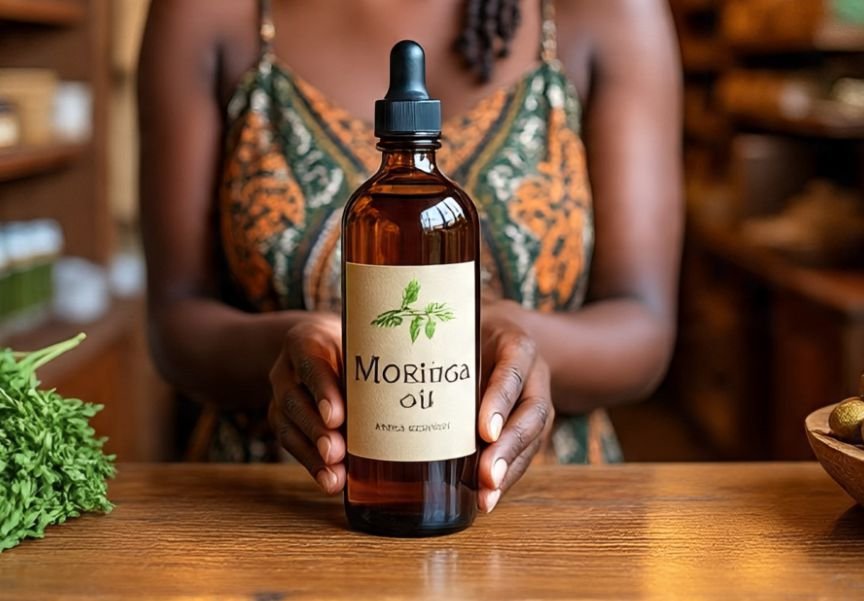
Choose moringa oil in dark glass bottles, which shield nutrients and antioxidants from light exposure, maintaining potency, preventing degradation, and ensuring the oil stays effective for hydration and skin support.
Dropper Tops for Controlled Use
Bottles with dropper tops allow precise application, reducing waste and contamination while making it easy to measure the right amount for skin, hair, or face care routines daily.
Seals and Freshness Indicators
Look for tamper-evident seals and freshness indicators that confirm the oil hasn’t been exposed or expired, helping ensure maximum nutrient retention and safe, high-quality use every time.
Color, Texture, and Scent Indicators
Observing moringa oil’s color, texture, and scent helps you identify purity and quality, ensuring the oil delivers maximum hydration, nutrients, and antioxidant benefits for skin, hair, and face care.
Natural Golden or Amber Color
High-quality moringa oil has a warm golden to amber hue, reflecting its nutrient-rich profile and minimal processing, signaling freshness and effectiveness for moisturizing and nourishing your skin or hair.
Smooth, Lightweight Texture
Look for an oil that feels smooth, lightweight, and non-greasy, allowing easy absorption, leaving skin hydrated without residue, and supporting daily routines for both face and body care.
Mild, Earthy Scent (Not Overly Perfumed)
Quality moringa oil carries a gentle, earthy scent without strong artificial fragrances, indicating purity, minimal refining, and suitability for sensitive skin, hair, and scalp applications.
Brand Reputation and Transparency
Choosing a reputable brand ensures your moringa oil is sourced responsibly, processed carefully, and maintains consistent quality, giving you confidence in its effectiveness for skin, hair, and face care.
Company Mission and Sourcing Info
Look for brands that share their mission and sourcing practices openly, including ethical harvesting, sustainable cultivation, and support for local communities, which reflects care and reliability in every bottle.
Reviews and Community Feedback
Check customer reviews and feedback to see how the oil performs in real-life use, from hydration to texture and scent, helping you make an informed choice based on experience.
Clear Labeling of Origin
Brands that clearly indicate the country of production and source of their moringa seeds show transparency, giving assurance about the quality, authenticity, and traceability of the oil you use.
Price vs Value
Evaluating price against quality helps you choose moringa oil that delivers real benefits for skin, hair, and body care, without overspending or risking poor results.
Why Extremely Cheap Oil Might Be Low Quality
Very low-cost oils can lack nutrients, be heavily refined, or contain fillers and additives.
Choosing bargain oils may compromise absorption, effectiveness, and overall skin and hair benefits.
When a Higher Price Is Worth It
Paying more often reflects cold-pressed extraction, organic certification, and careful sourcing.
Premium oils retain vitamins, antioxidants, and fatty acids, ensuring you get full nourishment and visible results.
How to Spot Low-Quality or Fake Moringa Oil
Knowing what signs indicate poor-quality or counterfeit moringa oil helps you protect your skin, hair, and health while ensuring every drop delivers real hydration and nutrients.
Cloudiness or Strange Smell
Genuine moringa oil is clear, golden, and slightly earthy.
Cloudiness, unusual dark color, or a chemical-like odor can indicate oxidation, contamination, or improper processing, reducing effectiveness and skin benefits.
Extra Ingredients Without a Clear Purpose
Some low-quality oils include fillers, synthetic fragrances, or additives that don’t improve skin or hair.
These can irritate sensitive skin and dilute nutrients, compromising results and hydration.
No Batch or Expiration Info
Oils without batch numbers, manufacturing dates, or expiration labels may lack quality control.
Missing this information makes it hard to verify freshness, potency, and safety for daily use.
Conclusion
Knowing how to choose quality moringa oil makes a real difference for your skin, hair, face, and body care.
Proper extraction, purity, packaging, and storage ensure nutrients, vitamins, and antioxidants remain intact, supporting hydration, softness, and barrier health.
Paying attention to labels, certifications, and brand transparency protects you from fillers, additives, or low-quality oils that may irritate sensitive skin or scalp.
Consistent use of high-quality moringa oil allows natural nourishment, smooth texture, and gentle care.
Learning how to choose quality moringa oil helps your daily routine stay safe, effective, and results-driven while keeping skin and hair healthy, calm, and radiant.
Frequently Asked Questions About Moringa Oil Quality
Can cold-pressed moringa oil differ from refined oil?
Cold-pressed oil retains more vitamins, fatty acids, and antioxidants. Refined oil may lose nutrients, but it absorbs easily, offering a lighter option for sensitive skin or hair.
How can I verify purity before buying moringa oil?
Check for 100% pure labeling, absence of additives, clear batch and expiration info, and third-party testing to ensure nutrients, antioxidants, and fatty acids are intact.
Are expensive oils always of better quality?
Higher prices often reflect organic sourcing, minimal processing, and nutrient retention. Very cheap oils may lack potency, contain fillers, or be over-refined, reducing effectiveness for skin and hair.
Can brand reputation affect moringa oil quality?
Yes, reputable brands share sourcing practices, ethical harvesting, and community support. Reviews, transparency, and clear origin labels indicate reliable, nutrient-rich oil for daily care.
References

Chims Clements writes about herbs from personal experience and careful research. Growing up in Aba, Nigeria, moringa and tamarind were everyday household plants long before they became globally recognised superfoods. He uses both regularly in his home today. At Six Herbs he goes deep on moringa, tamarind, fenugreek, and sea moss — building honest, experience-backed content that separates what tradition knows from what science confirms. The content on this site is for informational purposes only and is not medical advice. Always consult a healthcare provider before using herbs medicinally.